
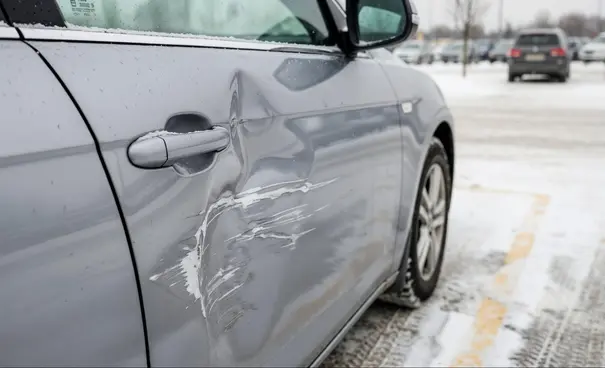


Les accidents de parking sont l'une des sources de responsabilité les plus courantes pour les entreprises, mais ils sont souvent négligés. Les collisions à basse vitesse, les blessures subies par les piétons et les chutes peuvent sembler mineures, mais elles sont souvent à l'origine de demandes d'indemnisation, de litiges juridiques et d'une augmentation des coûts d'exploitation.
Ce qui rend les risques liés aux parkings difficiles à gérer, c'est que de nombreux incidents se produisent sans témoin, en dehors des heures de bureau ou dans des endroits peu visibles. Lorsqu'un accident se produit, les entreprises doivent répondre à des questions difficiles : Quelle en est la cause ? Aurait-il pu être évité ? Et pouvons-nous prouver que nous avons pris des mesures raisonnables pour réduire les risques ?
Cet article présente les causes les plus courantes d'accidents dans les parkings, les incidents qui donnent le plus souvent lieu à des réclamations et les moyens pratiques dont disposent les entreprises pour réduire les risques et la responsabilité, en particulier lorsqu'il n'y a personne dans les parages.
Pourquoi les accidents de parking représentent-ils un risque majeur pour les entreprises ?
Pour les propriétaires d'entreprises et les gestionnaires immobiliers, les accidents de parking ne sont pas seulement des problèmes de sécurité. Ils sont événements liés à la responsabilité. Dans de nombreuses juridictions, les propriétaires ont le devoir de maintenir des conditions raisonnablement sûres pour les conducteurs et les piétons.
En cas d'accident, l'absence de preuves ou de documentation joue souvent en défaveur de l'entreprise. Les demandes d'indemnisation peuvent reposer sur des déclarations contradictoires, des hypothèses ou des informations incomplètes, ce qui augmente le risque de résultats défavorables.
La réduction des accidents dans les parkings n'est donc pas seulement une question de sécurité, mais aussi de la gestion des risques, la protection par l'assurance et la prise de décision responsable.
De nombreux incidents peuvent être évités grâce à des contrôles de base et à la sensibilisation des employés. Fournir meilleurs conseils pour la sécurité des employés dans les parkings est un moyen simple de réduire l'exposition et de démontrer une gestion proactive des risques.
Les causes les plus fréquentes d'accidents dans les parkings :
Mauvais éclairage, mauvaise visibilité et angles morts :
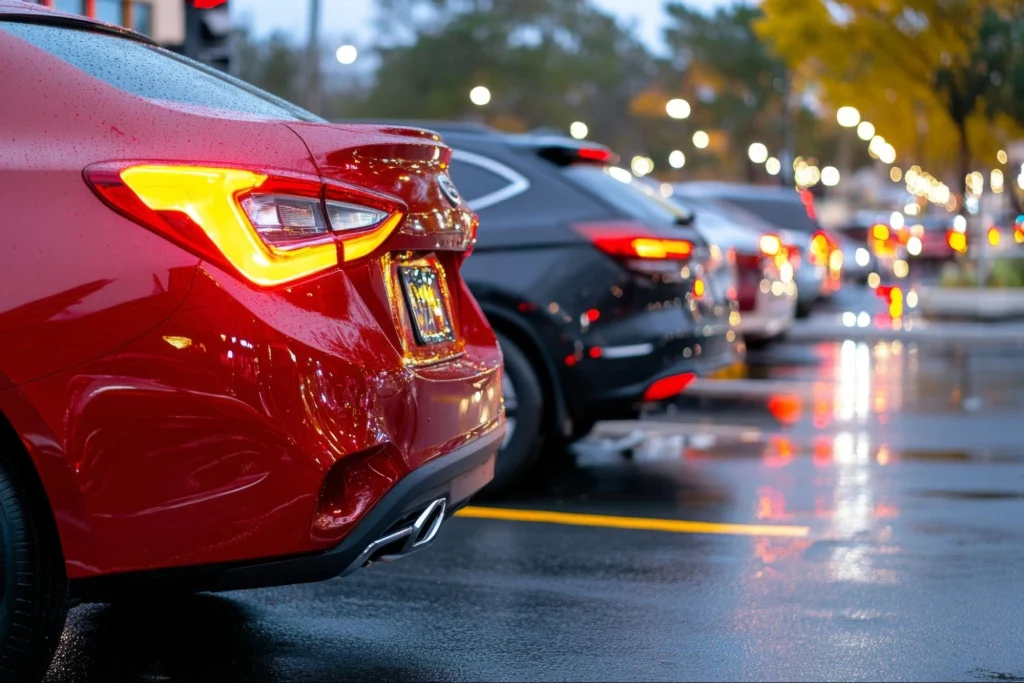
Un éclairage inadéquat est l'une des causes les plus fréquentes d'accidents dans les parkings. Les zones sombres, l'éblouissement et les ombres réduisent le temps de réaction et empêchent de voir les piétons ou les obstacles.
Les angles morts causés par les véhicules en stationnement, les colonnes, les aménagements paysagers ou la conception de l'espace augmentent encore le risque de collision, en particulier dans les zones étroites ou à forte circulation.
Excès de vitesse, distraction au volant et conflits avec les piétons :
Les parkings sont souvent considérés comme des espaces de conduite informels. Les excès de vitesse, l'utilisation du téléphone et les manœuvres agressives sont monnaie courante, même dans les zones partagées avec les piétons.
Le manque de clarté des cheminements piétons et une emprise mal définie augmentent la probabilité de conflits entre véhicules et piétons.
Conditions météorologiques, état de surface et lacunes en matière d'entretien :
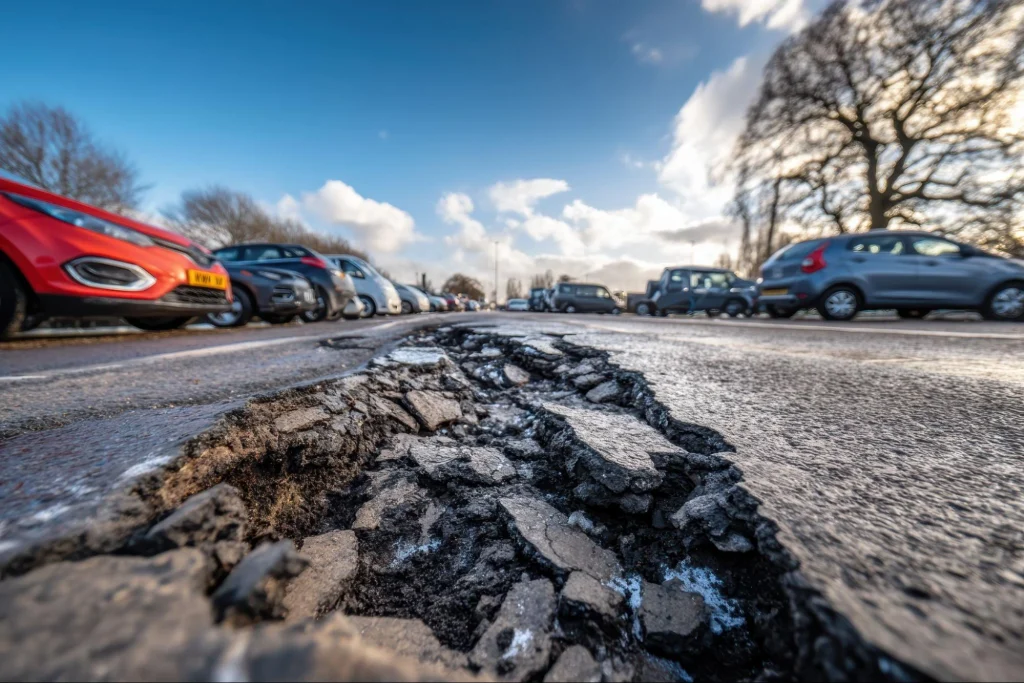
La pluie, la neige, le verglas, les nids-de-poule, les marquages défraîchis et les irrégularités de la chaussée sont autant de facteurs qui contribuent aux accidents. Un retard d'entretien ou un mauvais drainage peuvent transformer des conditions météorologiques prévisibles en risques de responsabilité.
Glissades et chutes dépendent souvent de la question de savoir si les risques de surface ont été identifiés et traités en temps utile.
Activités en dehors des heures de travail et non surveillées :
De nombreux incidents dans les parkings se produisent tard dans la nuit ou en dehors des heures d'ouverture, lorsqu'aucun membre du personnel n'est présent. En l'absence d'un aux stationnements, Un comportement dangereux peut s'aggraver sans intervention, et les incidents peuvent n'être découverts qu'après que des dommages ou des blessures se sont produits.
Les incidents qui conduisent le plus souvent à des sinistres :
Collisions de véhicules et dommages matériels :
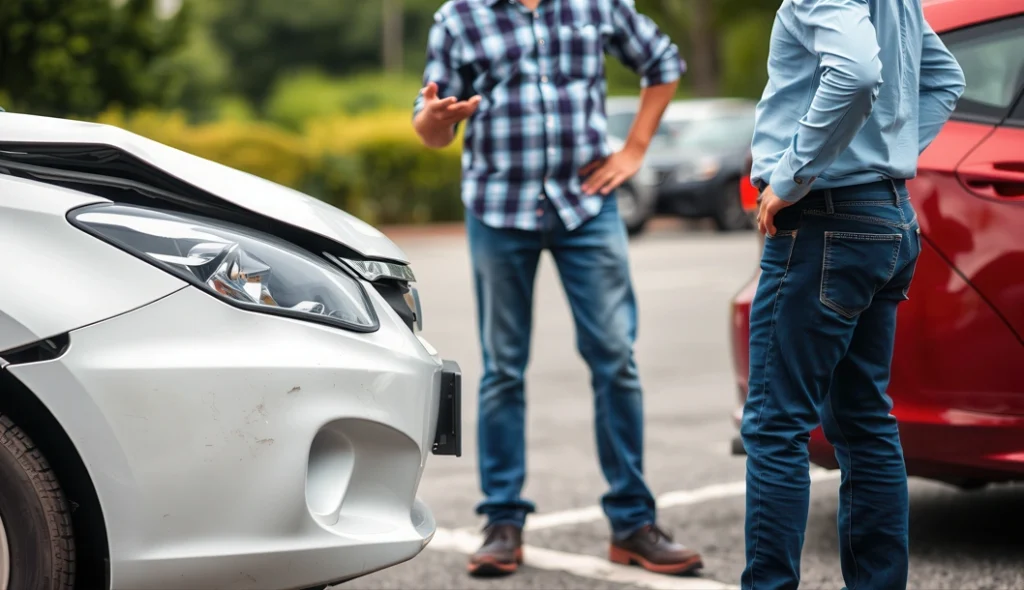
Les collisions à basse vitesse sont fréquentes et souvent contestées. Même les incidents mineurs peuvent entraîner des réparations coûteuses et une intervention de l'assurance, en particulier lorsque la responsabilité n'est pas clairement établie. D'après l'étude Transline industries:
- Un sur cinq (20%) des accidents de la route se produisent dans les parkings.
- Les parkings sont le théâtre de plus de 60,000 chaque année.
- Les accidents dans les parkings augmentent pendant la période des fêtes de fin d'année.
- Les chiffres réels peuvent être plus élevés car de nombreux accidents ne sont pas déclarés.
Blessures de piétons et chutes :
Les blessures subies par les piétons représentent l'un des risques de responsabilité les plus élevés. Ces incidents font l'objet d'un examen minutieux en ce qui concerne les conditions d'éclairage, l'entretien des surfaces et la sensibilisation aux dangers.
En l'absence de preuves, les entreprises peuvent avoir du mal à démontrer qu'elles ont fait preuve d'une diligence raisonnable.
Où les entreprises sont-elles le plus exposées à la responsabilité ?
Absence de preuves ou de documentation claire :
Lorsque des accidents se produisent, l'absence de vidéo, de photos ou d'enregistrements d'incidents fait que les entreprises s'appuient uniquement sur des déclarations. Cela affaiblit les défenses et complique les réclamations.
Réaction tardive ou absence de réaction en cas d'incident :
Les incidents qui s'aggravent en raison d'une intervention tardive, en particulier après les heures de bureau, peuvent accroître la gravité des blessures et les risques juridiques. Le temps de réponse est important, même lorsque le personnel n'est pas sur place.

Comment les entreprises peuvent-elles réduire les risques liés aux parkings ?
Conception, éclairage, signalisation et entretien :
Une circulation fluide, une signalisation visible, un éclairage adéquat et un entretien régulier permettent de remédier à la plupart des causes d'accident les plus courantes. Ces mesures sont rentables et défendables.
Les inspections documentées et les réparations effectuées en temps voulu sont tout aussi importantes que les améliorations elles-mêmes.
Un éclairage qui réduit les accidents (pas seulement “plus de lumière”) :
Un mauvais éclairage augmente le nombre de collisions, de heurts avec des piétons et de réclamations pour glissades et chutes, car les conducteurs et les piétons ne peuvent pas voir les dangers suffisamment tôt. L'objectif est d'obtenir un éclairage cohérent, sans éblouissement, qui élimine les zones d'ombre et améliore la qualité de l'image des caméras.
Utiliser des éclairages de zone à LED ou des boîtes à chaussures à LED sur des poteaux pour les rangées de parkings ouverts, et des luminaires à coupure totale pour réduire l'éblouissement et la diffusion de la lumière.. Dans les couloirs de circulation et les voies piétonnes, il est préférable d'avoir une couverture uniforme plutôt que des couleurs vives. “points chauds” entouré de ténèbres.
Où placer les lumières :
- Aux entrées/sorties et aux guichets pour améliorer la visibilité pendant les fusions.
- Le long des allées principales et des intersections où se produisent la plupart des conflits.
- Près des passages piétons, des trottoirs et des voies piétonnes (en particulier entre les entrées des magasins et les rangées de parking).
- Autour des cages d'escalier, des ascenseurs et dans les coins des garages.
- Dans les zones à risque connues : zones de chargement, zones de bennes à ordures et couloirs à l'arrière des bâtiments.
Une règle pratique : si vous pouvez vous promener dans le lot et identifier “poches d'ombre”.” vos chauffeurs et vos caméras seront également en difficulté. Ces poches sont des zones prioritaires. Éclairage AGC traite en détail de la conception des feux de stationnement.
Intégrer l'éclairage à la vidéosurveillance pour obtenir de meilleures preuves et réduire les angles morts:
L'éclairage et les caméras fonctionnent mieux lorsqu'ils sont planifiés ensemble. Un bon éclairage améliore l'identification des visages et des véhicules, réduit le flou de mouvement et renforce la documentation sur les incidents.
Pour soutenir la vidéosurveillance :
- Évitez de placer des lumières vives directement derrière l'appareil photo (le contre-jour crée des silhouettes).
- Utilisez un éclairage qui fournit une lumière uniforme dans le champ de vision de la caméra.
- Envisagez un éclairage activé par le mouvement dans les zones peu fréquentées afin de décourager les activités en dehors des heures de bureau, mais gardez les itinéraires principaux éclairés en permanence afin d'éviter les changements soudains d'exposition.
- Si vous utilisez la vidéo de nuit, choisissez des luminaires qui réduisent l'éblouissement sur les chaussées et les pare-brises mouillés.
Lorsque l'éclairage est homogène, vos caméras enregistrent des séquences plus claires et vos analyses d'incidents deviennent plus rapides et plus justifiables.
Un aménagement et une signalisation qui guident le comportement:
Une disposition confuse est une cause cachée d'accidents. Les conducteurs hésitent, coupent les voies, font une marche arrière inattendue et manquent les piétons. La solution consiste à rendre les déplacements “évident”.”
Focus sur :
- Voies à sens unique dans la mesure du possible (réduction des conflits frontaux et de la marche arrière).
- Des lignes d'arrêt claires, des marquages de céder le passage et des flèches directionnelles à chaque point de décision.
- Des passages pour piétons à haute visibilité placés là où les piétons marchent réellement, et non pas là où c'est joli sur le papier.
- Chemins piétonniers dédiés reliant les entrées aux rangées de parking.
- Rétroviseurs ou modifications de la conception lorsque les angles morts ne peuvent pas être supprimés.
La signalisation est plus efficace lorsqu'elle est répétée au point d'action. Un seul “Stop” à l'entrée du terrain ne fait rien à l'intersection interne.
Entretien des chaussées et des surfaces pour éviter les sinistres:
Les problèmes de surface causent des dommages aux véhicules et des blessures. Les réparations ne sont pas seulement opérationnelles, elles concernent aussi la défense de la responsabilité.
Établir des priorités :
- Réparation des nids-de-poule, des dalles inégales, des bordures cassées et des débris détachés.
- Repeindre les lignes et les passages piétons décolorés (la visibilité diminue considérablement la nuit ou sous la pluie).
- Améliorer le drainage pour éviter l'accumulation d'eau et le givrage.
- Un plan saisonnier pour le traitement de la neige et du verglas avec un calendrier documenté (sel, déneigement, traitement ponctuel).
Une bonne pratique consiste à tenir un simple journal d'inspection : date, constatations, mesures prises. C'est l'un des moyens les plus efficaces de faire preuve de diligence raisonnable après un incident.
Dissuasion comportementale et contrôle du trafic :
Les comportements dangereux sont l'une des causes d'accidents de parking les plus difficiles à maîtriser, car ils impliquent des personnes et non des infrastructures. Les excès de vitesse, les distractions au volant, les manœuvres de recul inappropriées et les raccourcis pour les piétons sont autant de facteurs qui augmentent les risques, même dans les parkings bien conçus. Une prévention efficace se concentre sur l'orientation des comportements, et non sur le respect des règles.
Ralentir les véhicules là où c'est vraiment important :
La vitesse est un facteur important dans les collisions sur les parkings et les blessures des piétons. L'objectif est de ralentir les véhicules avant les points de conflit, et non après.
Les mesures efficaces sont les suivantes
- Mise en place de ralentisseurs ou de passages piétons surélevés avant les zones piétonnes et les intersections.
- Rétrécissement des voies ou compression visuelle des voies qui réduit naturellement la vitesse.
- Des marquages sur la chaussée qui renforcent les attentes en matière de vitesse réduite à intervalles fréquents.
Les contrôles de vitesse sont plus efficaces lorsque les conducteurs les rencontrent à plusieurs reprises, et non pas une seule fois à l'entrée.
Réduire la distraction et l'agressivité au volant:
Les parkings invitent à la distraction. Les conducteurs cherchent des places, surveillent les piétons et consultent leur téléphone en même temps.
Pour réduire ce phénomène :
- Utilisez une signalisation claire et minimale qui évite la surcharge d'informations.
- Éliminer les points de décision inutiles en simplifiant le flux des voies.
- Ne placez les contrôles d'arrêt que là où ils sont nécessaires, afin que les conducteurs les prennent au sérieux.
La cohérence est importante. Lorsque les règles semblent prévisibles, le respect des règles s'améliore.
Gérer les déplacements des piétons en toute sécurité :
Le comportement des piétons est souvent déterminé par la commodité. Les gens empruntent le chemin le plus court, même s'il n'est pas sûr.
Le risque est réduit par :
- Alignement des passages pour piétons avec des chemins de promenade naturels, et non des itinéraires idéalisés.
- Fournir trottoirs continus entre les entrées et les rangées de parking.
- Utiliser la séparation visuelle (peinture, texture, élévation) pour signaler les zones prioritaires pour les piétons.
Lorsque les piétons se sentent guidés plutôt que limités, les raccourcis dangereux diminuent.
Contrôler les comportements après les heures de travail et les abus :
En dehors des heures de travail, les parkings passent souvent d'un environnement contrôlé à un espace informel. Excès de vitesse, cascades, le vagabondage, L'utilisation de l'Internet et l'utilisation non autorisée sont de plus en plus fréquentes.
Les mesures préventives comprennent
- Des indices physiques tels que des accès clôturés, des bloqueurs de voies ou des fermetures partielles.
- Des signaux d'application cohérents, tels qu'une surveillance visible ou une signalisation dissuasive.
- Des règles claires sont affichées aux points d'entrée pour établir des limites.
Ces mesures réduisent les abus et favorisent l'application de la loi ou l'intervention ultérieure.
Comment la technologie permet-elle de prévenir et de documenter les incidents ?
Caméras de surveillance à des fins de preuve et d'examen :
Les caméras de surveillance offrent une visibilité et créent un enregistrement objectif des événements.. Les preuves vidéo sont essentielles pour comprendre ce qui s'est passé et pour étayer les analyses des assurances ou des tribunaux.
Surveillance vidéo à distance pour une intervention en temps réel :
L'enregistrement des incidents après coup ne permet pas de prévenir les dommages. La surveillance vidéo à distance ajoute une couche proactive en permettant à des opérateurs formés de vérifier l'activité et d'intervenir lorsqu'un comportement dangereux est détecté, en particulier en dehors des heures de travail.
Cette combinaison de visibilité et de réponse permet de réduire la gravité des incidents et d'améliorer la documentation.
Gérer les risques lorsque personne n'est sur place :
Les parkings restent actifs longtemps après la fermeture des entreprises. Sans personnel sur place, les risques augmentent et les possibilités d'intervention se réduisent.
La surveillance à distance, la dissuasion claire et la supervision documentée aident les entreprises à garder le contrôle même lorsque les sites sont sans surveillance, ce qui réduit à la fois les incidents et la responsabilité en aval.
Principaux enseignements pour les propriétaires d'entreprises et les gestionnaires de biens immobiliers :
Les accidents dans les parkings constituent un risque prévisible et gérable. La plupart des incidents sont dus à des problèmes de visibilité, de comportement, à des lacunes en matière d'entretien et à un manque de surveillance, en particulier après les heures de bureau.
Les entreprises qui se concentrent sur la prévention, la documentation et la réaction rapide sont mieux placées pour protéger les personnes, les biens et la responsabilité. En s'attaquant aux causes profondes et en utilisant la technologie pour améliorer la visibilité et l'intervention, les parkings deviennent des lieux plus sûrs et beaucoup moins coûteux à gérer.
Conclusion
Les accidents dans les parkings ne sont pas des événements aléatoires. Ils découlent de risques prévisibles liés à la visibilité, au comportement, à l'entretien et à la surveillance. Pour les entreprises, le risque réel survient souvent après l'incident, lorsque les preuves manquent, que la réponse est tardive ou que la diligence raisonnable est difficile à démontrer.
La réduction de ce risque nécessite une approche proactive. Une conception claire, un éclairage adéquat, un entretien de routine et la sensibilisation des employés permettent d'éliminer de nombreux risques à la source. Lorsqu'elles sont associées à la surveillance, au contrôle en temps réel et à une documentation claire, les entreprises bénéficient à la fois d'une prévention et d'une preuve.
Si vous cherchez à mieux contrôler les risques dans vos parkings, en particulier en dehors des heures de bureau ou sur plusieurs sites, n'hésitez pas à nous contacter. contacter notre équipe pour obtenir de l'aide.


