
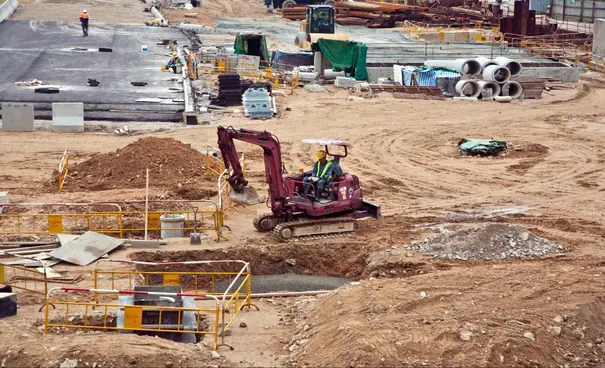


D'abord, c'est une perceuse. Puis, c'est un générateur. Et ensuite, ce sont vos bénéfices et votre réputation qui vous sont volés, petit à petit.
Les vols sur les chantiers de construction coûtent chaque année environ $1 milliard au secteur américain de la construction. À elle seule, la valeur moyenne des sinistres liés au vol de matériel dépasse $30 000, sans compter les retards dans les projets, les hausses des primes d'assurance ni le coût du remplacement des matériaux en cours de chantier.
La prévention des vols sur les chantiers consiste avant tout à éliminer les moindres failles et à limiter le temps dont dispose un individu pour causer des dégâts. Un plan de sécurité solide sur le chantier comble cette lacune. Les caméras de vidéosurveillance réduisent cette fenêtre d’opportunité en transformant les premiers signes de comportement suspect en alertes en temps réel et en permettant des interventions plus rapides grâce à la surveillance vidéo en direct des chantiers.
Ce guide présente 10 méthodes de prévention des vols sur les chantiers qui ont fait leurs preuves sur le terrain, allant de l'installation de clôtures, de l'éclairage et de locaux de stockage verrouillés aux caméras de surveillance, au contrôle d'accès, au suivi des équipements et à la vidéosurveillance à distance.
À qui s'adresse ce guide ? :
Ce guide s'adresse aux responsables de chantier, aux chefs de projet, aux chefs de chantier et aux entrepreneurs qui ont besoin de mesures pratiques de sécurité sur les chantiers afin de réduire les vols sans ralentir les travaux.
Qu'est-ce que la prévention des vols sur les chantiers ?
La prévention des vols sur les chantiers de construction est une approche de sécurité planifiée qui repose sur systèmes, technologies et processus afin de limiter les accès non autorisés et de protéger les actifs de grande valeur.
Cela comprend la sécurité physique, le contrôle d'accès, l'éclairage, les locaux de stockage verrouillés, les caméras de surveillance, le suivi des équipements et la vidéosurveillance à distance.
| L'objectif est simple : rendre l'accès au site plus difficile, compliquer les vols et faciliter la surveillance en dehors des heures d'ouverture. |
Pourquoi les chantiers de construction sont-ils exposés aux vols ?
Les chantiers de construction sont exposés aux vols, car leur configuration évolue plus rapidement que ne le font généralement les plans de sécurité.
Les risques de sécurité proviennent de trois sources :
- Des points d'accès ouverts qui ne font l'objet d'aucun contrôle ni d'aucune surveillance 24 /7.
- Des outils, des matériaux, du carburant et du matériel de grande valeur ont été laissés sans surveillance sur le chantier.
- Visibilité réduite en dehors des heures de travail, notamment à proximité des portails, des remorques, des aires de stockage et des angles morts.
Le risque n'est pas réparti de manière uniforme sur l'ensemble du territoire. Le Texas, la Californie et la Floride figurent systématiquement parmi les États où le nombre de vols de matériel de chantier est le plus élevé, selon les données du NICB. Si vos chantiers sont situés dans ces États, l'exposition au risque est plus élevée et l'approche par paliers décrite ci-dessous revêt une importance accrue.
En leur offrant un accès facile, des biens à la vue de tous et suffisamment de temps pour agir, vous créez exactement les conditions que recherchent les voleurs.
Au lieu de vous en tenir à une configuration fixe, utilisez des caméras surveillées pour vous adapter aux changements sur le site.
Une fois que vous avez identifié les points vulnérables du chantier, l'étape suivante consiste à combler ces failles à l'aide de mesures pratiques de prévention des vols, adaptées à l'évolution du chantier.
Quels sont les objets les plus souvent volés sur les chantiers de construction ?
Les vols sur les chantiers ne sont pas le fruit du hasard. Les voleurs ciblent des biens spécifiques en fonction de trois critères : leur valeur, leur facilité à être emportés et la difficulté à les retrouver. D'après les données du NER sur les vols commis lors de la Fête du Travail en 2025, les chantiers figuraient parmi les lieux les plus ciblés du pays, les mini-chargeuses, les tondeuses et les véhicules utilitaires arrivant en tête des vols d'équipements signalés.
Le cuivre reste l'un des matériaux présentant le plus de risques, car il est précieux, facile à transporter et pratiquement introuvable une fois démonté et vendu à la ferraille.

| “Si un bien peut être déplacé, chargé, détourné, dépouillé ou revendu, il doit bénéficier d’une protection renforcée.” |
On ne protège pas une chargeuse compacte de la même manière qu'un fil de cuivre. On ne sécurise pas le carburant de la même manière que des tablettes ou des appareils GPS. Chaque bien présente des points faibles différents et nécessite donc un niveau de protection adapté.
Comment protéger les objets les plus souvent volés sur les chantiers de construction ?
Il est facile de prévenir les vols sur les chantiers quand on sait ce qu'il faut protéger. On peut alors trouver de meilleurs moyens de le protéger.
Les mesures de sécurité applicables aux engins de chantier peuvent varier selon les équipements et les matériaux concernés. L'objectif est d'adapter les mesures de sécurité à chaque bien. Par exemple :
Les articles portables nécessitent un stockage et un suivi plus rigoureux :
Les petits outils sont les plus faciles à voler, car on peut les prendre, les cacher dans une veste ou les emporter avec d'autres équipements. Les perceuses, les scies, les batteries, les niveaux laser, les cloueuses et les petits générateurs peuvent disparaître pendant la journée ou après la fermeture.

La solution la plus simple consiste à les mettre sous clé à la fin de chaque service. Utilisez un local à outils verrouillé, une armoire à outils ou un conteneur de stockage. Pour renforcer encore la sécurité, vous pouvez mettre en place des registres de prêt, des codes QR, des étiquettes RFID, des gravures ou des registres de numéros de série, afin que l'équipe sur site sache qui a pris chaque outil, quand il a quitté le local de stockage et s'il a bien été restitué.
Les matériaux de grande valeur nécessitent un accès contrôlé :
Si votre principal problème concerne le vol de matériaux de construction, commencez par examiner les conditions sur le chantier : où les matériaux sont-ils stockés, à quelle distance se trouvent-ils du périmètre, qui a accès à cette zone, comment les livraisons sont-elles réceptionnées, combien de temps les matériaux restent-ils sur place avant leur mise en œuvre, et la zone fait-elle l'objet d'une surveillance en dehors des heures de travail ?.
Pour les câbles en cuivre, le bois de construction, les appareils électroménagers, les équipements fixes, l’acier et les composants de chauffage, de ventilation et de climatisation, la sécurité des accès doit être une priorité. Utilisez des portails verrouillés pour les parcs de stockage, des cages de stockage cadenassées pour les matériaux de petite taille, des conteneurs à clé pour les fournitures de grande valeur, ainsi que des registres d’entrée pour les ouvriers, les sous-traitants et les livreurs. Sur les chantiers de grande envergure, utilisez des badges d’accès, des claviers numériques, des identifiants mobiles ou des portails surveillés pour contrôler qui entre dans les zones réglementées et à quel moment.
Si les matériaux sont entreposés dans une zone de stockage à ciel ouvert, installez des clôtures temporaires et mettez en place un point d'accès contrôlé. Lorsque trop de personnes y ont accès, réservez les clés ou les codes d'accès aux responsables habilités et assurez le suivi des accès par équipe de travail. Pour les livraisons arrivant avant que les équipes ne soient prêtes à procéder à l'installation, programmez-les à une date plus proche de l'installation ou transférez les matériaux dans un conteneur verrouillé.
Il faut ensuite installer un système d'éclairage et de vidéosurveillance autour de la zone de stockage. Les caméras surveillées en direct permettent aux opérateurs de disposer d'une visibilité en dehors des heures d'ouverture, ce qui leur permet de vérifier toute activité suspecte à proximité des matériaux avant que quelqu'un ne charge du cuivre, du bois ou des équipements dans un camion et ne quitte le site.
Le matériel doit être visible, immobilisé et accompagné d'un justificatif de propriété :
Les pelles hydrauliques, chargeuses, chargeuses compactes, chariots élévateurs, compresseurs et remorques doivent être stationnés dans des zones bien éclairées et surveillées par des caméras. Utilisez le suivi GPS, les coupe-carburant, les dispositifs de déconnexion de batterie, les antivols de roues, le contrôle des clés et des marquages visibles de l'entreprise. Conservez à portée de main les numéros de série, les numéros d'identification des véhicules (VIN), les photos et les justificatifs d'achat en vue des procès-verbaux de police ou des déclarations de sinistre.
10 conseils pour prévenir les vols sur les chantiers :
1. Élaborer un plan de sécurité pour le chantier :
Si vous souhaitez la sécurité des chantiers, vous devez d'abord disposer d'un plan de sécurité écrit. Nous le savons par expérience : vous avez besoin d'un plan de sécurité avant même que votre matériel et votre équipement n'arrivent.
Ce plan de sécurité du chantier présentera les risques, les zones à couvrir, ainsi qu'une liste de tous les entrepreneurs, sous-traitants et autres personnes autorisées à accéder au chantier. Sur la base de ces informations, vous pourrez définir les règles d'accès et autres procédures opérationnelles standard (SOP) applicables au chantier.
Un bon plan de sécurité pour un chantier doit inclure :
- Un plan du site indiquant les points d'accès, les portails, les remorques, les zones de stockage et les angles morts.
- Liste des outils, équipements et matériaux de grande valeur, ainsi que des zones de stockage de carburant.
- Emplacements des caméras.
- Emplacements des luminaires.
- Procédures en dehors des heures d'ouverture.
- Règles relatives à la livraison et à la réception.
- Règles d'accès des sous-traitants.
- Contacts en cas d'urgence.
- Consignes d'intervention destinées à la police et aux agents de sécurité.
- Procédures de clôture à la fin de chaque service.
Toutes les 3 à 4 semaines, le plan de sécurité doit être mis à jour. Le site évoluant, une caméra de vidéosurveillance qui couvrait l'entrée principale au début du mois pourrait ne plus couvrir la nouvelle aire de stockage aujourd'hui.
2. Sécuriser le périmètre à l'aide de clôtures, de portails, de serrures et de panneaux de signalisation :
La sécurité du périmètre d'un chantier est l'aspect le plus souvent négligé. Il faut toujours commencer par sécuriser le périmètre. Les sacs de sable et les parpaings ne constituent pas un véritable périmètre de sécurité. Une clôture adaptée permet de canaliser les ouvriers, les sous-traitants, les livraisons et les visiteurs vers des points d'accès contrôlés.
- Commencez par installer une clôture solide autour du chantier.
- Sur de nombreux chantiers, les clôtures en treillis métallique équipées de portails verrouillés constituent la norme.
- Pour les sites à haut risque, nous recommandons des solutions plus robustes, telles que des clôtures anti-escalade, des mailles plus serrées, du fil barbelé, des barrières en béton ou des zones d'accès surveillées.
La hauteur a également son importance. Une clôture basse peut certes marquer la limite du terrain, mais elle ne sera guère efficace contre une personne déterminée à s’introduire à l’intérieur. Des clôtures plus hautes, des portails verrouillés et du fil barbelé peuvent constituer des moyens de dissuasion plus efficaces, en particulier autour des zones de stockage de grande valeur.
Un périmètre bien sécurisé n'empêchera pas toutes les tentatives de vol, mais il rendra l'accès plus difficile. C'est déjà une première victoire. Une fois le périmètre sécurisé, les caméras, l'éclairage, le contrôle d'accès et la vidéosurveillance à distance peuvent fonctionner correctement.
3. Améliorer l'éclairage autour des points d'accès, des zones de stockage et des angles morts :
Les voleurs privilégient les endroits sombres, notamment autour des remorques, des piles de matériaux, des engins et des constructions inachevées.
Un bon éclairage élimine les cachettes et facilite l'analyse des images de vidéosurveillance. Il permet également de mieux distinguer les panneaux d'avertissement, les portails et les zones d'accès restreint.
Ces zones bien éclairées dissuadent tout accès non autorisé, facilitent l'identification rapide des intrus et renforcent la sécurité globale du chantier en mettant en évidence les cachettes potentielles. De plus, l'éclairage des panneaux d'avertissement et de signalisation garantit leur bonne visibilité, ce qui réduit les risques de vol et d'accidents sur le chantier.
Privilégiez l'éclairage autour des :
- Entrées et sorties.
- Aires de stationnement.
- Réservoirs de carburant.
- Remorques et conteneurs de stockage.
- Aires de stockage des matériaux.
- Matériel lourd.
- Bureaux temporaires.
- Angles morts derrière les structures.
- Emplacements des caméras.
Pour les sites ne disposant pas d'une alimentation électrique stable, utilisez un éclairage solaire ou des tours d'éclairage temporaires. Veillez à ce que les lumières ne soient pas dirigées directement vers les caméras. Les reflets peuvent altérer la qualité des images et rendre l'identification plus difficile.
4. Contrôler l'accès au chantier :
Le contrôle d'accès à un chantier commence par le fait de savoir qui se trouve sur place, à quelle heure ces personnes sont arrivées et pourquoi elles sont là.
Il convient au minimum de mettre en place une procédure d'enregistrement à l'entrée et à la sortie pour les employés, les sous-traitants, les fournisseurs et les visiteurs. Les chantiers de grande envergure ou présentant un risque élevé peuvent nécessiter l'utilisation de badges, d'identifiants mobiles, de codes d'accès temporaires, d'interphones aux portails ou d'un contrôle d'accès surveillé aux portails.
Un contrôle d'accès rigoureux permet de réduire les vols de trois façons :
- Cela limite l'accès au site.
- Il enregistre l'activité du site.
- Cela permet de repérer plus facilement les accès non autorisés.
Définissez des règles claires concernant les livraisons. Précisez qui est habilité à réceptionner les marchandises, où les livraisons doivent être déposées et comment les articles de grande valeur doivent être entreposés.
Ne laissez pas les portails ouverts pendant les heures de travail sans surveillance. Sur un chantier très animé, une intrusion peut passer inaperçue.
5. Installer des caméras de surveillance sur le chantier :

Les caméras de surveillance des chantiers de construction permettent de voir clairement les portails, les zones de stockage, les remorques, les équipements et les angles morts.
Pour prévenir les vols, l'emplacement des caméras est plus important que leur nombre. Commencez par les zones où une personne pourrait s'introduire, se cacher, charger du matériel ou emporter du matériel.
Voici quelques emplacements utiles pour installer une caméra :
- Entrée principale.
- Points d'accès secondaires.
- Aires de stationnement pour remorques et conteneurs.
- Zones de stockage des matériaux.
- Stockage de carburant.
- Aire de stationnement pour le matériel.
- Lacunes au niveau du périmètre.
- Bureaux temporaires.
- Zones de chargement et de déchargement.
Pour les chantiers de construction, optez pour des caméras dotées des caractéristiques suivantes :
- Vision nocturne.
- Logements résistants aux intempéries.
- Résistance aux chocs.
- Connectivité LTE ou mobile.
- Un soutien à l'énergie solaire là où c'est nécessaire.
- Détection de mouvement ou d'intrusion.
- Accès à distance.
- Une qualité d'image nette, quelle que soit la distance.
Vous faites confiance aux électriciens pour s'occuper du câblage, aux plombiers pour installer les canalisations d'eau, aux conducteurs d'engins pour manœuvrer les machines lourdes et aux chefs de chantier pour veiller au bon déroulement des travaux.
Il en va de même pour la sécurité. Confiez la surveillance aux experts. Une équipe de vidéosurveillance à distance peut analyser la configuration du site, identifier les points faibles, adapter la couverture des caméras en fonction de l'évolution des besoins et intervenir en cas d'activité en dehors des heures d'ouverture.
6. Intégrez vos caméras à un système de surveillance vidéo à distance :

La surveillance vidéo à distance permet de visualiser en direct les images des caméras installées sur les chantiers.
Lorsque la détection par IA ou l'analyse vidéo identifie une activité telle que l'intrusion, la flânerie, ou en cas de mouvement dans une zone restreinte, une alerte est envoyée à un centre de surveillance à distance. Un opérateur qualifié examine les images de la caméra, vérifie la nature de la menace et suit les consignes d'intervention du site.
Comment réagit l'opérateur ?

Cette réponse peut inclure :
- Diffusion en direct de la voix via les haut-parleurs.
- Contacter le responsable du site.
- Transmission de l'affaire au personnel de sécurité.
- Contacter les services d'urgence lorsque cela s'avère nécessaire.
- Documenter l'événement à l'aide de clips vidéo et d'horodatages.
Cela s'avère particulièrement utile sur les chantiers de construction, car les vols ont souvent lieu en dehors des heures de travail, lorsqu'il n'y a plus personne sur place.
Les caméras passives permettent de voir ce qui s'est passé. La vidéosurveillance à distance permet de réagir tant qu'une personne se trouve encore sur place.
Par ailleurs, la surveillance en continu renforce la sécurité des visiteurs et des prestataires autorisés en dissuadant les intrus et en créant un environnement sécurisé sur le site.
7. Verrouiller les outils, le matériel, les remorques et les conteneurs de stockage :
Les outils et le matériel doivent être rangés sous clé à la fin de chaque service.
Utilisez des remorques de chantier, des conteneurs de stockage en acier, des casiers à outils, des coffres verrouillables et des cages sécurisées pour les objets de grande valeur. Rangez les petits outils dans des conteneurs verrouillés plutôt que de les laisser dans des véhicules, des pièces non fermées à clé ou des remorques non sécurisées.
Pour mieux prévenir les vols d'outils sur les chantiers :
- Rangez les outils dans un conteneur ou une remorque tous les soirs.
- Utilisez des cadenas très résistants.
- Sécurisez vos remorques à l'aide de verrous de remorque et de verrous d'attelage.
- Utilisez des câbles antivol pour les objets qui peuvent être attachés les uns aux autres.
- Conservez le cuivre, les câbles et les petits matériaux de grande valeur à l'abri des regards.
- Veillez à ce que les clés soient gérées et répertoriées.
- Évitez de laisser des outils dans votre pick-up pendant la nuit.
8. Suivre les outils, les livraisons, les stocks et le matériel :
La gestion des stocks permet de détecter plus facilement les vols et rend ceux-ci plus difficiles à dissimuler.
Tenez un registre des outils, du matériel, du carburant et des matériaux entrant et sortant du chantier. Utilisez, dans la mesure du possible, les numéros de série, les photos, les justificatifs d’achat, les traceurs GPS, les codes QR, les étiquettes RFID ou un logiciel de gestion des actifs. Mettez en place des procédures d’enregistrement à l’entrée et à la sortie pour les outils. Si une perceuse, une scie ou un générateur venait à manquer, le responsable du chantier devrait savoir quand il a été utilisé pour la dernière fois et qui en disposait.
Les vérifications des stocks doivent être effectuées à des moments clés :
- À la réception des marchandises.
- Avant le week-end.
- Après les week-ends.
- Avant les vacances.
- À la suite de changements importants au niveau des sous-traitants.
- À la suite d'un vol ou d'une intrusion.
- Lors des changements de phase du projet.
Inscrire les informations sur le matériel :
Le marquage par gravure des équipements, en particulier des engins de grande valeur tels que les pelles mécaniques, les pelleteuses, les grues, les bulldozers, les chargeuses et les bétonnières, constitue un moyen de dissuasion visible contre le vol.
Cette méthode est également utile pour les petits outils portatifs tels que les marteaux-piqueurs, les perceuses électriques, les scies, ainsi que pour le matériel de soudure et les générateurs. Afin de renforcer la sécurité et de dissuader les vols sur un chantier, vous pouvez graver les informations suivantes sur le matériel :

Numéros d'identification :
Apposez un numéro d'identification unique sur chaque équipement. Il peut s'agir d'un numéro de série, d'un numéro d'identification du véhicule (VIN) ou de tout autre identifiant distinct.
Nom et logo de l'entreprise :
Faites graver ou apposer le nom et le logo de votre entreprise bien en évidence sur le matériel. Cela permet de l'identifier facilement et d'en indiquer le propriétaire.
Coordonnées :
Indiquez clairement un numéro de téléphone ou une adresse e-mail permettant de signaler toute information concernant le matériel. Cela incite les personnes qui trouvent du matériel égaré à contacter le propriétaire. Le vol de matériel nécessite une procédure spécifique. Le bois, l’acier, le cuivre, les appareils électroménagers, les équipements fixes et les composants mécaniques doivent être livrés le plus près possible du lieu d’installation.
9. Immobiliser et marquer les équipements de grande valeur :
Sécuriser un chantier, c'est mettre en œuvre toutes les technologies, procédures et mesures nécessaires pour protéger votre chantier contre tout accès non autorisé. L'étape la plus cruciale consiste donc à sécuriser les engins de chantier. Le vol représente un coût élevé, car non seulement les machines elles-mêmes sont onéreuses, mais leur immobilisation peut également entraîner l'arrêt des travaux.
Vous pouvez protéger les pelles hydrauliques, les chargeuses, les chargeuses compactes, les chariots élévateurs, les groupes électrogènes, les compresseurs et les engins de béton à l'aide de méthodes d'immobilisation et d'identification.
Parmi les mesures de sécurité utiles concernant les équipements, on peut citer :
- Le suivi par GPS : Il indiquera l'emplacement exact de cet engin lourd s'il venait à être déplacé.
- La télématique : Cela vous permettra de suivre l'activité, la localisation, les heures d'utilisation et les alertes relatives à vos équipements à partir d'un seul et même système.
- Les coupe-circuits de carburant empêchera la machine de fonctionner, même si quelqu'un parvient à y pénétrer.
- Les coupe-circuits de batterie coupez l'alimentation électrique de l'équipement afin qu'il ne puisse pas être mis en marche facilement.
- Les antivols de roues sont les plus efficaces pour empêcher que les remorques et autres véhicules ne soient emmenés par la fourrière.
- Les serrures hydrauliques bloquent le système hydraulique, ce qui empêche le bon fonctionnement des engins de chantier.
- Les bouchons de réservoir verrouillés peuvent réduire le vol de carburant dans les réservoirs, les camions et les engins.
- Les commutateurs d'arrêt d'urgence cachés ajoutent une couche de protection invisible, difficile à repérer et à contourner.
| Chris Cullen, directeur du développement commercial chez Sirix, déclare : “ Apposez sur le matériel le nom de votre entreprise, votre logo, un numéro d'identification ou vos coordonnées. Utilisez pour cela la gravure, des étiquettes métalliques, des autocollants ou d'autres méthodes de marquage durables. ” |
Notez les numéros de série, les numéros d'identification des véhicules (VIN), les photos et les détails permettant d'identifier les biens. Conservez ces informations dans un endroit auquel l'équipe du site pourra accéder rapidement en cas de vol.
10. Former les employés à signaler toute activité suspecte et à respecter les procédures de clôture :
Vos employés voient le chantier tous les jours. Ce sont souvent eux les premiers à remarquer qu'il y a un problème.
Former le personnel de bord à signaler :
- La présence de personnes inconnues sur le site.
- Les véhicules stationnés près des portails ou des zones de stockage de matériel.
- La clôture endommagée.
- Les serrures cassées.
- Les outils manquants.
- Les conteneurs ouverts.
- Des lumières ou des caméras qui ont cessé de fonctionner.
- Des personnes qui posent des questions inhabituelles concernant les livraisons ou le matériel.
- La récidive de la flânerie à proximité du site.
Mettez en place un processus simple de clôture de fin de journée.
Avant de partir, l'équipe doit vérifier les points suivants :
- Les outils sont rangés sous clé.
- Les portails sont fermés et verrouillés.
- Les remorques et les conteneurs sont arrimés.
- Les clés des équipements ont été retirées.
- Les zones de ravitaillement sont fermées.
- Les lumières fonctionnent.
- Les caméras sont en ligne.
- Les matériaux de grande valeur sont mis en sécurité.
- Les journaux d'accès sont complets.
Veillez à ce que le chantier reste propre. Un chantier encombré offre des cachettes aux personnes indésirables et rend plus difficile la détection des objets manquants.
Vol interne sur les chantiers de construction :
Tous les vols ne proviennent pas de l'extérieur du périmètre. Les vols internes – outils, matériaux, carburant et matériel dérobés par des ouvriers, des sous-traitants ou des livreurs – sont fréquents sur les chantiers en activité et plus difficiles à détecter, car ils se produisent pendant les heures de travail.
Les personnes concernées connaissent la configuration du site, les horaires de travail et l'emplacement des angles morts.
Pour réduire le vol interne :
- Tenez un registre de prêt pour tous les outils. Lorsqu’une perceuse quitte le local à outils, son emprunt doit être consigné au nom de la personne qui la prend. Si elle n’est pas restituée, le registre permet de savoir qui en était le dernier utilisateur.
- Limitez l'accès aux zones de stockage de grande valeur en fonction des rôles. Tous les sous-traitants n'ont pas nécessairement besoin d'accéder à l'armoire de câblage en cuivre ou au conteneur d'appareils.
- Vérifiez les registres de livraison. Assurez-vous que les marchandises reçues correspondent bien à celles pour lesquelles un accusé de réception a été signé. Les écarts constatés à la réception constituent l'une des causes les plus courantes de pertes internes.
- Installez des caméras dans les zones de stockage, les aires de dépose et les zones de chargement. Les travailleurs qui savent que les caméras sont en service et que les images sont visionnées sont nettement moins enclins à prendre des risques.
- Effectuez des contrôles d'inventaire aléatoires avant les week-ends et après chaque rotation des sous-traitants. Il est ainsi plus facile de repérer rapidement les articles manquants.
- Consignez et enquêtez sur chaque élément manquant. Considérer la disparition d'un générateur comme un simple problème administratif plutôt que comme un incident facilite la dissimulation du prochain.
La vidéosurveillance à distance renforce la responsabilité aux moments où la surveillance est la moins stricte : tôt le matin, en fin d'après-midi et lors des relais en dehors des heures de travail. Les opérateurs peuvent vérifier qui accède aux zones de stockage et à quel moment, même en l'absence d'un responsable de site.
Que faire en cas de vol sur un chantier ?
Même avec un plan de sécurité solide, un vol peut toujours se produire. Ce que vous faites au cours des premières 24 heures déterminera la part de vos biens que vous pourrez récupérer.
Étape 1 : Ne touchez à rien sur les lieux.
Si vous constatez un vol le matin, préservez les lieux. Ne déplacez pas le matériel, ne rouvrez pas les conteneurs et ne nettoyez pas avant d'avoir consigné ce qui s'est passé. Les empreintes de pas, les traces de pneus, les clôtures sectionnées et les serrures forcées constituent autant d'indices.
Étape 2 : Récupérez immédiatement les images de vidéosurveillance.
Exportez les séquences vidéo correspondant à la période où le vol a eu lieu avant qu'elles ne soient écrasées. Si votre système prévoit une courte durée de conservation des données, il est urgent de le faire. Si votre site utilise un système de vidéosurveillance à distance en direct, le journal des interventions de l'opérateur, les horodatages des alarmes et les extraits enregistrés sont peut-être déjà consignés.
Étape 3 : Déposez une plainte auprès de la police en fournissant tous les détails.
Contactez les forces de l'ordre locales en leur fournissant les numéros de série, les numéros d'identification du véhicule (VIN), des photos, les justificatifs d'achat et toute vidéo dont vous disposez. Les signalements vagues ne sont pas traités en priorité. Un signalement comprenant les numéros de série du matériel, des descriptions physiques et des preuves vidéo horodatées donne aux enquêteurs des éléments concrets sur lesquels s'appuyer.
Étape 4 : Déclarer l'incident au NICB.
Le National Insurance Crime Bureau (NICB) gère une base de données répertoriant les engins de chantier volés. Le fait de déposer une déclaration sur nicb.org augmente les chances de récupération si l'engin est retrouvé chez un concessionnaire, lors d'une vente aux enchères ou sur un chantier dans un autre État.
Étape 5 : Prévenez votre assureur dans les 24 heures.
La plupart des polices d'assurance des biens commerciaux et des risques maritimes intérieurs exigent une déclaration rapide. Tout retard dans la déclaration peut entraîner une réduction ou l'annulation de votre indemnisation. Veuillez fournir le numéro du procès-verbal de police, la documentation relative au matériel et toute preuve vidéo. Si vous disposez d'un système de surveillance en direct, les rapports d'incident établis par l'opérateur et comportant l'heure exacte constituent des preuves authentifiées.
Étape 6 : Évaluer les failles de sécurité.
Après chaque vol, déterminez comment il s'est produit. Vérifiez quel angle de caméra n'a pas permis de le filmer, quel point d'accès n'était pas surveillé et quelle équipe n'assurait pas la surveillance en dehors des heures d'ouverture. Comblez ensuite ces lacunes avant le début de la phase suivante du projet.
Prévention des vols en fonction des conditions sur site grâce à la vidéosurveillance à distance :
- Coupures de courant.
- Modifications du périmètre.
- Changements prévus pour le week-end.
Coupures de courant :
Qu'il s'agisse d'un arrêt programmé ou d'une coupure de courant imprévue, 4 à 5 heures d'interruption sur les chantiers entraînent l'arrêt des opérations de sécurité.
Cela se produit souvent avant la mise en place d'une alimentation électrique permanente, lorsque le chantier est alimenté par des générateurs ou des panneaux solaires temporaires, ou lorsque l'alimentation est coupée en dehors des heures de travail. Un chantier où pas d'alimentation électrique fiable il faudra encore :
- Alimentation électrique pour les caméras, les éclairages et les équipements réseau.
- Une connexion Internet ou Wi-Fi pour envoyer des vidéos et des alertes.
- Des points de fixation fixes qui restent utiles même lorsque le site évolue.
Un prestataire de premier plan spécialisé dans les centres de vidéosurveillance à distance propose toutes ces fonctionnalités dans son boîtier de sécurité autonome spécialement conçu pour les chantiers de construction.
Boîtier de sécurité autonome comme solution antivol :

Un boîte de sécurité autonome est conçue pour les chantiers en extérieur ; il offre aux équipes de chantier une solution de sécurité autonome qui ne dépend pas des mêmes conditions qu'un système de caméras fixes.
- Caméras de vidéosurveillance solaires ou alimentées par batterie, qui fonctionnent sans être raccordées au réseau électrique du site.
- Connectivité LTE permettant d'envoyer des alertes et des vidéos sans passer par le Wi-Fi.
La surveillance à distance permet de transformer l'alerte en action concrète, telle que la coupure du son, la prise de contact avec le site, l'envoi d'un agent de sécurité ou la remontée d'urgence. Elle prend en charge :
- Des caméras de surveillance qui ne dépendent pas uniquement de l'alimentation électrique du site.
- la connectivité LTE pour envoyer des alarmes vidéo et des alertes sans Wi-Fi.
- la détection par IA permettant d'identifier les intrusions, les personnes qui s'attardent, les véhicules, les personnes ou tout mouvement dans les zones d'accès restreint.
- la diffusion des messages vocaux en direct via les haut-parleurs pour dissuader les intrus en temps réel.
- la surveillance à distance permettant aux opérateurs de vérifier la nature de la menace et de suivre le plan d'intervention du site.
Modification des périmètres :
Au début des travaux, vous sécurisez le périmètre provisoire à l'aide de caméras de vidéosurveillance et de clôtures temporaires. Mais au fur et à mesure que le chantier évolue, le périmètre est modifié pour permettre le stockage des matériaux et l'installation des engins de chantier. Voici quelques changements courants sur les chantiers de construction qui peuvent modifier la couverture des caméras, obstruer les angles de surveillance et créer d'importantes failles de sécurité :
- Au début du projet, le portail principal, la clôture et les caméras pourraient constituer les seuls moyens d'accès.
- Dans quelques semaines, une deuxième porte pourrait s'ouvrir pour les livraisons, mais les caméras pourraient continuer à se concentrer sur l'entrée d'origine.
- Les clôtures provisoires peuvent être déplacées afin de laisser de la place pour du matériel, des bennes à ordures ou des livraisons de matériaux.
- Une aire de stockage peut être déplacée plus près du bord du chantier, ce qui permet de rapprocher le cuivre, le bois ou les outils du périmètre.
Ce ne sont là que quelques exemples. Plus un projet de construction est d'envergure, plus les changements sont importants.
Adapter la surveillance à l'évolution des périmètres pour lutter contre le vol :
Un boîtier de sécurité autonome offre au site un niveau de protection plus flexible. Il peut être installé à proximité des zones présentant un risque réel, déplacé en fonction des changements du périmètre et relié à des opérateurs capables d'intervenir en cas d'activité hors des heures d'ouverture.
Exposition pendant le week-end :
Pendant un week-end prolongé, les voleurs ont davantage de temps pour forcer les serrures, enfoncer les portes ou revenir avec le véhicule adéquat pour emporter le butin. Les week-ends ou les longs jours fériés sont l’occasion pour les mini-chargeuses, les chargeuses, les générateurs, les remorques et les véhicules utilitaires de rester inutilisés.
Il se peut qu'aucun agent de sécurité ne soit présent sur place. Il se peut qu'un responsable ne vienne vérifier l'état des lieux qu'au prochain jour ouvrable. Une caméra peut enregistrer ce qui se passe, mais les images enregistrées n'empêchent pas quelqu'un de couper une clôture, d'ouvrir une remorque, de dérober du cuivre ou de déplacer du matériel.
Une ronde de surveillance virtuelle permet de combler ce manque de couverture le week-end :
Au lieu d'attendre qu'un problème soit détecté le lundi matin, des opérateurs qualifiés se connectent à distance et inspectent les caméras du site à des heures prédéfinies. Ils peuvent ainsi contrôler les portails, les remorques, les aires de stockage, les zones de ravitaillement en carburant, les zones réservées aux équipements, les clôtures et les recoins sombres du site.
Au cours de ces contrôles à distance, les opérateurs recherchent des signes d'activité indésirable, tels que :
- Errance.
- Des gens se rassemblent.
- Véhicules entrant en dehors des heures d'ouverture.
- Déplacement du matériel.
- Fumée ou feu.
- Dégâts.
- Vandalisme.
- Activité inhabituelle à proximité des remorques ou du matériel.
Si quelque chose semble anormal, l'opérateur suit les procédures d'intervention préétablies par le site. Cela peut impliquer de visionner les images de la caméra, d'utiliser la fonction de communication vocale en direct, de contacter le responsable du site, de faire appel au personnel de sécurité ou d'alerter les services d'urgence si nécessaire.
Le week-end et pendant les longues vacances, le principe est simple : le site ne reste pas sans surveillance simplement parce que l'équipe est absente.
Foire aux questions :
Comment prévenir les vols sur un chantier ?
Les vols sur les chantiers peuvent être évités grâce à un dispositif de sécurité à plusieurs niveaux, comprenant notamment des clôtures, un éclairage, un contrôle d'accès, une vidéosurveillance à distance, un système de suivi des équipements et une intervention rapide menée par des opérateurs.
Quels sont les objets les plus fréquemment volés sur les chantiers de construction ?
Parmi les objets les plus fréquemment volés sur les chantiers de construction, on trouve les outils électriques, les fils de cuivre, le bois de construction, le carburant, les engins de chantier, les remorques, les générateurs et les matériaux de construction.
Les caméras de chantier en valent-elles la peine ?
Oui, les caméras de chantier sont utiles, car elles contribuent à dissuader les vols, à vérifier l'existence de menaces, à faciliter les enquêtes et à offrir aux équipes une visibilité en temps réel en dehors des heures de travail.
En quoi la surveillance vidéo à distance permet-elle de prévenir les vols sur les chantiers ?
La vidéosurveillance à distance permet de prévenir les vols sur les chantiers de construction en détectant les activités suspectes, en vérifiant les menaces en temps réel, en émettant des avertissements vocaux et en signalant le problème aux autorités avant que les biens ne soient volés.
Que doit comporter une stratégie de protection d'un chantier ?
Une stratégie efficace de sécurisation des chantiers doit inclure la protection du périmètre, le contrôle d'accès, l'éclairage, la couverture par caméras, la surveillance à distance, le suivi des équipements, les procédures d'urgence et le signalement des incidents.
Comment protège-t-on les matériaux de construction contre le vol ?
Protégez les matériaux de construction contre le vol en les entreposant dans des locaux fermés à clé, en limitant l'accès au chantier, en installant des caméras, en assurant le suivi des articles de grande valeur, en améliorant l'éclairage et en surveillant le chantier en dehors des heures de travail.
Comment assurer la sécurité d'un chantier sans électricité ni Wi-Fi ?
Vous pouvez sécuriser un chantier sans électricité ni Wi-Fi à l'aide de remorques de surveillance alimentées à l'énergie solaire, caméras LTE, capteurs alimentés par batterie, unités de sécurité mobiles et surveillance vidéo à distance.
Comment prévenir le vol de matériel de chantier ?
Prévenez le vol de matériel de chantier en recourant au suivi GPS, aux dispositifs d'immobilisation, au stockage sous clé, au contrôle d'accès, à des caméras bien visibles, à la vidéosurveillance à distance et à des procédures claires d'enregistrement à l'entrée et à la sortie.
Comment réduire le vol interne sur un chantier ?
Réduisez les vols internes sur les chantiers grâce à un contrôle des accès, à des registres d'inventaire, à un système d'enregistrement des emprunts de matériel, à une surveillance par caméra, à la responsabilisation des superviseurs et à une documentation claire des incidents.
Conclusion :
La prévention des vols sur les chantiers est plus efficace lorsque chaque partie du chantier se voit attribuer un rôle précis en matière de sécurité.
Les clôtures contrôlent l'accès. L'éclairage améliore la visibilité. Les serrures protègent les outils et les matériaux. Les registres d'inventaire permettent de suivre les changements. Les caméras assurent la visibilité sur le site. La vidéosurveillance à distance permet d'intervenir en temps réel en dehors des heures d'ouverture.
Sur les chantiers en activité où se trouvent des outils de grande valeur, des matériaux à la vue de tous, des engins lourds ou qui font l'objet d'intrusions répétées, les caméras de surveillance peuvent réduire le délai entre la détection d'une activité suspecte et l'intervention.
Contactez Sirix pour en savoir plus sur les caméras de surveillance, la détection par IA et la surveillance vidéo à distance pour votre chantier.


