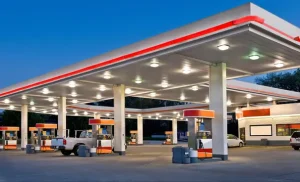
Autonomous gas stations can extend operating hours and reduce labor pressure, but they also create a different risk profile. When nobody is on-site, small gaps in visibility, payment security, access control, and response time can turn into fuel theft, skimming, vandalism, loitering, or safety incidents.
This guide focuses on autonomous gas station security strategies, not on how autonomous fueling works. If you need the definition and operating model, read our separate guide on what an autonomous gas station is and how it works.
Quick answer: the most secure autonomous gas stations combine open site design, hardened dispensers, AI video analytics, live remote intervention, strict access control, better lighting, payment security controls, and incident documentation in one operating model. That combination is what reduces both physical and cyber risk.
What makes autonomous gas station security different?
A traditional station can rely on staff to notice suspicious behavior, challenge loiterers, spot dispenser tampering, and react to smoke, spills, or unsafe conduct. An autonomous station cannot. That is why the security stack has to replace human presence with better visibility, faster verification, and clear escalation.
- Card skimming and dispenser tampering.
- Fuel theft, including drive-offs and organized siphoning.
- After-hours loitering, vandalism, and trespassing.
- Unauthorized access to control rooms, network racks, or tank systems.
- Delayed response to smoke, fire, spills, or aggressive behavior.
- Cyber exposure around payment and connected control systems.

Top 8 essential strategies for autonomous gas station security:
1. Design the site for clear sightlines:
The first security layer is the physical layout. Pump islands, payment areas, entry lanes, exits, and pedestrian paths should stay visible from multiple camera angles without landscaping or structures creating blind spots. At unattended sites, hidden corners give offenders time to tamper with pumps or stage theft before anyone reacts.
Keep shrubs low, avoid visual barriers near pumps, and make sure the forecourt tells visitors they are entering a monitored site. The FBI notes that fuel-pump skimmers are often installed inside the machine and are difficult for customers to see, which makes strong visibility and routine inspection even more important.
2. Harden dispensers and payment hardware:

Dispensers at unmanned sites should be treated like high-value access points, not simple vending devices. Weak cabinet doors, unsecured card readers, exposed wiring, and inconsistent inspection routines create an easy path for tampering, skimming, or free-fuel fraud.
- Install tamper-evident seals on dispenser access doors and payment enclosures.
- Use anti-skimming capable terminals and encrypted payment hardware.
- Protect exposed cabling with conduit and reinforced routing.
- Standardize weekly inspections for bezels, overlays, loose panels, glue residue, and unfamiliar devices.
- Document every inspection so operators and technicians can see patterns over time.
The PCI Security Standards Council recommends routine inspection of payment devices for broken seals, odd cables, or new hardware that should not be there. That guidance is directly relevant to autonomous gas stations because the card-present attack surface sits outside and is harder to supervise continuously.

3. Build an AI-driven video surveillance layer:

Autonomous gas station security depends on rapid detection. High-resolution AI security cameras should cover every fueling position, payment terminal, vehicle approach, and entry or exit lane. The goal is not just recording. The goal is to detect unusual behavior early enough to intervene.
Useful analytics for this environment include loitering detection, license plate recognition, smoke and fire alerts, intrusion detection near restricted zones, and crowding or aggressive behavior detection. Those layers help replace the situational awareness that an on-site attendant would normally provide.
If you need the supporting technology stack, related tools include motion sensors, real-time video monitoring workflows, and cloud video analytics that can connect video events to live operator action.
4. Add live remote intervention, not just recording:

Video without response is only partial protection. A person lingering beside a pump at 2 a.m., a customer smoking near dispensers, or a vehicle sitting too long without fueling should trigger human review in seconds. That is where remote video monitoring changes the outcome.
When analytics send an alert to a trained operator, the operator can verify the risk, speak through on-site audio, warn the individual, notify the owner, and contact emergency services if required. That shortens the time between detection and action and makes unattended sites feel actively managed rather than abandoned.
For an autonomous site, this is one of the clearest competitive differentiators: not just cameras, but cameras tied to continuous monitoring and immediate intervention.

5. Integrate video, alarms, and pump events into one workflow:
The strongest unattended sites do not run cameras, pump controls, sensors, and operator workflows as separate tools. They connect them. When a nozzle lift, forced door opening, tank-level anomaly, or shutdown event happens, the system should automatically tie that event to video and operator logs.
That integration makes investigations faster and helps stop incidents earlier. It also creates stronger documentation for station operators, insurers, law enforcement, and compliance reviews. If you are building a commercial deployment, this should point users toward your autonomous gas station monitoring solution rather than competing with that page on a broad top-of-funnel query.
6. Control who can access critical systems:

Even without on-site employees, people still need periodic access: technicians, IT teams, cleaners, couriers, service contractors, and managers. Access to network racks, safes, payment systems, and fuel-control infrastructure should be uniquely assigned, logged, and reviewed.
Use role-based access instead of shared keys or generic PINs. NIST’s RBAC guidance supports assigning privileges by job role so access is easier to manage and audit. For payment-connected systems, the PCI Security Standards Council also requires multi-factor authentication for remote access that can lead to the cardholder data environment.
For readers exploring the broader model, your supporting internal content on access control as a service is a better fit here than repeating generic product claims.
7. Improve lighting, signage, and visible deterrence:
Lighting does more than help customers see. It improves image quality, reduces concealment, supports operator verification, and makes the forecourt feel controlled. Use bright, even LED lighting at pump islands, drive lanes, pedestrian paths, and payment points.
Pair that with visible deterrence messaging such as monitored site notices, plate capture notices, and anti-skimming inspection notices. The point is not decorative signage. The point is to communicate that the site is actively observed and that suspicious behavior will be challenged quickly.
8. Cover cyber risk, compliance, and reporting:

Autonomous gas station security is not only a physical security problem. Connected payment systems, back-office access, and remote administration create cyber exposure as well. CISA’s #StopRansomware Guide recommends practical steps such as patching, vulnerability management, tested backups, and stronger credential controls.
On the operational side, every serious event should create a usable record with timestamps, images, operator actions, and escalation notes. That is valuable for post-incident review, law-enforcement support, insurance, and internal compliance. If your monitoring workflow already produces this, connect it to your incident reporting process or service documentation instead of leaving reporting as a generic promise.
FAQ: autonomous gas station security
What are the biggest security risks at an autonomous gas station?
The biggest risks are skimming, fuel theft, dispenser tampering, after-hours trespassing, vandalism, unauthorized system access, and delayed response to safety incidents such as smoke or spills.
Are cameras alone enough for an unattended gas station?
No. Cameras help document incidents, but unattended stations usually perform better when video is paired with analytics, live operator review, audio intervention, and structured escalation.
How can gas stations reduce payment skimming risk?
Use tamper-evident seals, anti-skimming terminals, routine inspection checklists, stronger physical locks, and payment-system controls aligned with PCI guidance. Inspection and fast detection matter because many fuel-pump skimmers are hidden inside the machine.
Conclusion:
The strongest autonomous gas stations do not depend on a single control. They combine site design, hardened dispensers, AI detection, remote intervention, access control, lighting, payment security, and usable reporting into one security workflow.
If you want to build a monitored, unattended forecourt with faster detection and verified response, explore our autonomous gas station monitoring solution or contact us for a deployment review.