
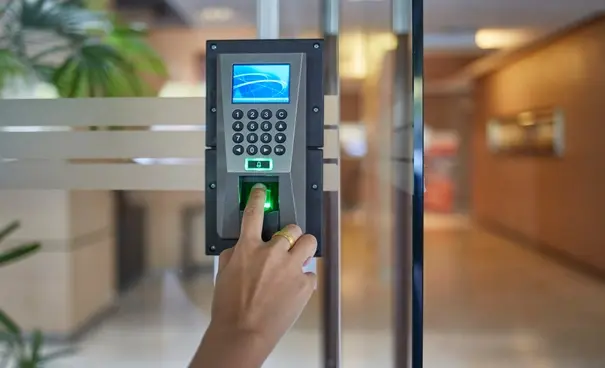



Un système de contrôle d'accès assure la sécurité des espaces physiques en autorisant ou en restreignant l'accès. L'accès est accordé après vérification à l'aide de méthodes d'authentification avancées telles que la biométrie, les cartes RFID, les identifiants mobiles ou les codes PIN.
C'est vous qui déterminez le niveau d'accès à chaque porte, barrière et portail sur tous les sites de votre entreprise. Vous pouvez même créer des règles de contrôle d'accès personnalisées en fonction de l'heure et des rôles pour gérer les autorisations.
Vos règles d'accès déterminent précisément qui a accès à quelles ressources spécifiques, dans quelles conditions et à quelles fins.
Mais qu'en est-il alors des personnes non autorisées qui se faufilent derrière des personnes autorisées aux points d'accès contrôlés et vérifiés ?
C'est exactement ce dont nous parlons dans cet article : qu'est-ce qu'un système de contrôle d'accès, comment fonctionne-t-il et comment fonctionne le contrôle d'accès à distance.
Qu'est-ce qu'un système de contrôle d'accès ?

Les systèmes de contrôle d'accès automatisent l'accès à certaines zones, garantissant ainsi que seules les personnes autorisées des personnes accèdent à des zones à accès restreint.
Cet accès est autorisées via des identifiants. Les identifiants constituent le moyen d'authentification dans les systèmes de contrôle d'accès. Pour être vérifiés, les identifiants sont glissés, approchés, scannés ou présentés devant un lecteur, par exemple :
- Cartes-clés.
- Porte-clés.
- Codes PIN.
- Données biométriques (rétine, reconnaissance faciale, reconnaissance de l'iris, empreinte digitale, etc.).
Qu'est-ce qu'un dispositif de contrôle d'accès ?
Les dispositifs de contrôle d'accès sont les interfaces physiques qui permettent d'authentifier et d'autoriser les personnes. Les systèmes de contrôle d'accès se composent de plusieurs éléments :
- Identification : Vérification de l'identité d'un utilisateur.
- Authentification : Vérification de la validité de l'identité fournie.
- Autorisation : Attribution des autorisations appropriées en fonction de l'identité authentifiée.
Les identifiants servent de moyen d'authentification dans les dispositifs de contrôle d'accès. L'authentification constitue la première étape du processus de contrôle d'accès, qui consiste à valider les identifiants présentés.
Le lecteur authentifie le titre d'accès en l'identifiant, en le vérifiant, en le validant, en le comparant et en le faisant correspondre avec les enregistrements autorisés.
La demande d'accès est alors acceptée ou rejetée.
Au-delà d'un accès sécurisé et contrôlé, lorsqu'il est associé à des outils d'analyse, ce système fournit des informations telles que le nombre de visiteurs, les périodes de pointe, la durée de séjour et les flux de personnes.
Contrôle d'accès physique et contrôle d'accès logique :
Le contrôle d'accès physique permet de sécuriser les bâtiments, les locaux, les portes et autres espaces physiques, tandis que le contrôle d'accès logique protège les ressources numériques telles que les ordinateurs, les réseaux et les applications. Ce guide se concentre sur les systèmes de contrôle d'accès physique utilisés pour sécuriser les bâtiments et les installations.
Éléments constitutifs d'un système de contrôle d'accès RFID :
Un système de contrôle d'accès RFID utilise une étiquette, un Lecteur RFID, un panneau de contrôle d'accès et une serrure permettant d'autoriser l'accès à certaines personnes.
Dans le cadre du processus de contrôle d'accès, vous présentez votre carte RFID devant le lecteur RFID, ce qui déclenche la communication avec le panneau de contrôle. Ce dernier vérifie les autorisations d'accès et active le mécanisme de verrouillage en fonction de la validité de la carte. Si l'accès est autorisé, l'entrée est accordée ; dans le cas contraire, l'accès est refusé.
L'accès est autorisé par un logiciel de contrôle d'accès qui gère efficacement les identifiants des utilisateurs, leurs autorisations et les journaux d'accès.
Différents types de contrôles d'accès :
Afin de garantir un niveau élevé de sécurité, les entreprises de tous les secteurs mettent en place divers dispositifs de contrôle d'accès.
Ces contrôles d'accès sont différenciés en fonction du poste occupé au sein de l'organisation ou du nombre de passages quotidiens à l'entrée et à la sortie du bâtiment commercial.
Les secteurs de la santé et de la finance ont souvent recours à des systèmes de contrôle d'accès biométriques, qui utilisent la reconnaissance des empreintes digitales ou de la rétine pour authentifier les personnes. Cela permet d'assurer le contrôle des zones sensibles et de protéger les informations confidentielles.
Nous avons répertorié ici les quatre principaux types de contrôle d'accès :
- Contrôle d'accès discrétionnaire (DAC).
- Contrôle d'accès obligatoire (MAC).
- Contrôle d'accès basé sur les rôles (RBAC).
- Contrôle d'accès basé sur des règles (RuBAC).
Contrôle d'accès discrétionnaire (DAC) :
Un système de contrôle d'accès qui vous permet de gérer les accès comme bon vous semble ; vous pouvez le rendre aussi discret que possible. Cela signifie que c'est vous qui décidez qui a accès à quoi. Il est particulièrement adapté aux petits espaces au sein d'une grande organisation.
Un système d'accès DAC peut également être utilisé dans des zones où sont stockées des informations ou des biens très sensibles, et où l'on souhaite surveiller de près les personnes qui y entrent ou en sortent.
Contrôle d'accès obligatoire (MAC) :
Le système de contrôle d'accès le plus sûr et le plus précis est le contrôle d'accès obligatoire, mis en œuvre par une autorité unique.
Cette autorité est habilitée à décider d'accorder ou de refuser l'accès. Les contrôles d'accès obligatoires sont utilisés par les établissements financiers et les institutions publiques.
Contrôle d'accès RBAC (contrôle d'accès basé sur les rôles) :
Le contrôle d'accès basé sur les rôles attribue des autorisations aux utilisateurs en fonction de leurs rôles au sein d'une organisation. Cette approche simplifie la gestion en associant les autorisations à des fonctions professionnelles spécifiques, ce qui facilite la régulation et le contrôle de l'accès aux ressources.
Le contrôle d'accès basé sur les rôles (RBAC) est largement utilisé dans les secteurs des technologies et des entreprises.
Contrôle d'accès basé sur des règles (RuBAC) :
Le contrôle d'accès basé sur des règles utilise un ensemble de règles pour déterminer si une personne est autorisée à accéder à un lieu donné. Il ne dépend en rien du rôle de cette personne au sein de l'organisation.
La personne se verra refuser l'accès à cette zone si elle ne remplit pas les critères requis, quel que soit son niveau hiérarchique au sein de l'organisation.
Comment choisir la meilleure méthode de contrôle d'accès ?
Le choix de la meilleure méthode de contrôle d'accès dépend de vos besoins spécifiques en matière de sécurité. Si vous êtes en train de présélectionner des fournisseurs, commencez par consulter notre comparatif des les meilleures entreprises de contrôle d'accès. Si votre objectif est de sécuriser les points d'entrée et de sortie physiques, le contrôle d'accès physique, qui fait appel à des barrières et à des portails, constituerait le choix optimal.
Pour une sécurité optimale, le contrôle d'accès obligatoire (MAC) est la meilleure option. Dans l'ensemble, la méthode la plus simple à mettre en œuvre est le contrôle d'accès basé sur les rôles (RBAC).
Contrôle d'accès dans le cloud ou sur site :

Le contrôle d'accès dans le cloud vous permet de gérer la sécurité depuis pratiquement n'importe où, tout en simplifiant la maintenance, en améliorant l'évolutivité et en réduisant les coûts d'infrastructure. Qu'il s'agisse de gérer un seul bureau ou des centaines de sites, les administrateurs bénéficient d'une visibilité centralisée via une interface unique.
Les plateformes cloud modernes permettent aux entreprises de :
- Accorder ou retirer des droits d'accès instantanément.
- Gérer plusieurs sites à partir d'un seul tableau de bord.
- Surveiller les portes en temps réel.
- Recevez des alertes de sécurité en temps réel.
- Déployer automatiquement les mises à jour logicielles.
- Réduire les coûts de maintenance et de matériel.
Voici une brève comparaison montrant en quoi le contrôle d'accès dans le cloud offre une meilleure sécurité que le contrôle d'accès sur site.
| Fonctionnalité | Contrôle d'accès dans le cloud | Contrôle d'accès sur site |
|---|---|---|
| Coût initial | Inférieur | Plus élevé |
| Maintenance | Mises à jour automatiques par le fournisseur | Géré par votre équipe informatique |
| Gestion à distance | Gérez vos activités où que vous soyez | Généralement sur site ou via un VPN |
| Mises à jour logicielles | Automatique | Manuel |
| Évolutivité | Ajout facile de portes et de lieux | Nécessite du matériel supplémentaire |
| Gestion multisite | Un tableau de bord unique pour tous les sites | Une gestion distincte pour chaque site |
| Dépendance à Internet | Nécessite une connexion Internet pour la gestion à distance ; les portes peuvent toutefois fonctionner hors ligne sur de nombreux systèmes | Fonctionne en local, avec une dépendance minimale à Internet |
| Gestion des visiteurs | Enregistrement en ligne, billets sur mobile, validations à distance | Nécessite généralement un logiciel supplémentaire |
Comment choisir le bon système de contrôle d'accès ?
1. Comptez tous les points d'entrée :
Vous pouvez commencer par recenser tous les lieux nécessitant un contrôle d'accès. Pensez notamment aux entrées des bureaux, aux portes intérieures, aux salles de serveurs, aux ascenseurs, aux stationnements couverts et au contrôle d'accès au portail pour l'entrée des véhicules. Chaque type de porte nécessitant des lecteurs, des serrures et des contrôleurs spécifiques, un inventaire complet permet d'éviter des coûts d'installation imprévus.
2. Définir le niveau de sécurité pour chaque zone :
Toutes les zones ne nécessitent pas le même niveau de protection. Les espaces publics peuvent se contenter d’une authentification de base, tandis que les salles de serveurs, les entrepôts, les bureaux de direction et les laboratoires de recherche requièrent souvent une authentification multifactorielle ou un accès biométrique. La mise en place d’un système de sécurité par zone permet d’améliorer la protection sans créer de contraintes inutiles pour les employés.
3. Choisissez des moyens d'accès adaptés à votre personnel :
Sélectionnez les moyens d'accès en fonction de l'utilisation que font les personnes de votre bâtiment. Les cartes-clés et les porte-clés électroniques restent très prisés pour l'accès quotidien, tandis que les moyens d'accès mobiles simplifient l'accès pour les équipes hybrides. identifiants mobiles faciliter l'accès pour les équipes hybrides. Le contrôle d'accès biométrique est particulièrement adapté aux zones hautement sécurisées où la vérification d'identité est essentielle et où le partage des moyens d'accès n'est pas acceptable.
4. Choisissez entre un système de contrôle d'accès dans le cloud et un système sur site :
Notre plateforme de gestion a une incidence tant sur les coûts que sur la flexibilité. Le contrôle d'accès dans le cloud permet aux administrateurs de gérer les utilisateurs à distance, de recevoir des mises à jour logicielles automatiques et de sécuriser plusieurs sites à partir d’un seul tableau de bord. Les systèmes sur site offrent un meilleur contrôle local et sont souvent privilégiés par les organisations soumises à des politiques de sécurité internes strictes.
5. Assurez-vous qu'il s'intègre à vos systèmes de sécurité :
Le contrôle d'accès ne doit jamais fonctionner de manière isolée. Choisissez une plateforme qui s'intègre à Caméras de vidéosurveillance, alarmes anti-intrusion, gestion des visiteurs, interphones et automatisation des bâtiments. Les systèmes connectés améliorent la gestion des incidents, simplifient les enquêtes et offrent une vue d'ensemble complète de chaque événement de sécurité.
6. Anticipez votre croissance avant d'en avoir besoin :
Le remplacement d'un système de contrôle d'accès coûte bien plus cher que son extension. Optez pour une plateforme capable d'accueillir facilement de nouveaux utilisateurs, portes, bâtiments et sites à mesure que votre entreprise se développe. Les systèmes évolutifs réduisent les coûts de mise à niveau futurs et prolongent la durée de vie de votre investissement.
7. Comparer le coût total de possession :
Comparez l'installation, le câblage, les licences logicielles, les abonnements au cloud, la maintenance, l'assistance technique et les possibilités d'extension futures. En examinant les coût total de possession vous aide à éviter les frais cachés et à choisir un système qui s'avère plus rentable à long terme.
Comment fonctionne un système de contrôle d'accès associé à une surveillance vidéo à distance ?
Les opérateurs à distance disposent d'un accès complet à votre système de contrôle d'accès, ce qui leur permet d'ouvrir à distance les portails de votre site.
Ces panneaux de contrôle d'accès sont équipés d'un système vidéo unidirectionnel et d'un système audio bidirectionnel, ce qui permet aux opérateurs d'interagir avec les personnes se trouvant aux portails. Ils peuvent vérifier les titres d'accès, poser des questions et n'autoriser l'accès qu'aux personnes habilitées.
Déroulement étape par étape du processus de contrôle d'accès à distance à un portail ou à une porte :
Étape 1 : Arrivée de l'utilisateur :
Une personne ou un véhicule arrive devant votre portail.
Étape 2 : Alerte à l'opérateur :
L'opérateur professionnel reçoit une alerte vidéo sur son poste de travail, signalant la présence du visiteur.
Étape 3 : Réponse dynamique du flux de travail :
L'opérateur suit votre processus de travail dynamique prédéfini et réagit à la situation conformément aux principes de votre organisation.
Par exemple, l'opérateur peut utiliser le système audio bidirectionnel pour vérifier l'identité du client.
Étape 4 : Hébergement des invités :
Une fois les informations d'identification du visiteur vérifiées et validées, l'opérateur lui ouvre la porte. Un rapport de l'événement est enregistré sur votre compte. Le dossier est alors considéré comme clos.
Étape 5 : Préparation pour le prochain client :
L'opérateur est désormais prêt à accueillir le client suivant, garantissant ainsi un processus de contrôle d'accès continu et sécurisé.
Avantages du contrôle d'accès :

Prévenir les accès non autorisés et les vols :
Limitez l'accès aux zones sensibles telles que les salles de serveurs, les entrepôts de stock, les laboratoires de recherche et les bureaux de la direction. Chaque accès est enregistré, ce qui facilite les enquêtes en cas d'incident tout en réduisant les risques liés à la perte, au vol ou à la duplication des clés.
Mettre fin au fonctionnement en silos des systèmes de sécurité :
Un système de contrôle d'accès gagne en efficacité lorsqu'il est associé à vos autres technologies de sécurité. Il peut déclencher les caméras de sécurité dotées d'intelligence artificielle en cas de tentative d'intrusion, activer des alarmes après une effraction, prendre en charge le contrôle d'accès à distance aux portails et déverrouiller automatiquement certaines portes en cas d'incendie.
Adaptez votre sécurité à la croissance de votre entreprise :
Votre système de sécurité doit évoluer au rythme de votre entreprise. Les plateformes modernes de contrôle d'accès permettent d'ajouter facilement de nouveaux utilisateurs, des portes, des bâtiments et des sites sans avoir à remplacer votre infrastructure existante. La gestion dans le cloud simplifie encore davantage cette expansion.
Réduire les coûts d'exploitation :
Le contrôle d'accès ne se contente pas d'améliorer la sécurité ; il renforce également l'efficacité. Un système intégré de gestion technique du bâtiment permet d'éteindre les lumières et de réguler le chauffage, la ventilation et la climatisation dans les zones inoccupées, tandis que les identifiants numériques évitent de devoir procéder à des changements de serrures coûteux. Le contrôle d'accès sans fil réduit également les coûts d'installation dans les bâtiments existants.
Simplifier la mise en conformité et la préparation aux audits :
De nombreux secteurs d'activité imposent aux entreprises de restreindre l'accès aux zones sensibles et de tenir des registres détaillés des accès. Le contrôle d'accès contribue à protéger les zones à risque, répond aux exigences en matière de sécurité des personnes en cas d'urgence grâce à l'intégration des systèmes d'alarme incendie, et génère des pistes d'audit qui simplifient l'établissement des rapports de conformité.
Facilitez l'accès aux employés et aux visiteurs :
Les employés n'ont plus besoin d'avoir sur eux des clés physiques. L'accès peut être autorisé à l'aide de cartes-clés, d'identifiants mobiles, de codes PIN ou de données biométriques, tandis que des plannings déterminent automatiquement à quels moments les utilisateurs peuvent accéder à des zones spécifiques. Des identifiants temporaires simplifient également l'accès pour les visiteurs et les prestataires.
Gérez votre immeuble où que vous soyez :
Le contrôle d'accès dans le cloud vous offre une visibilité totale sans nécessiter de présence sur place. Vous pouvez déverrouiller des portes à distance, attribuer ou révoquer des autorisations instantanément, surveiller l'activité en temps réel et gérer plusieurs sites à partir d'un seul tableau de bord.
Combien coûte un système de contrôle d'accès ?
Si vous vous demandez combien coûte un système d'accès par carte ou par badge, la réponse dépend de la technologie du lecteur, des dispositifs de verrouillage, du câblage et des logiciels nécessaires à votre bâtiment.
Voici quelques gammes de systèmes de contrôle d'accès aux portes :
| Type de contrôle d'accès | Coût d'installation type |
|---|---|
| Contrôle d'accès par clavier | $500 – $1 500 |
| Système d'accès par carte ou porte-clés pour bâtiments | $1 000 – $2 500 |
| Contrôle d'accès mobile / dans le cloud | $1 000 – $3 000 + $10 – $30 par porte et par mois |
| Le contrôle d'accès biométrique | $2 500 – $10 000+ |
Les projets de grande envergure, les installations hautement sécurisées, les ascenseurs, les portails et les intégrations d'entreprise peuvent entraîner une augmentation des coûts.
Qu'est-ce qui influence le plus le coût ?
Le prix d'un système de contrôle d'accès ne dépend pas uniquement du lecteur de porte.
- Nombre de portes : Un nombre plus élevé de portes augmente le coût du projet, mais réduit généralement le coût moyen par porte.
- Type de titre : Un clavier numérique est généralement l'option la plus abordable, tandis que le prix d'un système de contrôle d'accès biométrique est nettement plus élevé grâce à des technologies de lecture et d'authentification de pointe.
- Câblage du bâtiment : Les constructions neuves sont généralement moins coûteuses que la mise à niveau d'un bâtiment occupé avec un nouveau câblage.
- Licences logicielles : Les plateformes cloud facturent généralement un abonnement mensuel, tandis que les systèmes sur site nécessitent souvent du matériel serveur et des licences logicielles.
- Intégrations système : Intégration du contrôle d'accès aux systèmes de vidéosurveillance, d'alarme et de gestion des visiteurs, systèmes d'accès par carte pour ascenseurs, ou le système de contrôle d'accès par portail, entraîne des coûts supplémentaires en termes de fonctionnalités et d'installation.
- Surveillance et maintenance : L'assistance continue, les mises à jour logicielles, la surveillance à distance et la maintenance préventive doivent toujours être prises en compte lors de la comparaison des devis.
Conformité et réglementation en matière de contrôle d'accès aux États-Unis et au Canada :
Le contrôle d'accès ne suffit pas à lui seul à garantir la conformité d'une entreprise ; il offre des fonctionnalités essentielles telles que le contrôle des entrées, l'authentification des utilisateurs, l'enregistrement des visiteurs et les journaux d'audit, qui aident les organisations à respecter les exigences en matière de sécurité et de confidentialité.
Les exigences en matière de conformité varient selon les juridictions, les secteurs d'activité et les organisations. Voici quelques exigences incontournables aux États-Unis et au Canada :
| Région | Règlement | Comment le contrôle d'accès favorise la conformité |
|---|---|---|
| États-Unis | HIPAA | Les établissements de santé doivent mettre en place des mesures de sécurité physiques, notamment des contrôles d'accès aux locaux, afin de protéger les informations de santé protégées sous forme électronique (ePHI). Un accès sécurisé aux salles de serveurs, aux zones de dossiers médicaux et aux services à accès restreint permet de répondre à ces exigences. |
| PCI DSS | Les entreprises qui traitent des paiements par carte bancaire doivent restreindre l'accès physique aux systèmes qui stockent ou traitent les données des titulaires de carte. La mise en place de salles de serveurs à accès contrôlé, de journaux d'audit et d'un système de gestion des visiteurs contribue à renforcer la conformité à la norme PCI DSS. | |
| SOC 2 | Les organisations qui souhaitent obtenir la certification SOC 2 doivent mettre en place, dans le cadre de leur programme global de sécurité, des mesures de sécurité physique visant à limiter tout accès non autorisé à leurs locaux, à leurs équipements et à leurs infrastructures sensibles. | |
| Canada | LPRPDE | Les organisations qui collectent des données biométriques ou tiennent des registres d'accès électroniques doivent traiter ces informations comme des données à caractère personnel, limiter leur collecte à des fins professionnelles légitimes et les protéger à l'aide de mesures de sécurité appropriées. |
| Loi n° 25 du Québec | Le Québec impose des obligations supplémentaires en matière de protection de la vie privée lorsque les organisations utilisent des identifiants biométriques. Les entreprises doivent évaluer les répercussions sur la vie privée, obtenir le consentement approprié lorsque cela est nécessaire et gérer les données biométriques de manière responsable. | |
| Normes ULC | De nombreux systèmes de sécurité commerciale et d'alarme surveillée au Canada respectent les normes des Underwriters Laboratories of Canada (ULC), qui définissent les pratiques reconnues en matière de surveillance, de transmission des alarmes et de fiabilité des systèmes. |
L'avenir du contrôle d'accès, en 2026 et au-delà :
Chaque titre d'accès présenté à l'entrée, chaque visiteur pénétrant dans un site et chaque déplacement au sein d'un bâtiment fournissent des informations précieuses sur le fonctionnement d'une organisation et sur ses points faibles.
Cette transformation est accélérée par l'intelligence artificielle, le cloud computing, les identifiants mobiles et l'authentification biométrique. Le contrôle d'accès est désormais plus rapide, plus numérique et davantage axé sur les données. Lorsque ce système intelligent et proactif protège les personnes et les biens, vous pouvez vous attendre à une meilleure conformité et à des décisions opérationnelles plus judicieuses.
Les systèmes modernes de contrôle d'accès basés sur l'IA permettent de :
- Détecter les schémas d'accès inhabituels dans les différents bâtiments.
- Identifier les identifiants volés, clonés ou utilisés à mauvais escient.
- Sachez repérer les tentatives de « tailgating » et d'intrusion non autorisée.
- Déclencher les procédures de confinement automatisées en cas d'urgence.
- Mettre en corrélation l'activité aux portes avec les images de vidéosurveillance en temps réel.
- Hiérarchiser les alertes en fonction d'une analyse des risques comportementaux.
La biométrie redéfinit la vérification d'identité :
L'avenir du contrôle d'accès consiste à vérifier l'identité des personnes, et non plus uniquement leurs identifiants.
Contrairement aux cartes d'accès ou aux codes PIN, l'authentification biométrique repose sur des caractéristiques propres à chaque individu, ce qui rend la vérification d'identité nettement plus sûre.
Les technologies biométriques modernes comprennent :
- Reconnaissance faciale.
- Authentification par empreinte digitale.
- Reconnaissance de l'iris.
- Authentification par reconnaissance des veines de la paume.
- Reconnaissance vocale.
- Vérification biométrique multimodale.
Les identifiants mobiles renforcent encore davantage la fiabilité du contrôle d'accès :
Les identifiants mobiles constituent une alternative plus sûre et plus pratique, car ils permettent aux employés d'utiliser les appareils qu'ils ont déjà sur eux au quotidien.
Les organisations adoptent de plus en plus :
- Identifiants du smartphone.
- Portefeuilles numériques NFC.
- Authentification Bluetooth Low Energy (BLE).
- Montres connectées et appareils portables.
- Accès des visiteurs via un code QR.
Au-delà de leur aspect pratique, les identifiants mobiles permettent aux administrateurs d'accorder ou de révoquer des droits d'accès en quelques secondes, éliminant ainsi les délais liés à l'impression, à la distribution et au remplacement des cartes physiques. Les analystes du secteur considèrent de plus en plus les identifiants mobiles comme l'un des segments connaissant la plus forte croissance au sein du secteur de la sécurité physique.
L'accès est au cœur d'une sécurité unifiée :
L'évolution la plus importante n'est peut-être pas l'apparition d'un nouveau support d'identification ou d'un nouveau lecteur, mais bien l'intégration.
La sécurité consiste avant tout à mettre en place des écosystèmes unifiés dans lesquels chaque technologie contribue à une vision opérationnelle unique. Le contrôle d'accès en tant que service (ACaaS) devrait connaître une croissance plus de deux fois supérieure à celle des systèmes traditionnels sur site au cours des prochaines années.
Les plateformes de contrôle d'accès d'entreprise actuelles s'intègrent de plus en plus aux :
- Vidéosurveillance et analyse vidéo.
- Systèmes de détection d'intrusion.
- Logiciel de gestion des visiteurs.
- Systèmes d'automatisation des bâtiments.
- Plateformes de ressources humaines.
- Logiciel de gestion des temps et des présences.
- Gestion des identités et des accès (IAM).
- Plateformes SIEM et de cybersécurité.
Pourquoi le contrôle d'accès ne suffit pas à lui seul :
Un porte-clés volé, une carte d'accès partagée ou un identifiant mobile emprunté peuvent toujours permettre d'ouvrir une porte. Cela ne permet pas non plus d'empêcher la conduite trop rapprochée, lorsqu'une personne non autorisée pénètre dans les locaux à la suite d'une personne disposant d'un accès valide.
C'est pourquoi de nombreuses organisations associent le contrôle d'accès à la surveillance vidéo en direct. L'un contrôle l'accès. L'autre vérifie l'identité.
La vidéo apporte le contexte manquant :
Le contrôle d'accès vous indique quel titre de formation a ouvert une porte. La vidéo montre qui l'a réellement traversé.
Ensemble, ils aident les équipes de sécurité à :
- Vérifiez visuellement chaque entrée.
- Détecter les cas de conduite trop rapprochée et les comportements suspects.
- Enquêter plus rapidement sur les incidents.
- Renforcer les éléments probants de l'audit.
- Réagissez avant que les menaces ne s'aggravent.
La sécurité passe d'une approche réactive à une approche proactive.
Une solution plus intelligente pour sécuriser les accès aux véhicules :
Les portails d'accès aux véhicules posent un défi particulier. Les livreurs, les prestataires et les visiteurs ont souvent besoin d'un accès temporaire sans disposer d'un titre d'accès permanent.
Le contrôle d'accès à distance aux barrières résout ce problème. Un opérateur vérifie le véhicule, confirme l'autorisation, communique par interphone si nécessaire et ouvre le portail à distance. Il en résulte une sécurité renforcée sans ralentir la circulation.
Cette approche s'avère particulièrement utile pour les entrepôts, les parcs de camions, les installations logistiques, les lotissements fermés et les sites industriels.
Détection par IA avec vérification humaine :
L'intelligence artificielle est capable de détecter toute activité inhabituelle en quelques secondes. Les opérateurs humains apportent le jugement que l'IA ne peut pas fournir.
Par exemple, l'IA détecte un véhicule suspect s'approchant d'un portail. Un opérateur en direct examine la vidéo, vérifie le numéro d'immatriculation, s'adresse au conducteur si nécessaire et commande le portail à distance. Chaque action est automatiquement consignée dans un journal d'événements unique.
La combinaison de IA, surveillance en temps réel et contrôle d'accès offre une vérification plus rapide, une réponse plus rapide et une plus grande fiabilité que n'importe quel système pris isolément.
Des services tels que les services hébergés de Sirix et le contrôle d'accès géré réunir ces fonctionnalités au sein d'une seule et même plateforme cloud, combinant ainsi le contrôle d'accès, la vérification vidéo, l'analyse par IA et l'intervention en direct d'un opérateur.
Foire aux questions :
Qu'est-ce qu'un système de contrôle d'accès ?
Un de contrôle d'accès Il s'agit d'une solution de sécurité qui permet de contrôler qui peut entrer ou sortir d'un bâtiment, d'une pièce ou d'une zone à accès restreint. Au lieu de reposer uniquement sur des clés physiques, elle utilise des moyens d'authentification tels que des cartes-clés, des appareils mobiles, des codes PIN ou des données biométriques.
Quels sont les principaux types de contrôle d'accès ?
Les principaux types de contrôle d'accès discrétionnaire (DAC) , le contrôle d'accès obligatoire (MAC), le contrôle d'accès basé sur les rôles (RBAC) et le contrôle d'accès basé sur les attributs (ABAC). En matière de sécurité physique, les organisations choisissent également entre des identifiants sous forme de carte, de mobile, de code PIN et biométriques, en fonction de leurs besoins opérationnels, de leurs exigences de sécurité et de leurs obligations de conformité.
Quels sont les principaux composants d'un système de contrôle d'accès ?
Les principaux éléments d'un de contrôle d'accès notamment les badges d'accès, les lecteurs, les serrures électroniques, les contrôleurs de porte, les logiciels de gestion et une alimentation électrique fiable. Les installations professionnelles intègrent souvent ces composants à des systèmes de vidéosurveillance, d'alarme anti-intrusion et de gestion des visiteurs afin de créer une plateforme de sécurité unifiée, plus facile à surveiller et à gérer.
Combien coûte un système de contrôle d'accès par porte ?
Un de contrôle d'accès coûte généralement 1 000 et 4 000 dollars canadiens par porte,matériel et installation compris, bien que les tarifs varient en fonction du projet. Les coûts dépendent également du matériel de porte, du câblage, des licences logicielles, des abonnements au cloud, des intégrations et de la main-d'œuvre.
Quelle est la différence entre les modèles DAC, MAC et RBAC ?
La différence entre DAC, MAC et RBAC C'est ainsi que les autorisations sont attribuées et gérées. Le DAC permet aux propriétaires d'accorder des droits d'accès, le MAC applique des politiques de sécurité définies de manière centralisée, et le RBAC attribue les autorisations en fonction des rôles professionnels. La plupart des entreprises commerciales privilégient le RBAC, car il simplifie l'administration et favorise la mise en œuvre de pratiques de sécurité cohérentes.
Que se passe-t-il avec les portes à contrôle d'accès en cas de coupure de courant ? (mode « fail-safe » ou « fail-secure »)
En cas de coupure de courant, un porte à contrôle d'accès Elle se déverrouille ou reste verrouillée selon sa configuration. Les serrures à déverrouillage de sécurité se déverrouillent pour permettre une évacuation d'urgence, tandis que les serrures à verrouillage de sécurité restent verrouillées afin de protéger les zones sensibles. Les codes de construction, les réglementations en matière de sécurité des personnes et les exigences relatives à l'alimentation électrique de secours déterminent la configuration appropriée pour chaque ouverture.
Les systèmes de contrôle d'accès peuvent-ils être intégrés à des caméras de sécurité et à des alarmes ?
Oui, moderne les systèmes de contrôle d'accès peuvent s'intégrer à des caméras de sécurité, des systèmes d'alarme, des interphones vidéo et des plateformes de gestion technique des bâtiments. Ces intégrations permettent aux équipes de sécurité de recouper les événements d'accès avec les enregistrements vidéo, d'automatiser les interventions en cas d'incident et de gérer plusieurs systèmes de sécurité à partir d'une interface centralisée, ce qui améliore l'efficacité opérationnelle et la maîtrise de la situation.
Quel est le meilleur système de contrôle d'accès pour une petite entreprise ?
Le meilleur système de contrôle d'accès pour une petite entreprise est une solution qui allie sécurité, prix abordable et évolutivité future. Les plateformes basées sur le cloud sont souvent recommandées car elles offrent une gestion à distance, des identifiants mobiles, des journaux d'audit et une administration simplifiée sans nécessiter d'infrastructure sur site importante, ce qui facilite leur maintenance à mesure que l'entreprise se développe.
Les systèmes de contrôle d'accès biométriques sont-ils légaux au Canada ?
Oui, les systèmes de contrôle d'accès biométriques sont légales au Canada lorsque les organisations respectent les lois fédérales et provinciales applicables en matière de protection de la vie privée. Les entreprises doivent obtenir le consentement éclairé des personnes concernées lorsque cela est requis, limiter la collecte de données à des fins commerciales légitimes, protéger de manière sécurisée les informations biométriques et mettre en place des politiques claires de conservation et de suppression des données afin de garantir la conformité réglementaire.
Un système de contrôle d'accès, c'est la même chose qu'un système d'alarme ?
Non, un système de contrôle d'accès n'est pas la même chose qu'un système d'alarme. Le contrôle d'accès détermine qui est autorisé à pénétrer dans des zones spécifiques, tandis que les systèmes d'alarme détectent les intrusions ou les situations d'urgence et déclenchent des alertes.
Conclusion :
Le contrôle d'accès est particulièrement efficace lorsqu'il s'inscrit dans le cadre d'une stratégie de sécurité plus large. En l'associant à la surveillance vidéo en direct, à l'analyse par IA et la surveillance professionnelle permet une vérification visuelle, une intervention plus rapide en cas d'incident et une meilleure protection contre les menaces telles que le vol d'identifiants, le « tailgating » et l'accès non autorisé aux véhicules.
Que vous envisagiez de mettre en place un système de contrôle d'accès pour un nouveau site ou de moderniser un système existant, il est intéressant d'examiner comment un système de contrôle d'accès avec surveillance professionnelle et une vérification vidéo peuvent compléter votre stratégie de sécurité physique et améliorer votre maîtrise globale de la situation.
Prêt à renforcer la sécurité des accès de votre établissement ? Contactez Sirix dès aujourd’hui pour découvrir comment le contrôle d'accès géré, la surveillance vidéo en direct, et la vérification basée sur l'IA permet de protéger chaque point d'accès.


