


No, dumpster diving is not illegal in Texas. There is no statewide statute that bans dumpster diving in Texas.
But …
You don’t want dumpster divers on your property, and Texas laws allow them to be! Can a dumpster lock really prevent dumpster diving? Is it really that simple?
You’d be surprised to learn that, despite dumpster diving not being banned statewide, you have strong rights to protect your property and reduce risks. Every primary concern, pain point, and question you have, we provide real solutions.
What is dumpster diving?
Dumpster diving, also called garbage picking, is about more than just looking for recyclables. Dumpster diving is actually looking through large commercial, industrial, or shopping mall bins for really expensive finds.
Yes! Despite the cuts, abrasions, illness from bacteria, or even contaminated food. Nothing stops them from earning thousands of dollars by rummaging in the bins for:
- Cosmetics and skincare.
- Electronics and tools.
- Gadgets and accessories.
- Food and beverages.
- Shoes and clothes.
The list is very long; you get the idea that they’d be garbage-gleaning for big or small items! What do they do afterwards? Some list the items on their TikTok shops and move them fast to people who like bargain hunting. Others pass the finds to small vendors who clean, fix, or repackage the goods.
So it’s a business, but why can “binning” or “going for dumpster diving” be illegal? Two short examples help make this clear. If a scavenger climbs into a dumpster inside a locked enclosure behind your building, they are trespassing.
If the diver approaches a container that sits at the curb for city collection, they may not be trespassing, but they can still be removed if they cross onto your property to reach it.
When you map these zones and reinforce them with signs and barriers, you stay in compliance with Texas law and maintain control of the environment.
Where is dumpster diving legal in Texas law?
If you see big bins on public property, go ahead, you are free to dumpster dive. Yes, the state law allows you to! Because, once trash is placed in a public area for collection, the original owner typically loses most property rights in it, though this can vary by local rules and how courts in that area interpret “abandonment.”
Now we understand a few rules about when is dumpster diving legal in Texas:
- If the dumpster is placed on public property.
- If there is no sign related to trespassing.
- If you do not make a mess and don’t trigger any offense, such as littering.
Where is dumpster diving often illegal in Texas law?

No matter where your business operates across North America, but within the boundary of Texas, the Texas Penal Code §30.05 makes it a crime to enter or remain on property without the owner’s “effective consent”.
And especially after you have seen entry forbidden signs visibly posted, have been told to leave the premises, and do not!
So, we understand that whether dumpster diving is legal or not is dependent upon three conditions:
- The dumpster is placed on private property.
- Whether there is any “notice” (signs, fencing, verbal warning, lock).
- Whether another offense is triggered (theft of recyclables, health/sanitation, littering).
Criminal trespass is usually a Class B misdemeanor, but can be a Class C (less severe) in some situations and a Class A (more serious) if, for example, it occurs in a habitation or certain protected facilities, or involves a weapon in specific ways.
How to align with Texas law and apply trespassing rules on your property?
Trespassing law in Texas is built on a simple idea. A person cannot enter or remain on private property without permission. To apply that standard in your business, you need to make your boundaries unmistakable.
Defining private and public waste zones:
Understanding the difference between private and public waste zones is just as important. A dumpster placed behind a store in a fenced corner is private. Anyone stepping through that gate is on restricted ground.
Now imagine the same dumpster moved to the edge of a public alley for scheduled pickup. That location feels more open, but the business may still control the area around it if the container sits on its land.
Add signboards:
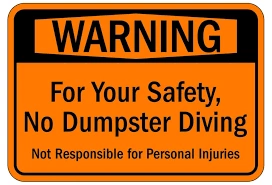
The simplest protection is signboards. But it has to be the right kind of sign in the right place. Post it where a visitor would naturally look, near the gate, beside the dumpster enclosure, and along any path that leads behind the building.
We also add here that we make the wording plain so no one can claim confusion. Once the signs are in place, close the gaps that invite trouble.
Adjust pickup frequencies of dumpsters:
Adjusting the pickup frequency of your dumpsters is one of the easiest ways to keep the area clean and prevent health concerns. When waste sits for too long, spills become more common, pests gather, and the site’s overall sanitation declines in a way customers notice.
A tighter pickup schedule helps keep the load manageable, and you can improve the results by switching to sealed or side-loading dumpsters that hold odors in and block easy access. It also helps to train staff to properly bag waste and place it in the container, without leaving loose debris around the edges.
A quick exterior check at the end of each day keeps minor problems from turning into larger ones. Move trash runs to daytime hours so employees can handle the task in a safer, well-lit environment. This steady routine helps prevent bins from overflowing and reduces dumpster diving.
Secure the dumpster:
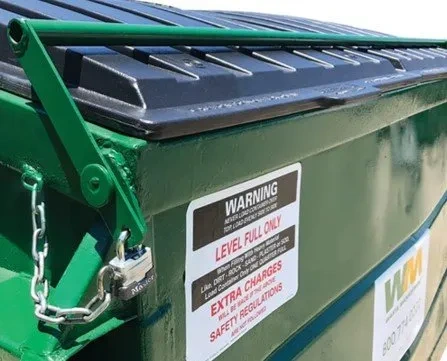
Secure the dumpster first. Use front-load or rear-load dumpsters, as both can be fitted with reliable lock bars or gravity locks to keep scavengers out.
Lock bars, crossbars, gravity locks, and chain locks are some types of dumpster locks. For commercial use, we suggest chain locks as some of the cheapest and effective locks for dumpsters.
Then secure the area around the dumpster. A lockable enclosure or corral with a self-closing, self-latching gate creates a controlled space that keeps unwanted visitors out.
The locks should be mounted in places that cannot be reached or cut from the street, and the walls should be high enough to discourage easy climbing.
It also helps to remove anything that could be used as a step, such as stacked pallets or low railings.
A marked gate or barrier makes it clear to anyone approaching that the area is private. This level of security protects your property in several ways. It stops scavengers from entering and prevents damage to the container. Adding CCTV coverage to this setup further strengthens protection. Cameras record who enters the space, deter tampering, and provide evidence if damage occurs.

Light the area:
Lights. The best way to outshine those dumpster divers. Darkness can create surprise, fear, and quick movements that escalate into customer-facing issues. LED security lights, such as wall pack lights, or solar-powered motion-sensor lights, prevent the kind of nighttime encounters that leave employees shaken.
A well-lit area gives your team a clear view of what is happening and makes the space feel controlled, when you combine lighting with clever placement, such as relocating the dumpster away from doors and access points.
They take advantage of darkness and walk away with items that cost your business real money. It could be items left out in a hurry or other high-value products. Power tools with minor defects. Small appliances that were left out during a display change.
Install CCTV cameras:

When you pair lights with CCTV cameras, you stay in control,and you can set your own boundaries about how closely you want to monitor the area. When dumpster divers find electronics, furniture, or other valuable items, they can create havoc! Lids are forced open. Locks snap. Fences get pulled apart so they can reach what they want.
AI cameras can detect unusual movement, sudden crowding, or violence that may signal a possible break-in. They detect fast changes in motion, pushing or pulling, or a person lingering longer than expected. Early detection gives you time to respond before the damage spreads.
Train staff:
Training your staff is one of the strongest tools you have. You can conduct a weekly or maybe a monthly talk to teach them how to dispose of waste properly so the area stays clean and less attractive to scavengers.
Remind them that direct confrontation is dangerous and usually costly for the business. Help them understand the situations that can create legal liability, such as stepping into a restricted space with someone who should not be there.
Give them a simple, polite script they can rely on when they need to speak to someone near the dumpster, something calm and firm that keeps distance and avoids conflict.
Know your local ordinances:
Texas strongly protects private property: the state constitution and statutes generally prohibit the taking or use of private land without consent, and eminent domain (forced taking) is limited to public purposes and requires compensation.
Owners and lawful occupiers have the right to control access, set conditions for entry, and exclude others; entering fenced, posted, or clearly private areas to reach a dumpster normally violates these rights and can be trespass, even if the trash itself looks abandoned.
Remote video monitoring:
Remote video monitoring gives you the reach you need to detect and deter dumpster divers before they cause damage. When you integrate CCTV cameras with top notch remote video monitoring services, you get real time alerts when someone enters, lingers, or begins to tamper with the container.
When you combine that oversight with tighter access control, such as locked gates and marked boundaries, the message becomes clear. The space is private, the rules are visible, and the property is not open for scavenging. These steps work together to reduce break-ins, protect valuable items, and keep your dumpster zone secure around the clock.
Tighter access controls:
Add access controls that track who enters and when. When you pair those controls with remote video monitoring, the property becomes less of an easy target. A monitored site sends a message before anyone touches a lid or climbs a fence.
Think about what sits in or near your dumpster on a busy day: packing materials, damaged products, metal parts, old cables, all the items a diver sees as valuable.
Relocate dumpsters away from access points:
A single broken latch or missing lock can lead to the loss of items worth hundreds of dollars. Knowing your legal boundaries is what ties these pieces together. Your property line, your signs, your gates, your cameras.
When each one is in place, you shift the liability away from uncertainty and toward a clean, well-managed environment that protects both your business and the people who work for you.
Use keyed, keypad, or card‑based locks so only staff/haulers can enter, and make “no propping doors/gates” a written rule.
Frequently asked questions:
Can a business legally ban dumpster diving?
Yes, a business can ban dumpster diving on its private property by setting clear boundaries. Signs, fences, gates, and controlled access make the restriction enforceable.
Does posting a sign actually help?
Yes, a sign counts as legal notice under Texas trespass law. It strengthens your position if someone enters the area without permission.
Can I be sued if a diver gets hurt?
A diver can attempt a claim, but trespassers have very limited protection under Texas law. Clear boundaries and proper signage reduce the risk even further.
Are there specific cities in Texas with stricter rules?
Yes, cities like Austin and San Antonio have stronger restrictions on scavenging. Others, like Houston, rely more on property and trespass rules.
Is dumpster diving allowed at public dumpsters in Texas?
Dumpster diving at “public dumpsters” in Texas is sometimes allowed, but only when the dumpster is truly on public property, not posted or locked, and local ordinances do not prohibit scavenging.
Conclusion:
Dumpster diving is not illegal under Texas state law, but that does not mean your property is open to the public. The key is understanding where your rights begin.
When a dumpster sits inside your boundary, and you mark that boundary with signs, gates, lighting, cameras, and clear access rules, you have strong control over who enters the space.
Local ordinances in cities like Austin and San Antonio add even more support for business owners, while cities with looser rules still rely on trespass law to protect private land.
By securing the dumpster, training your staff, adjusting waste routines, and using simple tools like lockable enclosures and CCTV, you turn a vulnerable spot into a managed environment. The goal is not only to stop scavenging but to reduce damage, safeguard your team, and keep your business predictable.
Contact us today for a customized security solution for your business.