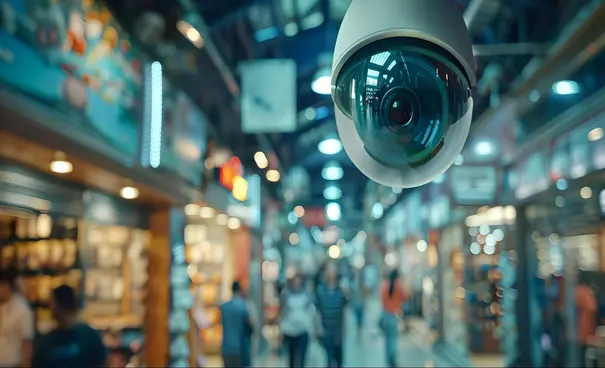


Commercial properties security horizon is vast; we don’t just mean securing the indoors. We suggest a worthwhile investment that secures parking lots, loading docks, perimeters, rooftops, storage yards, common areas, and much more.
Every commercial building has its own security issue: office buildings, retail stores and shopping centers, warehouses, industrial plants, manufacturing sites, logistics yards. And each would require highly customized value-focused camera placement and monitoring strategies.
That’s where remote video monitoring comes into play, providing a strategically justified, proactive security solution.
By the end of this article, you will be saying yes, remote video monitoring is absolutely worth securing my office or mall with!
A top-notch live video monitoring company understands that the security goals of commercial properties means fortified buildings through verified access control, shielded parking lots, protected workers, and secure assets.
What types of incidents does remote video monitoring best prevent?

Truth be told, prevention is possible when detection occurs in micro-milliseconds. Remote video monitoring is about precise detection through AI and swift human intervention. This takes us to a point where remote video monitoring can actually do anything AI can detect today!
Whether it’s detecting humans or vehicles from miles away, AI Surveillance has even become more adept at recognizing behavior, including gestures, sudden movements, and aggression.
“The sharper and smarter the surveillance, the more powerful remote video monitoring becomes!”
Alerts are no longer just blaring alarms!
How AI analytics improve incident detection accuracy?

Advanced video analytics notify about the exact type, direction, duration, and risk level. So the operators have more context to validate threats quickly and accurately. Even across multiple sites!
AI analyzes streams in milliseconds and generates alerts as incidents start. Remote video monitoring shrinks the gap between occurrence and response.
Remote video monitoring offers a suite of advanced video analytics and services that means even faster and more precise detection of the following:
Intrusion, theft, and unauthorized access:
Hundreds of businesses already trust remote video monitoring for early detection and live intervention that directly stops losses or breaches.
- Theft of tools, equipment, vehicles, and materials, especially after hours or on weekends.
- Continuous monitoring of schools, condos, and retail stores, focusing on single camera footage for suspicious activities.
- Tailgating and other access-control abuses at gates, docks, and doors are detected by monitoring people and vehicle behavior, not just card events.
Violence, safety, and life-threatening events:
Remote monitoring adds value through faster recognition, confirmation, and emergency response coordination. These are the incidents where rapid awareness and escalation reduce harm and liability.
- Gun detection in shopping malls and parking lots, before it turns into a catastrophic situation.
- Crowd detection.
- Mask detection.
- Slip-and-fall incidents to reduce fraudulent injury claims.
- Violence in parking lots, auto dealerships, or shopping malls.
Environmental, operational, and risk awareness:
Remote video monitoring helps detect incidents that require situational awareness, compliance, or post-event analysis. These not only reduce the risk in your commercial spaces but also improve decision-making.
- Fire and smoke risks for an early verified speedy response.
- Time alerts for parking lots to manage and identify activity outside approved hours, helping enforce policies and reduce after-hours risk.
Remote video monitoring is not just a security expense:

Traditional CCTV triggers alerts, but without verification. That lack of confirmation leads to low credibility, with most dispatchable alarms proving to be false.
ASU center for problem oriented policing states that 94% of alarms triggered by security systems or panic alarms are false!
It means your security system is costing you hundreds of dollars and disrupting your time!
Alarm video verification decreases false alarms because diligent remote operators assess the situation via live camera feeds and act in accordance with the pre-established SOPs. A report by SIA confirms that alarm verification is required for a prompt police response, making “verification” financially relevant, not just operationally friendly.
How long before remote video monitoring actually saves money for your commercial property?
The payback period depends on how your initial setup investment compares to the monthly savings generated once monitoring is live.
After installation and configuration, ongoing savings typically come from reduced guard hours, fewer false alarms, and lower theft or damage losses.
Comparing these upfront costs to recurring monthly savings indicates how quickly the system pays for itself.
What makes ROI clearer with remote video monitoring:
Remote video monitoring becomes ROI-measurable when it changes one of these outcomes:
- You incur fewer losses (theft, vandalism, arson, break-ins).
- Your operating cost drops (guards, patrols, internal staff callouts).
- Fewer false dispatch costs (fines, permit fees, service calls, internal disruption).
- Potential insurance discounts.
You incur fewer losses (theft, vandalism, arson, break-ins):
On-site guard coverage is costly. In 2026, security guard rates in the U.S. typically range from $35 to $50 per hour, and rise significantly in higher-risk environments.
Remote video monitoring changes the economics. By shifting coverage in shopping center aisles or parking lots from continuous on-site guarding to AI-assisted cameras with live verification, organizations can offset guard hours where they matter least often delivering the fastest payback.
Because guard services are billed hourly, even modest reductions in coverage translate into immediate savings.
In practice, many organizations use remote video monitoring to:
- Replace overnight or low-activity guard shifts.
- Reduce total guard hours while maintaining coverage.
In these scenarios, monthly savings from reduced guard hours are often realized within the first few months, allowing the cost of monitoring to be recovered quickly.
Your operating cost drops (guards, patrols, internal staff callouts):
If you see a reduction in theft, vandalism, or property damage, payback depends on how often incidents occur and how severe they are.
For some owners, the math is straightforward because there has already been a recent incident. Preventing one repeat event can justify the service for an entire year or longer.
For others, payback is evaluated through risk exposure:
- Property type.
- Location and crime patterns.
- After-hours activity.
Remote video monitoring shortens the time between detection and intervention. That often means incidents are stopped earlier, damage is reduced, and losses are contained before they become insurance claims.
Fewer false dispatch costs (fines, permit fees, service calls, internal disruption):
This is an underestimated but very real source of payback. False alarms cost more than fines. They create:
- After-hours staff callouts.
- Management fatigue.
- Lost productivity the next day.
- Escalating enforcement from municipalities under alarm ordinances.
By verifying events before escalation, remote video monitoring reduces unnecessary dispatches and unnecessary interruptions. Over time, this translates into lower operational friction and fewer hidden labor costs.
Many cities and agencies actively enforce alarm bylaws, issuing fines for repeat false alarms, making these savings increasingly significant.
Potential insurance discounts:
Yes. Monitored commercial properties are highly valued by insurers because they reduce the severity and frequency of loss. Many carriers offer credits depending on the protective measures installed.
The practical ROI positioning is that even if the discount is modest, the bigger economic impact is fewer claims and less loss severity.
How does remote video monitoring offer customized security for different industries? Is it worth it?
Office buildings:

After-hours unauthorized access. Laptop theft. Tailgating through controlled doors and misuse of access by former or off-hours employees are just a few security problems your office might face.
These incidents may go unnoticed for long periods. But remote video monitoring secures your commercial building with real-time visibility and control. With tighter access controls, your visitors and employees are monitored and verified before gaining access. AI detects loitering, break-ins, and unsafe behavior. Elevator monitoring offers a rapid response to trapped passengers.

Retail stores and shopping centers:
Shoplifting detection AI detects shoplifting and smash-and-grab incidents with precision. 24/7 remote monitoring detects and triggers live alerts for vandalism, vehicle theft, and customer safety issues, especially during closing and overnight periods. With enhanced retail store security, you can be confident that loiters in parking lots and exterior areas will be detected, preventing potential incidents from escalating into theft.
Warehouses and distribution facilities:
Warehouses are attractive targets due to high-value inventory and predictable shipping schedules. Remote video monitoring offers surveillance at various stages from loading docks to transit. It also helps mitigate the risk of undetected overnight incidents.
Industrial plants:
Industrial facilities face perimeter intrusion and worker safety hazards. Security solutions for industrial plants, like remote video monitoring, help to monitor hazardous materials, expensive machinery, and restricted zones where intrusion can have consequences beyond property loss.
Construction sites:

After-hours theft, trespassing, vandalism, and OSHA-relevant unsafe behavior are pushing construction site owners to the limit. As construction site security becomes increasingly important, unmonitored remote sites are highly vulnerable to theft and trespassing. Live monitoring helps detect after-hours intrusions, fuel siphoning, and perimeter breaches.
Multi-family residential properties:

Condos have consistently faced parcel theft, shared access points, varying operating hours, and overlapping public and private spaces, creating complexity. Remote video monitoring puts a stop to movement between zones, after-hours access abuse, and difficulty distinguishing regular activity from suspicious behavior.
Frequently asked questions:
What are the biggest advantages of remote monitoring?
The most significant advantage of remote video monitoring is real-time threat detection with immediate response, preventing incidents before damage or loss occurs.
What is remote video monitoring?
Remote video monitoring is the integration of your CCTV cameras and security devices to a remote video monitoring center. As soon as the AI cameras detect a security breach, an alarm is triggered at the remote video monitoring center. The qualified remote operators access live video feeds and assess the situation and intervene via live audio interventions or dispatching police or security services as per preestablished SOPs.
How much does video monitoring cost?
Video monitoring costs vary by site size and risk level, but typically range from a predictable monthly fee that is significantly lower than on-site security guards.
Key takeaways:
Remote video monitoring is definitely worth the investment for commercial properties because it lets you verify events and reduce the duration of damage through a quick response. Remote video monitoring yields results because it shifts security from reactive to preventive.
By combining AI detection with live verification, it reduces losses, false alarms, and guard costs while improving response speed. The result is measurable ROI, stronger protection, and smarter security operations across all commercial site types.
Whether you operate a business in downtown Toronto, manage a cannabis facility in a remote rural area, oversee a shopping mall in New York, or secure commercial properties in Los Angeles, Chicago, Houston, Miami, Dallas, Atlanta, Phoenix, Denver, Seattle, or Boston, the risks are different, but the expectation is the same.
Visibility, verification, and a timely response are essential before damage occurs.
Remote video monitoring delivers customized security strategies tailored to your location, risk profile, and operations, not a one-size-fits-all camera setup.
Whether it’s dense urban cores, remote industrial sites, retail environments, high-risk regulated facilities, or single locations to national portfolios, our solution adapts to your needs. Contact us today to design a customized remote video monitoring solution that protects your people, your property, and your bottom line.