

While most security companies grind through the same cycle, install, sell, deliver, repeat, and call it growth, you could do things differently: Install a camera that keeps paying you month after month.
That’s the shift Remote Video Monitoring creates: turning every system into a living service that keeps earning long after the job is done.
Stop selling equipment. Start selling outcomes. Clients don’t care about cameras! They care about fewer incidents, faster responses, and proof that their investment works. RVM gives them that, and gives you something better: predictable, recurring revenue built on trust, not transactions.
Why does monthly recurring revenue (MRR) matter?
When you sell a product, you get paid once. When you sell Remote Video Monitoring (RVM) from a top-notch remote live monitoring provider, you get paid every month.
That’s the power of Monthly Recurring Revenue. It turns a single transaction into a steady income stream. Instead of relying on one-time camera or system sales, our partners build long-term financial stability through ongoing service contracts.
How does it work?
- You install the cameras for your client. For example, a car dealership, construction site, or retail chain.
- Instead of walking away after the install, you connect your client to a trusted Remote Video Monitoring Command Center.
- The Command Center handles live monitoring, event verification, and real-time response on your behalf.
- Your client pays a monthly fee for the ongoing monitoring service.
- You earn recurring revenue every month the service remains active.
Does remote video monitoring really add RMR?

Yes. Because Remote Video Monitoring turns one-time installations into ongoing service contracts that generate predictable monthly income.
In 2025, decision-makers aren’t asking for “more cameras.” They’re asking tougher questions:
- How do I justify another monthly expense?
- How do I know this system actually prevents loss?
- What’s the ROI compared to having guards on-site?
And Remote Video Monitoring has the answers to these questions.
Remote Video Monitoring turns your security system into a service, not just a setup. Instead of selling one-time installations, integrators can offer a continuous protection model. One that generates measurable results for clients and predictable recurring monthly revenue (RMR) for your business.
Every alert triggered by your security camera, verification, and intervention is logged and reported. Clients see the value every month. Not just when something goes wrong.
Case studies and data tell the story: remote monitoring can cut total security costs by up to 60-80% compared to on-site guards. That’s a quantifiable win that justifies a monthly subscription.
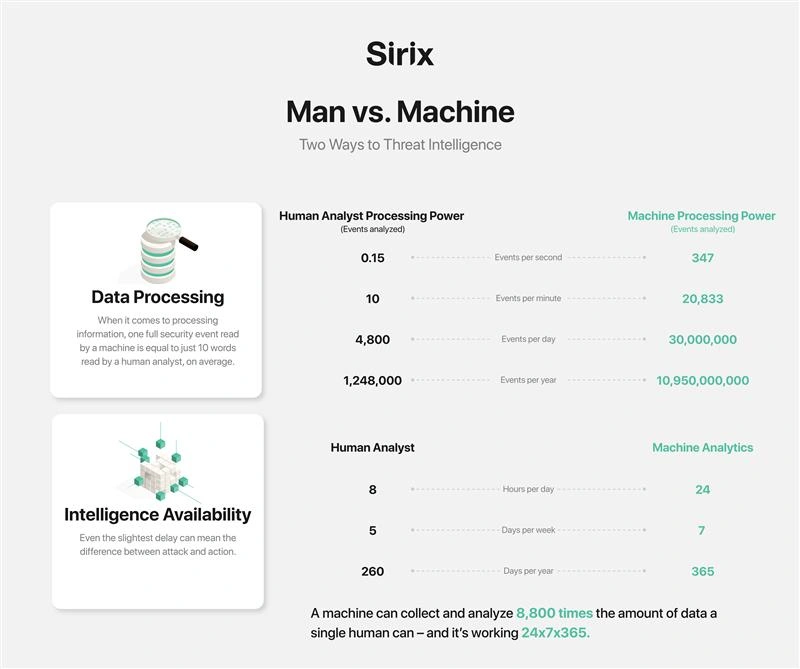
Instead of justifying megapixels, you can convince business owners by discussing how RVM reduces false alarms, shortens response times, and strengthens compliance. Shift the narrative from hardware to impact because that’s what really matters!
Your recurring revenue calculator:
When security integrators partner with a remote video monitoring center and offer RVM as a service, they move beyond one-time sales. Each installation becomes a source of steady, recurring income that grows with every camera, every client, every month.
Here’s a simple example of how predictable that revenue can be:
| Clients | Number of Sites | Cameras per Site | Monthly Revenue per Camera | Monthly Revenue per Client | Annual Revenue per Client |
|---|---|---|---|---|---|
| Car Dealership ABC | 3 | 20 | $40 | $2,400 | $28,800 |
| Retail Chain 123 | 5 | 25 | $35 | $4,375 | $52,500 |
| Construction Company 456 | 2 | 15 | $50 | $1,500 | $18,000 |
In this example, we show you how a partner managing just three clients with a few sites each can generate $8,275 per month. That makes nearly $100,000 in annual recurring revenue.
5 ways to add RMR with Remote Video Monitoring:
1. Build recurring income from every installation:
Every time you install cameras or a system, you’re creating an opportunity to keep earning. Instead of selling and walking away, you bundle in Remote Video Monitoring as a monthly service add-on by partnering with a trusted remote video monitoring center.
Example: A car dealership buys 30 cameras. You include 24/7 monitoring with a revenue of $45 per camera/month.
You earn $1,350/month for as long as they’re subscribed.
Impact: You have just converted a one-time project into a contract-based income.
2. Keep clients longer with proactive system care and transparent reporting:
Proactive system care keeps your clients confident and connected. Health monitoring and uptime reports prove reliability before they even ask, while continuous camera and network checks help prevent downtime, frustration, and cancellations.
When paired with clear, automated reporting (event summaries, audit trails, and monthly performance insights), clients see exactly how their system is performing.
For example, a logistics company receiving a monthly report showing 42 verified detections, 6 prevented intrusions, and 0 false dispatches clearly understands the value of the service.
That visibility builds trust, demonstrates ROI every billing cycle, and keeps your recurring revenue growing month after month.
3. Centralize multi-site monitoring for enterprise clients:
Instead of installing and managing separate systems for every location, combine all sites under a single monitoring agreement.
For example, a national fuel chain with 50 locations can unify their security under one centralized monitoring platform, paying a single monthly fee for complete coverage.
This approach simplifies management for you and the client: one contract, one dashboard, one consistent service.
Impact: Larger accounts, higher margins, reduced service complexity, and a scalable recurring revenue model.
4. Optimize field operations with remote diagnostics:
With system health monitoring, technical issues such as camera outages or network interruptions are automatically detected. Many of these problems can be resolved remotely, often with a simple reboot or configuration fix, before sending a technician on site.
For example, up to 70% of camera issues can be corrected through remote troubleshooting, saving time and service costs.
Impact: Fewer truck rolls, less downtime, happier clients, and higher profit margins on your recurring service plans.
5. Grow your recurring revenue by expanding services beyond surveillance:
One of the simplest ways to increase recurring monthly revenue is to go beyond traditional camera monitoring.
Installers who offer complementary remote services can open new income streams from the same client base.
Each added service strengthens relationships, builds trust, and creates another predictable monthly payment.
Every property has unique needs, and each of those needs can become an RMR opportunity:
- Multi-family or condo buildings: Offer remote concierge support to manage deliveries, visitor access, and security alerts. This reduces the need for on-site staff and provides residents with added convenience through managed service contracts.
- Construction sites: Provide lone-worker alarm response to protect staff working alone or after hours. Verified alerts and rapid response ensure safety compliance while generating short-term or project-based monitoring revenue.
- Commercial properties: Deliver remote gate and access control so operators can manage entry points in real time. Property owners save on staffing, while you gain consistent 24/7 RMR.
- Office buildings: Add elevator monitoring to detect entrapments or mechanical issues instantly. Integration with alert systems enhances tenant safety and creates another steady stream of monitoring.
These aren’t one-time installations. They’re ongoing, essential services that clients rely on every day. Over time, that means more value delivered, more loyal customers, and a stronger, more predictable business model.
Summary of how operational efficiency means more RMR:
| Optimization | Result | RMR Impact |
|---|---|---|
| Bundling monitoring with installs | Converts sales to recurring contracts | Adds a steady monthly income |
| AI event filtering | Serves more clients with fewer operators | Scale revenue efficiently |
| Tiered service upgrades | Increases ARPU | Higher RMR per client |
| Transparent reporting | Builds loyalty and renewals | Reduces churn |
| Centralized multi-site management | Simplifies operations | Expands account size |
| Remote troubleshooting | Cuts costs | Improves profit margin |
Conclusion:
Adding RMR through Remote Video Monitoring isn’t about selling more; it’s about selling smarter. When you turn installations into ongoing services, every camera becomes a source of predictable income and every client becomes a long-term partner.
By focusing on reliability, transparency, and results, you move from one-time transactions to continuous relationships built on trust and measurable value. The outcome is clear: steadier cash flow, stronger loyalty, and a business that grows month after month, even when you’re not chasing the next sale.
Contact us today to find out how Remote Video Monitoring doesn’t just protect your clients’ assets. It protects your revenue, too.