

In 2026, it’s not only about what your AI security camera can detect or not! It’s about how fast your business reacts to threats and anomalies.
Whether it’s access control or cybersecurity, one thing is certain: the faster AI detects and tracks a threat, the faster your response, down to microseconds.
In 2026, the technologies that will transform businesses are intelligent systems that perform real-time risk assessments and automate security policy enforcement.
What is security technology?
Security technology is any tool, software, or hardware used to prevent, detect, verify, and respond to theft, cyberattacks, or damage to people, facilities, and tangible assets.
These intelligent AI-driven security monitoring enables systems to recognize humans, identify objects they are holding (gun), and infer intent through advanced suspicious-behavior analysis.
The advanced system analyzes micro-movements, posture changes, dwell time, and interaction patterns to identify behaviors associated with risks such as shoplifting, aggression, or unauthorized access.
In this blog we talk about the AI Security technologies that have made businesses across North America more proactive.
AI security technologies in 2025:
Security technology in 2025 is built on AI powered surveillance systems that turn ordinary cameras into smart security solutions.
These AI security cameras protect your assets, people, and daily operations through advanced AI video analytics that watch, learn, and act faster than traditional methods. Security today goes far beyond locks and keys.
AI-driven monitoring, intelligent access control, cloud-connected platforms, and automated incident detection are here to stay because the security industry must always stay a step ahead of thieves.
Integrators that fail to follow these trends will fall behind, while those who embrace the future of security system technology will deliver stronger protection and better outcomes. IT security technologies prevent risks before they become threats. We give you the list of new security technologies shaping the next decade:
1. Advanced video analytics:
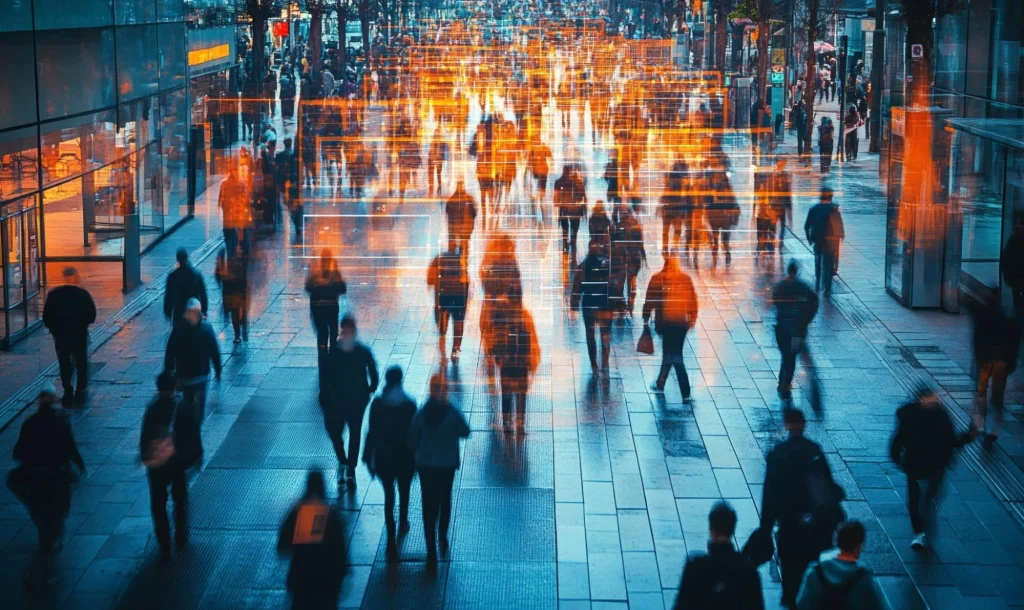
The AI security cameras are topped up with advanced real-time object detection capabilities. These AI systems self-monitor cameras, sensors, and network health to prevent downtime.
Not just detection but swift behavior analysis and automated enable protection that filters out false alarms and instantly identifies real threat, such as:
- Access attempts outside regular hours.
- Unusual movement patterns detected by cameras.
- Unexpected presence in restricted areas.
- Sudden spikes in network traffic.
- Cameras or sensors going offline unexpectedly.
- Tampering indicators, such as sudden camera movement or obstruction.
- Unexpected shutdowns or restarts of security systems.
- Badges are used in two places at the same time.
- Sudden loss of video or gaps in footage.
2. Multimodal sensor fusion:
These high-grade sensors combine video with access control, thermal, audio, and IoT data to deliver higher accuracy and context.
It’s all about predictive AI forecasting risks before they materialize based on patterns, anomalies, and historical data. So you know exactly where and what is about to happen in your system.
3 Autonomous monitoring agents:
These are the AI security agents that reason, adapt, and take actions across interconnected systems.
Ankita Gupta, CEO at Akto.io, an AI Agent Security Platform, says:
“I believe organizations will ultimately treat AI agents as first-class digital employees, each requiring identity management, behavioral baselines, access governance, and runtime protection.”
4. High accuracy facial verification:
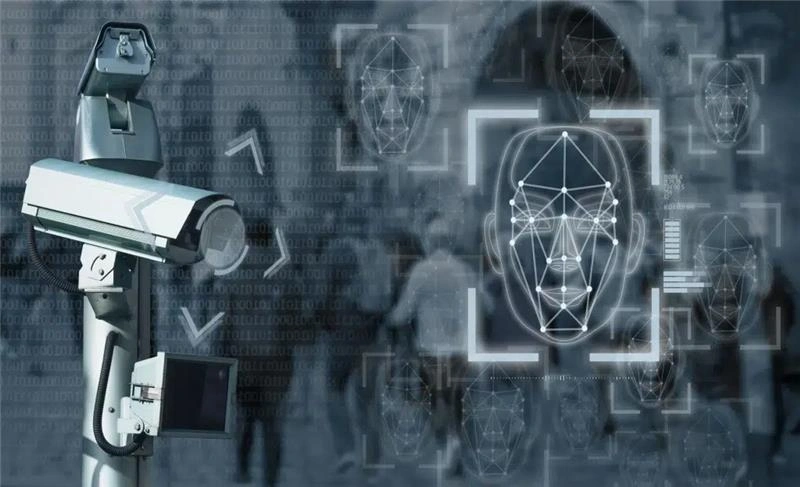
Facial verification, along with biometric verification, has been adopted by big industry leaders. But as laws and regulations evolve, businesses are still skeptical about their adoption.
However, privacy-compliant facial verification for access control and restricted zones enables full control with processing speeds under 120 milliseconds. The next generation of facial verification will enable 3D facial recognition with even greater identification accuracy by leveraging facial curves and contours.
5 Privacy-enhancing AI:
Businesses are moving to privacy-enhancing AI, where redaction systems automatically detect sensitive information. It could be faces, license plates, text, and audio, and apply blur, mute, or mask operations with high precision across multimedia content.
It’s quite beneficial for businesses that want to stay compliant and use data legally and lawfully by blurring sensitive information.
Corporate and media teams benefit from the technology, which reliably obscures confidential details in webinars, presentations, and broadcasts, keeping privacy intact while preserving the value of the content.
6. AI-powered incident correlation:
AI looks at everything happening across your systems, like login logs, network activity, customer behavior, device alerts, and cloud events, and connects them automatically.
For example, if someone tries to log into your POS system at midnight, and a few minutes later there is a sudden spike in refund attempts, the AI links these two actions as suspicious.
7. Intelligent access control systems:
Intelligent access control systems in 2025 and beyond adjust permissions based on how people normally behave and verify identity in smarter ways.
For example, if an employee always enters through the front door at 9 a.m. but suddenly tries to access a restricted lab at midnight, the system can block the attempt automatically. If a badge is used in two buildings simultaneously, the system can flag it as suspicious and freeze access in real time. This makes it much harder for unauthorized people to get in and keeps workplaces safer.
8 Generative AI for Security Operations:
Generative AI is changing how Security Operations Centers work by automatically creating reports, writing incident summaries, and guiding operators on what to do next.
For example, instead of a human spending 20 minutes writing a report after an alarm, the AI creates it in seconds. If an unusual login happens, the AI can explain the issue, suggest the right response, and pull up the correct SOP for the operator. This makes the whole security team faster, more efficient, and better prepared to handle threats.
9 Cyber anomaly detection:
Cyber anomaly detection finds unusual activity in your network that could signal an attack, even when it looks normal on the surface.
For example, the AI can spot someone slowly probing your network for weaknesses or notice a login from an account at a strange time or location. It also catches tiny timing patterns, such as rapid login attempts spaced by just a few milliseconds, which humans would never notice. This helps businesses stop cyber threats before they cause real damage.
10 Unified AI security platforms:
Unified AI security platforms bring all your security tools into one system by combining physical security and cyber security in a single smart dashboard.
For example, if someone tailgates into a building and the same person’s account tries to access sensitive files, the platform connects both events as one threat. Or if a camera detects a break-in and the network shows unusual activity at the same time, the system treats it as a coordinated attack. This unified view helps businesses respond faster and understand the full picture of any security incident.
Top 15 AI security advanced video analytics transforming businesses in 2026:
License Plate Recognition (LPR) Systems:
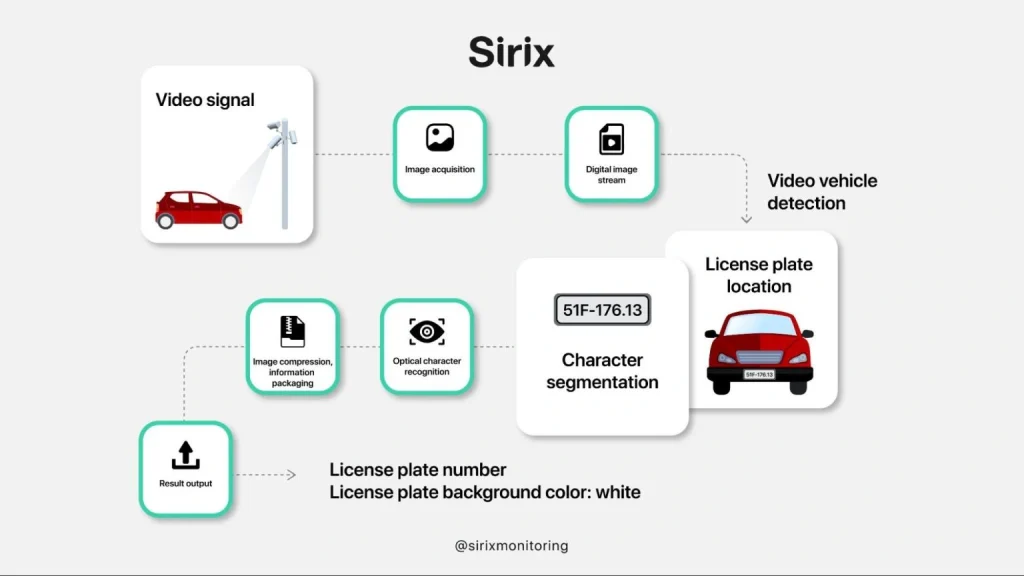
LPR system is an AI security technology that detects, captures, and logs license plate numbers at high speed and with high accuracy. Police departments across North America are already using it to control crime. Shopping malls and commercial buildings benefit greatly from automated tolling, reduced congestion, and time-based parking alerts for full control of parking management.
The system’s recognition speed, even of a moving vehicle, is 50 kmh, which is a marvel! The detection accuracy is 95%! It is a clear signal that parking lots and auto dealerships can automate manual tasks and generate valuable operational data through LPR systems.
Object detection & tracking AI:
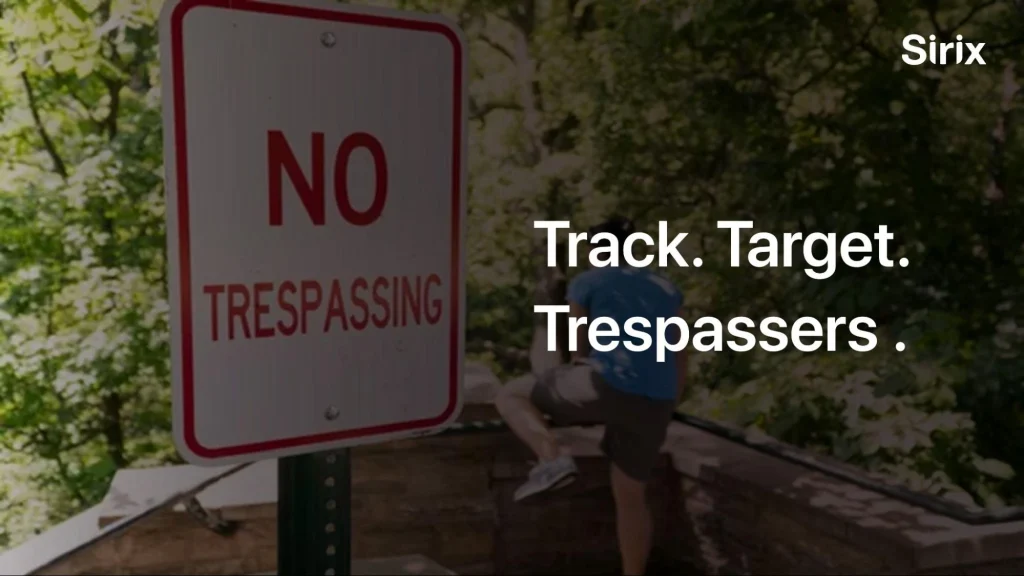
Intelligent security monitoring is about detecting suspicious humans and unauthorized vehicles as early as possible. The latest AI security technology does more than detect. It tracks.
That means an alarm is not triggered only when someone enters the scene. The AI watches the entire situation, not just a single moment. Now that is a smarter and more reliable security response.
Long-range detection AI (40-600m range):
Long-range detection AI is used to secure large construction sites, parking lots at condos, shopping malls, auto dealerships, scrap yards, and even industrial plants. These long-range cameras can easily detect vehicles entering or circling lots so you can log every vehicle without adding dedicated close-range cameras at each entrance.
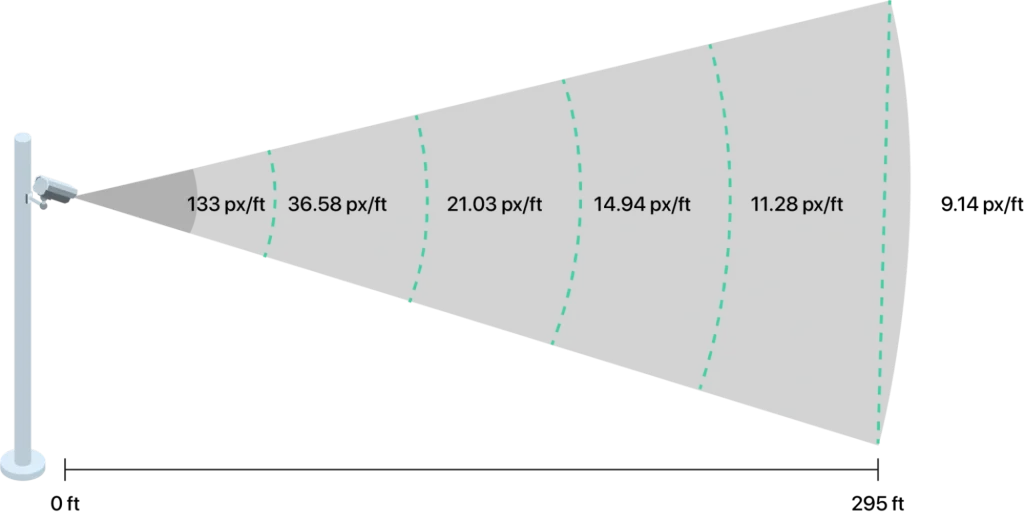
It’s an AI calibrated for long-distance detection, covering ranges from 40 to 600 m. This matters because a person in a remote corner of a large lot may trigger analytics at 100–200 ft instead of only 40–60 ft. When technology and security work together, you get stronger access control and a more resilient perimeter.
People, vehicles, and license plates at different angles or under different lighting conditions can all be detected with the right security camera placement.
Long-range AI triggers an alarm when subjects are still at the perimeter or far inside a large lot, not only once they are very close to the building or assets. A long-range AI can detect a person moving into a space between parked vehicles. Even if he becomes partly or fully hidden, or when he shows a crouching or lowered body posture.
Crowd detection AI:
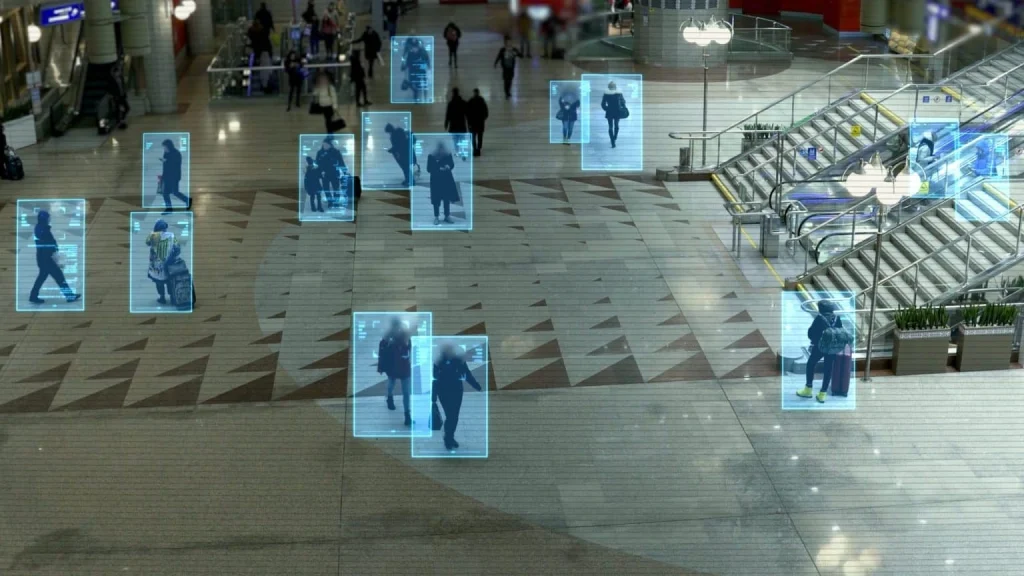
People moving in a shopping mall can form into a violent crowd in just a few minutes. An intelligent security system responds in seconds. Here’s the fun fact: the future of security is in proactive detection. We talk about it quite often, but what really is proactive detection? It’s actually the use of the latest tools to detect any anomaly before you see the disastrous effects of it. For example:
- A growing cluster breaking the normal flow.
- Two groups moving toward each other, fast.
- People circling or forming tight rings.
- Pushing waves within the crowd.
- Sudden empty pockets as people pull back.
- Individuals at the edges are moving away rapidly.
- Abrupt stops followed by fast micro-movements (pre-fight behavior).
These patterns often appear 10 to 60 seconds before the first punch or stampede.The AI crowd detection AI can detect these density, direction, and movement patterns, and triggers an alert at the remote video monitoring station. You have a clear picture of what is happening and how fast it is evolving.
Violence detection AI:
Violence detection AI is securing busy mall corridors, parking lots, entrances, hallways, loading areas. And any area where people gather or move quickly.
It looks for sudden rushing toward someone, fast arm swings, pushing, grappling, and any movement pattern that signals a fight starting. It monitors the scene frame by frame, enabling it to recognize these changes almost instantly. In most cases, the AI detects violent behavior in just one to three seconds.
Once violence is detected, the response is immediate. Live alerts are sent to monitoring staff. If the site is equipped with active deterrence, cameras can automatically activate floodlights, flashing strobes, or loud sirens. This sudden burst of light and sound creates a strong sense of urgency. Remote operators take control of the situation, ensuring the right help is dispatched to the location before anything escalates.
Gun detection systems:

A 99 percent accuracy and a detection time of 15 milliseconds per frame. Now that is the speed of detection we need to identify a person brandishing a knife or gun.
Visual AI solutions can detect a visible firearm and generate a validated alert in roughly 3 to 5 seconds, sometimes even faster.
Security systems with smarter access controls can detect concealed weapons at the entrance. The doors lock instantly, sirens and strobes activate to create urgency and the monitoring team is alerted with real-time visuals.
Fire and smoke detection AI:
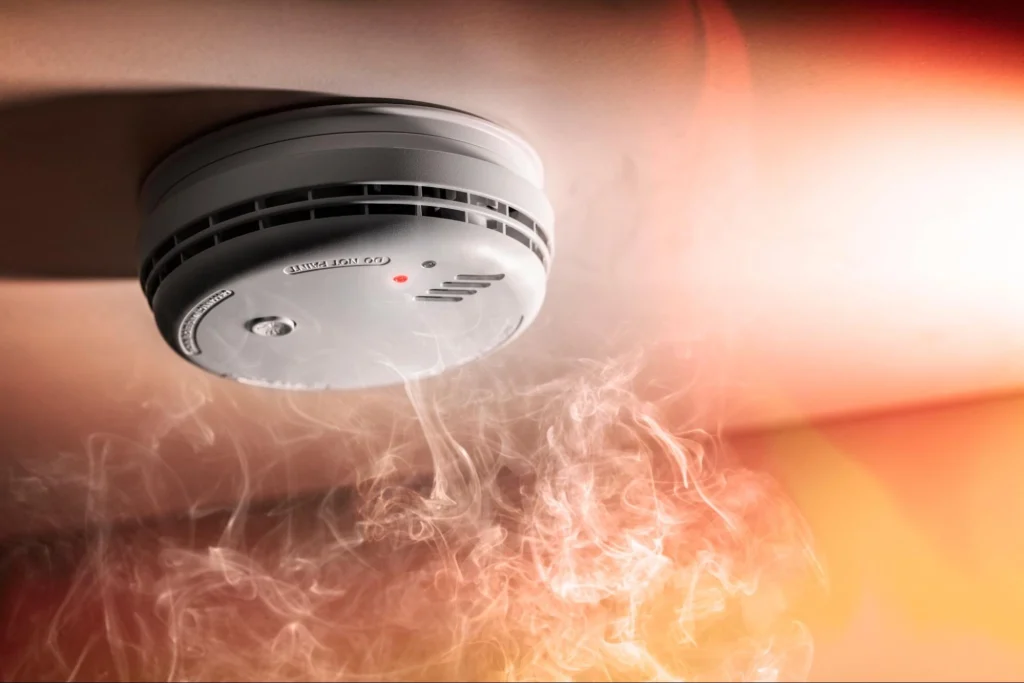
AI smoke detection works by recognizing how real smoke behaves. It analyzes the shape of the smoke as it forms, the way it drifts, the colors it takes on, and how quickly it spreads. This allows the system to detect many different types of smoke, including slow, smouldering smoke that appears long before flames, fast-rising smoke from active fire, outdoor smoke in lots or on rooftops, and even very light smoke that is difficult for people to see.
Now you may think this means a lot of false alarms but the AI security technology is so advanced that Fire Detection AI avoids false alarms by watching how a situation evolves, not just reacting to a single moment.
It looks at motion over several seconds, checks whether flame shapes stay consistent, studies how smoke moves, and verifies color or heat patterns when thermal imaging is used. If anything changes or doesn’t behave like real fire, the system ignores it. This prevents false alarms from everyday things like headlights, reflections, steam, dust, sunlight flicker or camera noise. It triggers an alarm only when there is a real fire.
Shoplifting prevention AI:

The only way to stop shoplifting is spotting the behaviors that betray would-be shoplifters. These include constantly looking around, taking products off the shelves and returning them, sweeping back and forth through the mall.
At the same time, AI-based security technology must be able to tell the difference between an employee who’s cleaning up aisles and a thief who’s making off with items he’s knocked onto the floor of an aisle.
That’s exactly how shoplifting detection AI can help you find those suspicious shoplifting behaviors. If you have 20 staff watching 20 aisles all day, on an eight-hour shift, the cost reads roughly 4,380 person-hours a year per aisle at an hourly wage of about 18.55 dollars. Multiply that by 20 aisles and you’re looking at 81,000 dollars per aisle per year.
It’s burning down more than 1.62 million dollars yearly just for that human existence standing in each aisle, watching shelves. Now compare this to cameras running AI. Fewer cameras detect in microseconds, never blink, never get distracted, and cover every angle at once. The cost drops, the accuracy rises, and the response time becomes instant. That’s the difference between manpower and machine speed.
Loitering detection AI:
Loitering is the first step to theft. Loiterers hang around your commercial building. They might seem harmless, but they have a bad intent. You see a few individuals:
- Slow-walk or circle the same section repeatedly.
- Waiting in dark or low-visibility areas.
- Watch doors, cameras, or staff movements.
- Standing near cars or loading areas while pretending to be on their phone.
- Approach and step back from entrances multiple times.
- Look for ways in: delivery bays or side gates.
- Observe how long it takes for staff or guards to respond.
Physical security trends have evolved so fast in the last decade that security is now about detecting these wanderers right when they cross the limits.
Tailgating detection AI (Vehicles and people):
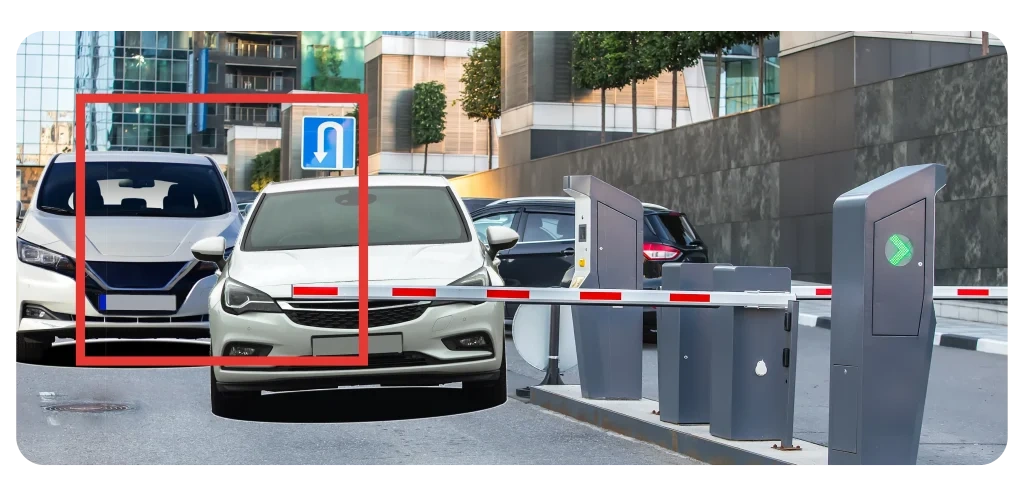
The biggest threat faced by commercial building owners is tailgating. So you have the RFID access cards operational, but some employees still buddy up (share credentials) with others when they shouldn’t.
The same applies to vehicles entering through other authorized entries! You cannot possibly have guards on patrol all day! Tailgating detection AI secures your offices and parking lots, allowing only authorized personnel to enter.
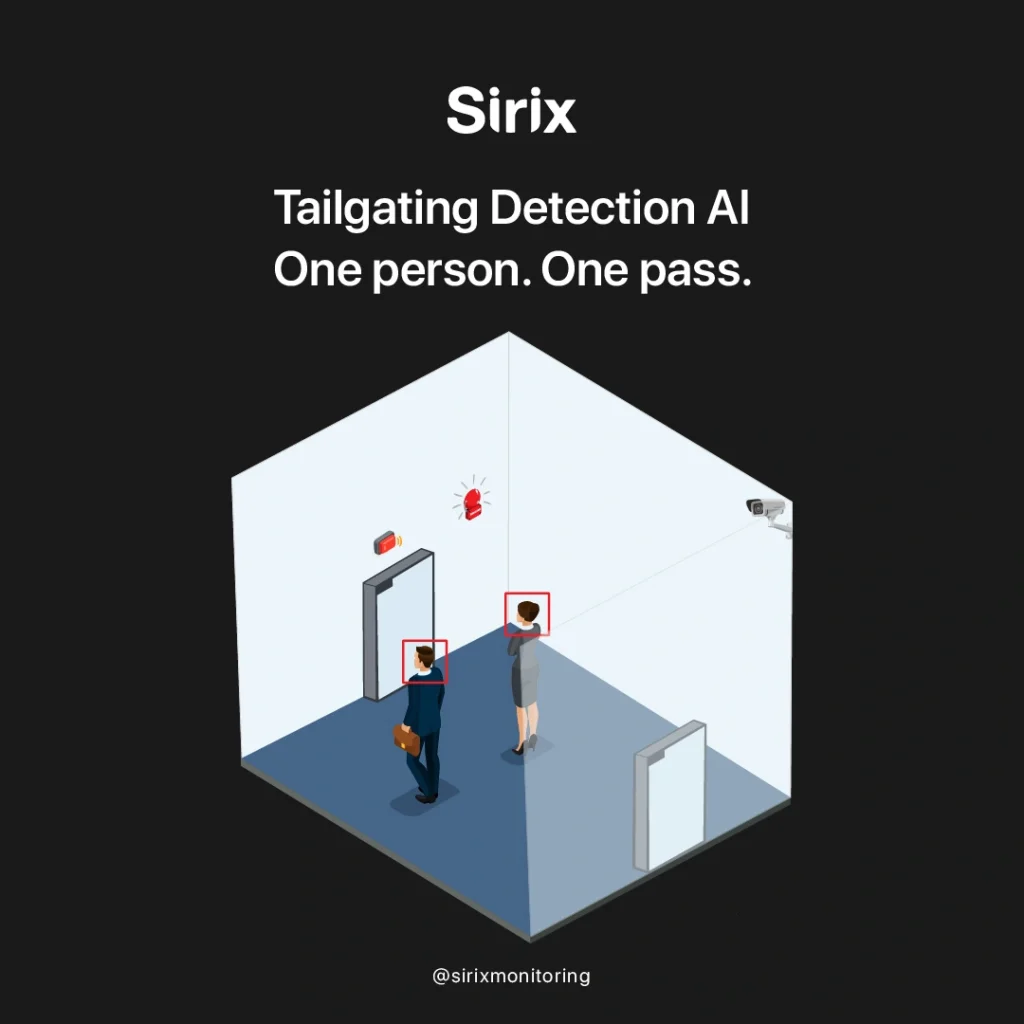
It analyzes doors, turnstiles, gates, and counts how many people pass vs how many authentications occur. It detects motion patterns, spacing between individuals, speed of entry, and whether a door stays open longer than normal.
AI tailgating systems track people frame by frame as they move through an entry point. Even if the 2 persons overlap, it uses virtual zones and person tracking to count unique bodies.
They compare that count against access control events to spot mismatches between people and credentials. Most detections occur within a second after the second person crosses the threshold. Once verified, alerts reach operators in one to five seconds, depending on the network and routing speed.
Traffic flow Analysis:
Traffic flow analysis lets security teams see how people and vehicles move through a site. Why is that important? You want to avoid choke points and congestion because they cause surveillance gaps. An AI so smart that it detects and tracks every activity in stadiums, warehouses, retail, and campuses, spots crowd hazards and theft.
The traffic flow analysis tracks movement across defined zones, counts entries and exits, measures crowding, and flags patterns that fall outside normal flow.
Slip & fall detection AI:
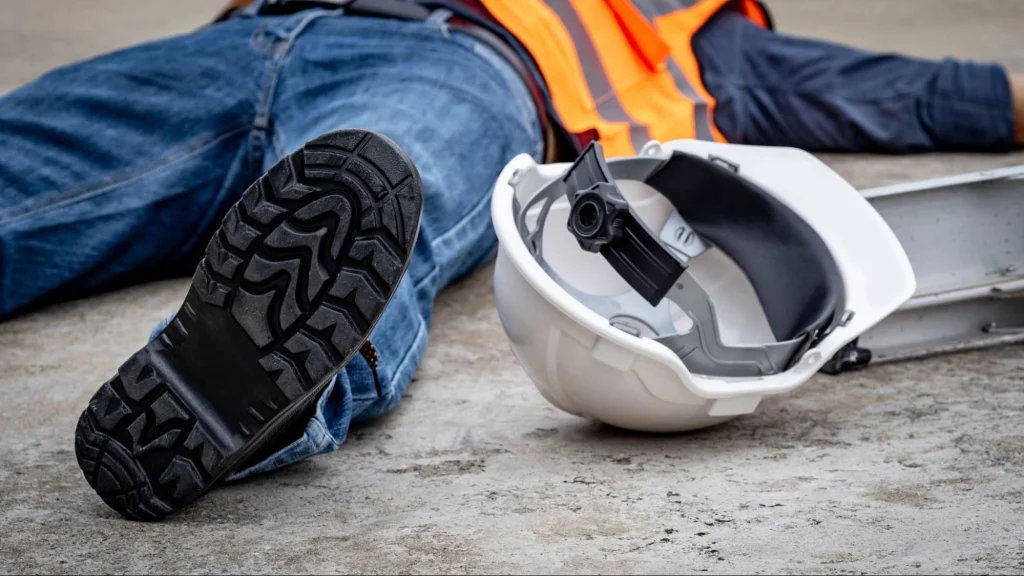
Slips and falls are disastrous in businesses. The employee gets hurt, and you end up with lawsuits, downtime, and high insurance claims.
AI security technology is changing that with prompt detection and swift action by the remote operators. The slip-and-fall detection AI identifies when a person suddenly drops to the ground using motion tracking, posture analysis, and abrupt-change detection, enabling it to detect real incidents in seconds.
It works in real time, usually detecting a fall within 1 to 3 seconds, allowing safety teams or monitoring centers to respond before injuries worsen.
Mask detection AI:
If you want consistent safety practices without depending on manual checks, which are slow, inconsistent, and easy to overlook, then mask detection AI is already helping hundreds of similar businesses. Mask detection becomes useful whenever a business needs reliable compliance monitoring and fast identification of violations.
Remote video monitoring enables automated alerts that help maintain a safer, healthier, and compliant atmosphere.
Conditional AI logic:
Conditional AI logic lets you decide exactly what the system reacts to and when it should react, giving you flexible oversight without losing control. It helps you loosen restrictions in situations where normal activity is expected, and tighten them when risk is higher, all based on rules you define.
This makes AI security safer by avoiding false alarms, adapting to real-world patterns, and ensuring alerts trigger only when conditions match your priorities. You use conditional AI when you want automation that respects context, such as time of day, staffing levels, access permissions, or activity thresholds.
For example, you might allow delivery workers to move freely in loading zones during business hours but trigger alerts after closing, or let cleaning staff access multiple rooms at night while flagging any movement in executive offices as suspicious.
Cloud video analytics integration:
By integrating cloud video analytics into your surveillance cameras, you are connecting those cameras to powerful cloud-based artificial intelligence. This means that all video feeds are being analyzed in real time, so you don’t need heavy hardware on site.
The system also lets you set exactly what it should detect and how insights flow back into your operations. This means that there is one “clever” control panel that is always up-to-date. It ties together all your sites.
You use cloud video analytics when you want central management across multiple locations. This includes the convenience of deploying new features without changing equipment.
For example, a retailer can roll out people-counting to every store overnight, or a property manager can monitor parking violations, tailgating, and after-hours access across dozens of buildings from a single dashboard.
Conclusion:
CCTV cameras are not enough in 2026! It is about intelligent systems that think, learn, and react faster than any traditional method. The top AI security technologies of 2026 give businesses real-time awareness and instant decision-making. These high-tech advancements are the only way businesses will have full control over preventing incidents before they escalate.
With advanced analytics, cloud intelligence, automated detection, and adaptive logic, companies can secure people, assets, and operations with precision.
The businesses that embrace these tools will move from reactive protection to proactive resilience. Contact us today for a free demo on how to use the Remote video monitoring solution for your business.