If someone is telling you that security gaps in shopping centers start with broken cameras or missing guards, they are wrong.
They start with moments no one is watching.
Incidents unfold in plain sight. Theft, assaults, medical emergencies, and vehicle break-ins. Not overnight. Not after hours. Right in the middle of the day, while cameras record, and no one reacts.
By the time someone reviews the footage, the damage is already done. Customers are shaken. Tenants are frustrated. Management is left explaining why the system saw everything and stopped nothing.
These failures are not caused by a lack of technology.
They are caused by the absence of live response where it matters most. In this blog we tell you how live video monitoring is a trusted proactive security solution across North America.
Why choose live video monitoring for shopping centers in 2026:

1. Parking lots and perimeters are crime magnets:
Large, multi‑level parking structures and open surface lots have ideal hideouts for vehicle break‑ins, vandalism, catalytic‑converter theft, and assaults. Incidents often go unnoticed until victims report them, which means there is no opportunity to deter the behavior or catch suspects early. You can’t possibly rely on traditional CCTV cameras here and there.
2. Aggressive shoplifting and organized retail crime:
The grab‑and‑run thieves and ORC crews are looking for a single security gap to make their move. Traditional mall security teams rarely see these incidents forming in real time; by the time a call reaches security, the group has already dispersed or exited through side doors and parking lots.
3. Blind spots inside complex layouts:
Multi‑level layouts, atriums, cinemas, food courts, and back corridors create blind spots that handheld radios and fixed patrol routes simply cannot cover at all times. Crowd surges during promotions or events can quickly create choke points that go unseen until a complaint or social media video appears.
4. Fragmented systems and slow incident response:
When something happens in a common area, it is not always clear who owns the response, which slows down decision‑making. Operators may see an incident on video but lack clear workflows for challenging the person, calling guards, or involving law enforcement with context.
5. High guard costs and staffing challenges:
Covering every entrance, parking deck, and interior corridor with on‑site guards 24/7 is expensive. You are always under pressure to cut operating expenses. While shrink, claims, and risk are moving in the wrong direction.
With decades of experience in deploying and monitoring retail security solutions, we know one thing for certain: the real difference comes from security that acts before the damage is done. Live video monitoring delivers 24-7 oversight, and when combined with advanced video analytics, it gives you the clarity and precision needed to respond fast.
Lets find out:
How live video monitoring works:

Live video monitoring works by installing cameras in various locations throughout a retail environment. The cameras capture footage and transmit it to a central monitoring station, where security operators can view it in real time when an alarm is triggered.
How Sirix’s shoplifting detection AI solution stops a shoplifter: A step-by-step example.
After strategically placing the cameras (which we will discuss further in this blog), the shoplifting detection AI solution is ready to capture live video footage and identify suspicious behavior with its robust capabilities.
Let us show you exactly how it works with the help of a real-life example:
Step 1:
At the mall’s drugstore, an individual swiftly tucks a perfume bottle into their coat pocket. This typical shoplifting gesture is recognized by Sirix’s shoplifting detection AI solution.
Step 2:
A video alarm is quickly displayed on one of Sirix’s operators’ workstations.
Step 3:
The skilled operator examines the live video feed to understand the situation.
Step 4:
Upon confirming the shoplifting incident, the operator swiftly presses a button, triggering a broadcast over the drugstore’s speakers that urgently alerts staff with a coded message conveying precise details.
“Attention store employees, code blue 25. I repeat, code blue 25.”
These codes, established in collaboration between the retail store management and Sirix, are seamlessly accessible to operators and form an integral part of the predetermined SOP. New store employees are briefed on these codes upon hiring.
Step 5:
In response to the broadcasted message, a vigilant store employee promptly offers assistance by discreetly communicating their awareness of the would-be shoplifter’s actions and providing a basket. This proactive intervention prevents potential damage or theft.
Step 6:
The remote monitoring center diligently compiles a comprehensive report documenting the incident for further review and analysis.
Key features of shopping center live video monitoring solutions:
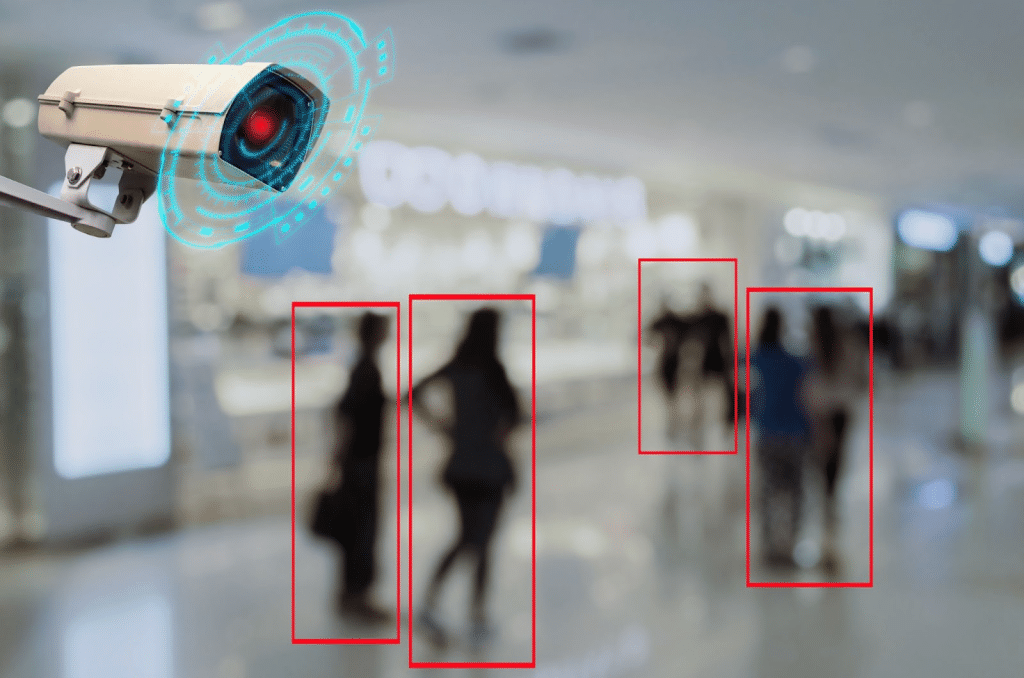
A reliable live video monitoring system for a shopping mall should have the following essential features:
Authorized personnel can access the shopping center live video monitoring feed from anywhere, at any time, allowing for quick response times and central monitoring.
The shopping center live video monitoring system can detect movement and trigger alerts to identify suspicious activity or potential security threats.
The system can capture clear video footage even in low-light or no-light conditions, making it useful for monitoring poorly lit areas.
High-definition video:
The system provides clear, detailed video footage through shopping center live video monitoring that can be used to identify individuals, vehicles, or potential safety hazards.
Scalability:
The system can be expanded or upgraded as needed to accommodate changes in the shopping center’s layout or security needs.
Real-time monitoring:
Live video monitoring in shopping centers enables security personnel to detect suspicious activity in real time, preventing theft, vandalism, and other crimes.
Alerts and notifications:
Shopping centers live video monitoring enables security personnel to detect security breaches in real-time and respond promptly to prevent further escalation.
Overall, these features make shopping center live video monitoring systems an effective tool for preventing theft, ensuring customer safety, reducing liability, and improving staff efficiency. By investing in this technology, retailers can create a safer and more secure shopping environment for their customers and employees.
Types of shopping center live video monitoring systems:
When selecting a shopping center live video monitoring system, it is important to consider the different types available.
Analog vs. IP cameras:
When selecting a shopping center live video monitoring system, one of the first decisions is whether to use analog or IP cameras. Analog cameras are traditional and still widely used. They send video signals over coaxial cables to a DVR or VCR for recording.
IP cameras, on the other hand, transmit video signals over a network and can be accessed remotely through the internet. They also offer higher resolution and better image quality compared to analog cameras.
Indoor vs. outdoor cameras:
Another consideration when selecting a shopping center live security monitoring is whether to use indoor or outdoor cameras. Indoor cameras are smaller and designed for use in well-lit environments.
Outdoor cameras, on the other hand, are larger and designed to withstand harsh weather conditions. They also often come with infrared capabilities for night vision.
Good reads:
Wireless vs. wired cameras:
Shopping center security camera monitoring uses either wireless or wired cameras. Wireless cameras are easy to install and can be placed anywhere without cables.
However, they can be susceptible to interference and can have connectivity issues. Wired cameras offer a more reliable connection but require cables to be run to the camera location.

To effectively monitor all mall visitors, it is important to install security cameras at all potential entry and exit points. This will allow for clear and detailed images of everyone who comes and goes.

Additionally, public areas such as food courts, lobbies, and plazas should also have surveillance cameras installed.

To cover all key areas where visitors frequently pass through, it is recommended to install surveillance cameras at major crossroads and traffic intersections throughout the mall.

Parking garages and parking lots are particularly vulnerable to break-ins and other crimes, so it is crucial to install surveillance cameras in these areas.
To prevent unauthorized access, it is important to closely monitor hallways, storage areas, and corridors.
Finally, delivery and loading areas should also be closely monitored as these are potential areas of concern. Be sure to record and monitor them closely.

Best practices for implementing live video monitoring:
Live video monitoring is an essential security measure for shopping centers to protect customers and employees. Implementing an effective system requires careful planning, staff training, compliance with privacy laws, regular maintenance, proper camera placement, and effective monitoring and response strategies.
Create a comprehensive plan:
To create a comprehensive plan, shopping center managers should consider the specific needs of their environment and conduct a risk assessment to identify potential security threats and vulnerabilities.
The plan should also outline camera placement, monitoring procedures, and emergency response protocols.
Train staff on system use:
Proper training is crucial for ensuring that staff members can use the shopping center’s live video monitoring system effectively. Staff should be trained on camera operation, accessing the live feed, and responding to potential security threats.
Additionally, staff members should be aware of the importance of maintaining confidentiality and protecting customer privacy.
Ensure compliance with privacy laws:
Compliance with privacy laws is critical for live video monitoring systems. Shopping center managers should obtain consent from customers and employees before recording video and ensure that the video footage is stored securely and only accessed by authorized personnel.
Legal experts and regulatory agencies should be consulted to ensure compliance with all relevant laws and regulations.
Regular system maintenance:
Regular maintenance is necessary to ensure the live video monitoring system functions properly and provides accurate, reliable footage. This includes regularly checking cameras, monitoring equipment, and storage systems.
In the event of system failures or malfunctions, shopping center managers should have a plan in place to quickly repair or replace equipment.
Proper camera placement:
Proper camera placement is essential for effective video monitoring. Cameras should be placed in strategic locations, such as entrances and exits, parking lots, and high-traffic areas. Lighting conditions should also be considered when placing cameras.
Effective monitoring and response strategies:
Effective monitoring and response strategies are critical to ensure that the video monitoring system is used to its full potential. Trained personnel should monitor the footage continuously to detect any suspicious activity and respond immediately.
Shopping center managers should also work closely with local law enforcement to develop effective response strategies in the event of an incident. Video analytics software can also be used to identify potential security threats in real time.
How to evaluate a live video monitoring provider for your mall:
When selecting a live video monitoring system for a shopping center or retail store, several factors should be considered. Here are some of the most important:
- Check detection and verification speed.
- Evaluate real-time intervention options.
- Ensure integration and full coverage.
- Review documentation and liability support.
- Clarify operations and reporting KPIs.

How does Sirix set itself apart in shopping center live video monitoring?
Detection and verification:
How quickly does Sirix verify an alarm or analytics event on live video?
Sirix uses AI-enhanced monitoring. Which means minimum false alarms. Only real problems, such as intrusion, suspicious shoplifting behaviors, or parking-lot incidents, are pushed to the command center. It’s a matter of seconds before the live operators access live video feeds and verify. This speedy detection and action, via an audio warning, notifies on-site security or contacts law enforcement as per SOPS.
What types of analytics does Sirix support?
For shopping centers, Sirix layers AI and advanced video analytics on top of your CCTV to detect suspicious shoplifting behavior, loitering, parking violations, intrusions, and assaults in real time.
High-definition PTZ cameras, LPR, and loitering detection actively control who enters your parking areas, and how long they stay.
Shoplifting detection AI distinguishes normal stocking from suspicious gestures.
Intervention capabilities:
Does Sirix provide audio talk-down and scripted interventions?
Yes. When our operators confirm a threat on live video, they can broadcast messages through on-site speakers to warn offenders, alert store staff, or direct people to safety.
These strong and clear voice interventions to deter intruders, stop in-progress shoplifting, and manage incidents such as parking-lot disturbances.
Can response scripts be customized to match our brand voice and different incident types?
Sirix operates according to customer-specific SOPs, which include how and when operators speak to people on site and what messages they deliver. That means interventions can be tailored to your mall’s environment, incident types (loitering, intrusion, aggressive behavior, after-hours access), and brand tone while still following best practices for safety and de‑escalation.
Integration and coverage
Can you integrate with our existing cameras, access control, and intrusion systems?
Sirix is designed to work with your existing CCTV infrastructure by turning your cameras into a remotely monitored, AI-powered system rather than a simple record-only setup. We connect to your cameras and alarm systems so that when an intrusion, fire, or other alarm triggers, our operators can immediately review live video, follow your procedures, and coordinate with your on-site team.
Documentation and liability support:
How does Sirix document incidents for liability and insurance claims?
Sirix creates a protocol-driven record of each incident by combining real-time monitoring, alarms, and operator actions into a clear sequence of events. When something happens, such as shoplifting, an intrusion, or a parking-lot assault, our system logs the alarm, the verified video, and the response steps taken according to your SOPs, giving you evidence you can share with insurers or legal teams.
Operations and reporting:
What KPIs do you report (incident counts, response times, and prevented events)?
Sirix provides clear, actionable insights into system performance by reporting on alerts, anomalies, and technical issues (such as camera disconnects or time tampering), as well as the incidents operators handle. These reports help you see where theft, intrusions, and safety issues are occurring across your mall and how often the system is detecting and responding to them, so you can continuously refine your security strategy.
Frequently asked questions:
Is live video monitoring legal in shopping centers?
Yes, most jurisdictions allow live video monitoring in common areas of shopping centers, as long as you avoid places with a reasonable expectation of privacy (like restrooms) and provide clear signage that surveillance is in use.
You also need to have clear policies for data retention, access, and sharing that align with local privacy and data‑protection laws.
How much does live video monitoring cost for a mall?
Costs usually depend on the number of cameras, hours of active monitoring, risk profile, and whether you’re using existing infrastructure or adding new hardware. A rough estimate would be an upfront cost and a monthly fee per camera or per site. .
How does live video monitoring enhance shopping center security?
Live video monitoring enhances shopping center security by providing real-time surveillance and enabling immediate detection and response to security threats. It also serves as a deterrent to potential criminals and helps in identifying suspects if an incident occurs.
What are the benefits of using video analytics in shopping centers?
Video analytics can identify suspicious behavior, track movements, and analyze data to identify trends, making it easier for security personnel to detect and respond to potential security threats. This can help improve overall safety in shopping centers.
Are shopping center security cameras always recording?
It depends on the system. Some shopping center security cameras are always recording, while others may only record when motion or specific events are detected. It is important to check with the shopping center management to understand their specific recording policies.
How can shopping center management ensure compliance with privacy laws when using live video monitoring?
Shopping center management can ensure compliance with privacy laws by obtaining consent from customers and employees before recording video, storing video footage securely, and restricting access to authorized personnel only. Legal experts and regulatory agencies can also be consulted to ensure compliance.
How can shopping centers ensure the proper placement of security cameras for maximum effectiveness?
Shopping centers can ensure proper camera placement by conducting a risk assessment to identify potential security threats and vulnerabilities, and placing cameras in strategic locations such as entrances, exits, parking lots, and high-traffic areas. Lighting conditions should also be considered when placing cameras to ensure clear footage.
How often should shopping center security cameras be checked and maintained?
Shopping center security cameras should be checked and maintained regularly to ensure they are functioning properly and providing accurate footage. A specific maintenance schedule should be established and followed, including regular checks of the cameras, monitoring equipment, and storage systems.
How can shopping center management respond effectively to security incidents captured on camera?
Shopping center management can respond effectively to security incidents by establishing clear procedures for monitoring the footage, identifying potential threats, and responding to incidents.
Trained personnel should monitor the footage at all times, and effective communication with local law enforcement can help develop response strategies.
Wrapping up:
Overall, shopping center security surveillance is a powerful tool that can help to prevent crime, improve safety, and enhance the overall security of public spaces. By investing in this technology, shopping centers can create a safer, more secure environment for everyone who visits or works in these spaces.
If you’re interested in implementing a state-of-the-art video monitoring system for your shopping center, Sirix Monitoring has the expertise and experience to deliver a customized solution tailored to your specific needs.
Don’t hesitate to reach out to us for a consultation and take the first step towards a safer and more secure shopping center. Please leave a comment below to start the conversation.