
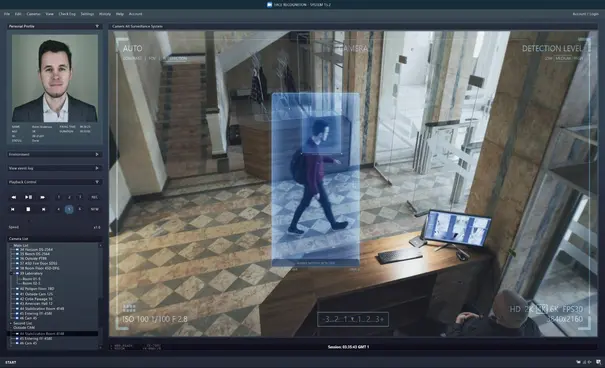


In 2026, CCTV cameras are not just recording crime; AI has made them a powerful security center on their own.
And you don’t need to spend hundreds of dollars on the latest high-tech most expensive camera in the market. Even your existing camera can be enhanced with AI to deliver AI-powered surveillance.
So, for a 100‑camera site, ripping and replacing hardware can cost 50,000-200,000 USD upfront, while adding AI to existing cameras is roughly half of it.
Adding intelligent detection on every camera is far less than the cost of replacing a fraction of them. When AI reduces monitoring workload by around 30%, the labor savings alone can often cover most or all of that annual license cost.
Now, just add in the avoided losses from even one prevented major theft, vandalism, or liability claim, and the payback period is frequently under a year.
In this blog, we talk about an AI-powered video surveillance system that enhances accuracy and response efficiency within seconds, replaces human guards, tracks suspicious behavior across dozens of cameras simultaneously, and, above all, gives you remote access.
So let’s have a quick look at what AI-powered surveillance is capable of detecting!
What is AI-powered video surveillance?

CCTV camera systems that can analyze real-time video feeds, perform complex tasks, and make informed decisions are called AI-powered video surveillance systems.
These artificial intelligence capabilities of CCTV cameras to perform complex tasks in real time on every frame couldn’t have been imagined on traditional security cameras, and are 100 times faster than a human guard. They can:
- Detect and follow people, vehicles, animals, bags, machinery, etc., frame‑by‑frame, so the system knows what is moving and where it’s going, instead of just “pixels changed.”
- Search and conduct an investigation at scale by indexing video with who/what/where/when so you can later search “red car,” “person in black shirt,” or a specific plate number and instantly pull every matching clip across days or sites instead of scrubbing manually.
AI-powered video surveillance as a fully integrated security ecosystem:
Now what’s even more interesting is that these AI security cameras can also be integrated with a cloud platform to give you a comprehensive security system for your business. Cloud platforms play a critical role in enabling this integration by acting as a centralized intelligence layer that correlates camera events with access control data, such as badge activity or forced entry alerts.
It can be a retail store, a commercial office building, a construction site, or even a scrap metal and recycling facility. Aisha V, Senior marketing and communications leader, says:
“AI-powered video surveillance has evolved into a fully integrated security ecosystem rather than a standalone monitoring tool.“
So it works by integrating video analytics with your premises access control. Gates, turnstiles, and electronic locks respond automatically based on what cameras detect.
When an AI camera identifies an unauthorized individual, a tailgater at an entrance, or suspicious activity near a restricted area, the system can instantly trigger alarms.
How do AI security cameras work?

AI-powered surveillance cameras work by combining standard CCTV hardware with software that can “understand” what’s happening in the image rather than just recording it.
- The camera captures video frames exactly like a standard IP camera (sensor, lens, encoding).
- Each frame is fed into AI models (computer vision and machine learning) that detect and classify objects such as people, vehicles, animals, or bags in real time.
- The system tracks these objects across frames, measures their motion, how long they stay, and whether they cross virtual lines or enter protected zones. The operator can track through bounding boxes or visual overlays on the video feed.
- Based on rules and learned “normal” patterns (for example, no person in the yard after 10 p.m.), it decides which events are suspicious and generates alerts only for those.
- Metadata (who/what/where/when) and video are stored locally or in the cloud, so operators can search later by attributes like “person in red shirt” or “white truck at loading dock,” rather than searching hours of footage.
Why do you need AI-powered video surveillance for your business today?
- Reduce false alarms by 95%.
- Fewer security incidents.
- Replace human guards.
- Lower insurance premiums.
- Scale better.
- Faster response times.
Reduce false alarms by 95%:

Whether you run a mid-sized business or a large enterprise, AI-powered surveillance gives you full control over your security. Its high detection accuracy significantly reduces false alarms.
Modern AI detection systems can identify people and vehicles with 90-95% accuracy, and they do it instantly, not minutes later when a guard eventually notices something on one of dozens of screens.
“Many jurisdictions now fine businesses for repeated false alarms. Beyond the fines, police response times to unverified alarms are increasingly slow.”
AI can tell between the wind, shadows, a stray cat, you name it. Previously, human operator scanning feeds took an average of 20 minutes to detect an incident. An AI-powered system flags it in under 30 seconds!
In a break-in, a workplace injury, or a theft situation, that gap between 20 minutes and 30 seconds is the difference between stopping something and filing a report about it.
Fewer security incidents:

Now it gets even more interesting. You can even add the Conditional AI layer to make your CCTV cameras even more powerful.
So now you are not just saying “alert me if there’s a person,” you can actually define particular situations such as: “alert me if there’s a person, in Zone B, between 11 PM and 5 AM, who doesn’t have a hard hat, and has been there for more than 2 minutes.”
So you keep customizing your detection criteria, further reducing security incidents.
AI can replace human guards:
AI changes everything. Unlike humans, it doesn’t get tired or distracted. Every camera, every second is under constant watch, ensuring it effectively replaces human guards.
For example, shoplifting detection AI is smart enough to distinguish between a worker stocking items on shelves and a person sweeping items into their bag from the aisle. It saves you from patrolling workers stationed at every aisle by stopping shoplifting that human guards may miss:
- Backpack and handbag concealment.
- Upper body concealment (coat or jacket pockets).
- Lower body concealment (trousers, skirt, or dress pockets).
- In-store consumption of products.
- Stroller concealment.

Lower insurance premiums:
Your claim frequency lowers because AI cameras detect intrusion and loitering proactively before theft and vandalism take place. Businesses using monitored or verified surveillance see a significant reduction in insurance premiums as insurers see fewer losses from theft or injury. Also, AI provides time-stamped clips with crystal-clear evidence, so this also reduces payouts in disputes.
Helps you scale better:
You can’t afford to have a person staring at 40 camera feeds all night, hoping to catch something. And you definitely can’t afford to find out about a problem the morning after. With AI-powered cameras you can secure more locations via mobile app as long as you have an internet connection.
Faster response times:
When your AI cameras detect security breaches faster, you can now expect improved operational efficiency across every aspect. For example, in retail or schools, AI flags a person at a back door after-hours and pulls up the exact clip with object classification, allowing verification and responding 80-90% faster than manual review. Key features of AI-powered video surveillance are changing security in 2026.
Key features of AI-powered video surveillance security in 2026:

AI-powered object and asset detection:
Precise identification and categorization of objects and movements across large monitored areas is the biggest AI-powered security advantage. You can accurately identify between a harmless individual and a real security threat through advanced computer vision. For example:
- Object detection and tracking AI helps to identify an individual moving across corridors to hallways to different rooms. It even detects a person trying to climb over the fence.
- Long-range object detection AI is perfect for detecting security breaches across large parking lots or construction sites. Such as a person hiding between cars.
AI-driven vehicle and traffic monitoring:
AI video analytics can track vehicle movement, monitor parking activity, and analyze traffic patterns in real time. For example :
- Read license plates (LPR/ALPR) and identify car brand, model, and color.
- Detect unauthorized or illegal vehicle movements.
- Detect vehicles parked too long.
- Tailgating detection of vehicles entering.
AI-based people and behavior detection:
Behavior analysis is one of the most powerful capabilities of AI video surveillance. By analyzing human movement and activity patterns, AI systems can automatically identify loiterers, suspicious shoplifting behavior, crowd formation, and policy violations.
AI-powered threat and safety detection:
AI surveillance systems can identify dangerous incidents and safety risks the moment they occur. From detecting weapons to recognizing accidents or fires.
These systems help security teams respond faster to slips and falls, and violence to prevent escalation.
How is AI-powered video surveillance used in different industries?
Commercial buildings:
A commercial office building uses AI-powered video surveillance to automatically flag unauthorized entry or unusual activity, without requiring staff to watch screens all day.
Shopping malls:
Shopping malls across North America have upgraded to shoplifting detection AI to spot shoplifting behavior patterns in real time.
Construction sites:
AI enables lone worker alarms, detects copper thieves via object classification, and flags vandalism before major damage occurs at construction sites.
Parking lots:
AI monitors for vehicle theft, break-ins, and vandalism by tracking suspicious loitering or forced entries across lots.
License plate recognition (LPR) matches stolen cars to watchlists, enabling 90% faster recovery and reducing premium hikes.

Schools:
The schools deployed AI-powered continuous surveillance to detect gun violence and after hours intrusions. Live verification cuts false alarms by 90%, letting remote teams intervene before incidents escalate on K-12 campuses.
What are the limitations of AI-powered video surveillance cameras?
AI security cameras represent a major leap in surveillance technology, but they are not a complete security solution on their own.
Weather conditions:
Heavy rain, fog, glare, poor lighting, and dirty lenses can degrade significantly under real-world conditions.
Although these might be one or more instances of missed detections or unnecessary alerts, even one missed detection can cost you hundreds of dollars.
Privacy concerns:
There are also growing legal and ethical considerations. Features such as facial recognition and long-term identity tracking are subject to strict regulatory scrutiny and are restricted or prohibited in several jurisdictions and U.S. states, making them difficult for many organizations to deploy.
Cybersecurity risks:
At the same time, network-connected cameras expand cybersecurity risks if devices are poorly configured or not regularly updated. Operationally, AI cameras still require careful placement, proper lighting, calibrated detection zones, and ongoing tuning to avoid noisy alerts and underperforming analytics.
This is where you need verified alarm responses for every triggered alarm, and Remote Video Monitoring provides a critical layer of intelligence. Instead of relying solely on automated detection, trained monitoring operators verify AI-generated alerts in real time, interpret ambiguous situations, and trigger appropriate responses, such as live audio warnings, security dispatch, or incident escalation.
Lets find out how:
How does an AI camera offer powerful integration with remote video monitoring?

You understand that you have speedy detection with AI; now you have to take swift action. When you integrate your AI-powered security video systems with Remote Video Monitoring, remote operators take rapid action on every triggered alarm.
Streaming verified events to centralized platforms lets operators act within seconds. By combining rapid AI detection of intrusions, loitering, or tailgating with offsite verification, operators can trigger live responses.
For instance, an AI camera flags a perimeter breach, triggering an alarm at the remote video monitoring center. The remote operator springs into action, immediately confirming the clip and initiating the appropriate response.
With a unified dashboard, two-way audio warnings, PTZ zoom, sirens, or dispatch coordination, reaction time is reduced from minutes to under 15 seconds.
In our latest YouTube video, Olivier explains the phases of alarm verification at a top-notch remote video monitoring center:
Conclusion:
AI-powered video surveillance is transforming security in 2026 by turning traditional CCTV cameras into intelligent systems that can detect, analyze, and respond to threats in real time.
If you want to secure your business 24/7, then AI-powered video surveillance will improve detection accuracy, reduce false alarms, and provide powerful security insights.
However, AI cameras are not perfect and automated detection alone cannot handle every security situation. This is why many organizations combine AI detection with remote video monitoring, where trained operators verify alerts and respond immediately.
Book a free demo today to learn how AI analytics and human verification create a more reliable, responsive security system.


