
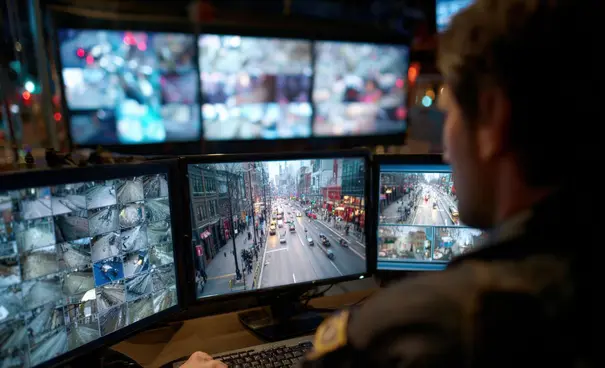


Traffic monitoring cameras are systems used to watch traffic flow, detect incidents, and help operators respond faster. Some are used for traffic management, some support enforcement, and some do both.
Not all traffic monitoring cameras do the same job.
Some are used to manage congestion, some help detect vehicles at intersections, and some are designed specifically for traffic rules enforcement. This guide explains the types of traffic-monitoring cameras and surveillance systems, whether they record, what they look like, and how they differ from one another.
Traffic monitoring cameras are surveillance or detection systems used to observe roadway activity in real time. They help transportation teams monitor flow, spot incidents, and improve response. Some systems also support enforcement or license plate recognition, but many are used mainly for traffic operations and safety.
What does traffic monitoring actually mean in 2026?

Traffic surveillance systems that integrate technologies such as traffic-monitoring cameras, IoT sensors, radar, LiDAR, and AI-powered video analytics to observe, analyze, and manage road activity in real time.
The primary goal is speed limit enforcement and also the safety and security of every vehicle, motorist, pedestrian, and cyclist on the road.
Earlier, the traffic cameras recorded, and the surveillance footage was reviewed much later, when things were out of control. But now traffic surveillance systems use cameras, radar, sensors, or imaging. And after detection comes live verification because the target of live video monitoring of cities is real-time detection and quick intervention.
Successful deployments of traffic monitoring cameras across U.S. cities:
- Houston is ready to invest $716K to actively expand AI-powered traffic signal technology, which uses cameras and sensors to monitor vehicles, pedestrians, and cyclists in real time and automatically optimize traffic flow.
- In Pittsburgh, AI-powered systems analyze real-time traffic data at more than 50 intersections. It has reduced travel times by up to 25% and has improved traffic flow analysis efficiency.
- In Seattle, real-time data from connected systems is used to dynamically adjust signals in response to live road conditions, improving safety and reducing stop-and-go congestion.
These deployments reflect a broader shift across U.S. cities. In 2026, the safety outcomes data are compelling:
| “New York City’s red-light program achieved a 73% decrease in red-light violations, a 65% decline in T-bone crashes, and 49% fewer rear-end collisions at camera-installed intersections.” |
What are traffic monitoring cameras?

Smart city traffic-monitoring cameras also go by traffic-control cameras or traffic video monitors. Cities mount these cameras on poles at intersections and above traffic lights on highways to monitor violations, enforce speed limits, detect red-light running, and read license plates for automated ticketing.
Traffic agencies deploy traffic monitoring cameras in the following ways:
- Fixed units monitor high-risk, single-point locations where speeding repeatedly creates danger. These locations include school zones, busy intersections, sharp turns, and construction areas. Fixed units help control speed at one specific hotspot where accidents most often occur.
- Point-to-Point (P2P) units monitor longer stretches of road, such as highways, tunnels, and bridges. Instead of measuring speed at a single point, they calculate the average speed over the distance. This prevents drivers from slowing down only near cameras and then speeding up again.
- Mobile units support flexible and unpredictable enforcement. Traffic teams place them in vehicles or trailers and move them to different locations based on traffic risk, complaints, or accident trends.
Why are traffic monitoring cameras used?
Traffic monitoring cameras are used to predict traffic patterns, identify congestion hotspots, and uncover harsh weather conditions that contribute to road accidents in real time.
The viability of the system can be better understood by the data that it captures.
For example, a live video with the following information:
- Timestamp: System logs the exact moment the violation occurred (e.g., 08:43:12 AM).
- Location: Data pinpoints the incident at a specific junction or lane.
- Vehicle data: System records details like speed, direction, and license plate for identification.the live video feed of the traffic violation, timestamp, location, and vehicle data.
Who monitors the traffic cameras?
The data from these cameras is monitored by authorized operators, traffic control staff, law enforcement, or system administrators.
Do traffic monitoring cameras record all the time?
Yes, traffic monitoring cameras do record and store video, but retention periods are usually limited. Most systems keep footage for about 7 to 14 days, while some municipal or commercial setups may store it for up to 30 days, depending on storage capacity and policy.
Types of traffic monitoring cameras:
Fixed traffic cameras:
Fixed traffic cameras monitor intersections, highways, school zones, and crash-prone spots.

According to the U.S. Department of Transportation, fixed units have reduced crashes on urban principal arterials by up to 54%.
Speed cameras (Radar/LIDAR):
Traffic speed monitoring cameras are designed to detect vehicle speeds using radar, laser, or video analytics. They are special cameras to detect vehicles breaking speed limits. Speed cameras capture images or video evidence that is reviewed by law enforcement before a citation is issued. A recent ScienceDirect report shows that deploying fixed traffic cameras reduces traffic crashes by 14%.
These cameras use advanced traffic surveillance systems that now incorporate the following:
- Vehicle detection and counting algorithms.
- Lane-based queue length estimation.
- Traffic signal control driven by pedestrians.
- Emergency vehicle recognition.
Red-light cameras:

Red light cameras take digital photos of a vehicle’s front and rear license plates when it runs a red light. These cameras connect with traffic signals, and the system creates a violation report before sending it to the vehicle owner online. A red light camera program helps reduce red-light collisions and injuries at intersections by 30%. Two main types of red light cameras are commonly used:
Fixed red light camera:
It is used to monitor red-light violations at a single intersection and is mounted above or next to the traffic lights.
Mobile red light camera:
These cameras can be placed on a vehicle such as a police mobile.
ANPR/ALPR cameras:
ALPR cameras are specialized devices that monitor and record license plates using optical character recognition technology. These LPR cameras are also used for parking lot security management. And for access control, tolling, and enforcement. Even in low lighting, license plate recognition offers over 95% accuracy. Additional capabilities further extend visibility, such as:
- Vehicle classification.
- Parking occupancy detection.
- Camera-based vacancy identification.
Traffic sensor cameras:

Traffic sensor cameras are a smart, non-enforcement system. You see them installed on traffic lights and poles to monitor traffic flow rather than issue tickets.
They use video analytics to detect vehicles, measure congestion, and adjust signal timing in real time, helping reduce unnecessary delays at intersections. They are small and dome-shaped; these cameras continuously analyze movement, speed, and lane occupancy to optimize traffic patterns. Unlike red-light or ANPR cameras, they focus purely on efficiency and safety, not violations or fines.
Red light camera vs traffic sensor camera:
The biggest difference between red light cameras and traffic sensor cameras is that traffic sensor cameras collect and analyze traffic data, whereas red light cameras detect violations and issue fines. Here are a few other differences:
| Factor | Red light cameras | Traffic monitoring sensors and cameras |
|---|---|---|
| Type of Data Collected | Capture photos/videos of violations and license plates | Collect speed, flow, density, and traffic patterns |
| Main Function | Enforce traffic laws and detect red-light violations | Monitor, analyze, and optimize traffic flow |
| Installation Locations | Installed at high-risk intersections with traffic signals | Deployed across roads, highways, intersections, poles, or under roads |
| Legal Usage | Provide evidence for fines and legal enforcement | Used for traffic planning and system optimization, not enforcement |
| Activation Method | Triggered when a vehicle crosses after the signal turns red | Operate continuously using sensors or event-based detection |
| AI Capabilities | License plate recognition and violation detection | Vehicle tracking, congestion analysis, and flow optimization |
Other traffic monitoring sensors and technologies:
Radar and LiDAR sensors:

Smart cities control traffic with LIDAR. These systems rely on radio waves or laser pulses to track vehicle speed, count traffic volume, and detect presence. They create real-time 3D maps of roads and intersections to analyze foot traffic. It can also detect collisions and near-miss incidents in real time, providing data to emergency response services for faster dispatch.
Bluetooth and WiFi scanners:
Traffic engineers can benefit from Bluetooth and wifi detectors. These tools pick up anonymous signals from mobile devices to estimate travel time, average speed, and movement patterns between locations.
GPS and connected-vehicle data:
Police mobiles with mobile traffic-monitoring cameras also use GPS data from navigation apps and connected cars to provide a broader, real-time view of traffic conditions and flow.
Acoustic, infrared, and ultrasonic sensors:
Infrared sensors are overhead detectors that use infrared light or heat to detect vehicles and people on the road. They can monitor approaching or departing traffic and even track movement from the side. These sensors help measure vehicle counts, speeds, and types, and they can also detect pedestrians at crosswalks to support safer signal control.
Advantages of traffic monitoring cameras and surveillance systems:
Adaptive traffic signal control:
Cameras detect vehicle density and automatically adjust signal timing to reduce congestion and waiting time.
Faster emergency response:
Real-time video and data help authorities detect incidents instantly and dispatch emergency services without delay.
Pedestrian safety:
Cameras detect pedestrians at crossings and extend signal time, reducing collision risks in high-footfall areas.
Improved road safety:
The biggest advantage of the fixed or speed cameras is that the drivers are forced to comply with speed limits. The roads have become safer for all, including pedestrians, other drivers, and cyclists. Speed is the first most dangerous.
Reduced traffic congestion:
Traffic signals are now automated, controlled by adaptive traffic signal control based on real-time vehicle density. The traffic keeps flowing.
Better accident investigation:
When a traffic monitoring system is in place, every event is recorded, synchronized, and contextualized:
- Time-stamped video footage shows exactly when the incident started and how it escalated.
- Vehicle tracking data reveals speed, direction, and lane behavior before impact.
- Multi-camera angles eliminate blind spots and confirm faults more accurately.
- Event logs and alerts capture signal status, congestion levels, and violations.
Valuable transportation planning data:
Traffic surveillance over longer periods reveals peak hours, bottlenecks, and road usage trends, helping cities design better infrastructure.
Reduce travel time:
Road blockages due to manual enforcement of violations like running red lights, wrong-way driving, or not wearing helmets are now automated, reducing travel time.
How traffic monitoring secures private commercial properties?
While transportation agencies typically manage public road traffic monitoring, the same core principles apply to private commercial sites. Properties with constant vehicle movement, such as parking lots, truck yards, distribution facilities, industrial campuses, and dealership lots, also need visibility, event detection, verification, and response.
That is where remote video monitoring becomes relevant. Businesses use monitored camera systems to detect congestion at entrances, unauthorized vehicle activity, blocked lanes, tailgating at gates, after-hours vehicle movement, and safety incidents.
The industries that benefit most from vehicle monitoring on private property include:
- Automotive dealership security: lot perimeter surveillance, after-hours vehicle monitoring, gate access control.
- Truck yard and freight facility security: entry and exit monitoring, unauthorized access detection, trailer surveillance.
- Parking lot and garage security: vehicle surveillance, occupancy detection, incident response, unauthorized vehicle monitoring.
- Construction site security: equipment monitoring, perimeter surveillance, after-hours activity detection.
Unlike public road systems that rely on city infrastructure, private site monitoring uses AI detection combined with live human verification, so when something is flagged, a trained operator confirms it before a response is dispatched. This eliminates false alarms and ensures intervention only happens when it is warranted.
How modern traffic monitoring systems work?
A modern traffic camera system manages congestion through a layered approach:
- AI-powered CCTV detection.
- Human verification.
- Real-time response systems.
AI-powered CCtv cameras:
AI converts video into structured traffic intelligence, including vehicle detection, counting, classification, license plate detection, lane occupancy, speeding patterns, and abnormal movement.
Human verification:
As soon as an alarm is triggered at the remote video monitoring center, a trained operator reviews the live video feeds in real time. The operator verifies whether the alert is genuine, assesses whether the vehicle or behavior is suspicious, determines whether the event requires escalation, and confirms whether the evidence is clear enough to support enforcement or dispatch. This step reduces false alarms, adds context that AI alone may miss, and turns automated detection into a credible operational response.
Response systems:
Once an event is verified, the remote operators intervene via audio warnings, dispatch workflows, or escalation to law enforcement. In stronger deployments, the verified clip is packaged with timestamps, location, vehicle details, and event notes, so responders receive a usable report rather than a vague alarm.
Does an AI-driven traffic monitoring system work in the real world?
The $15.3B smart traffic camera market in 2026 reflects a clear shift from passive surveillance to AI-driven traffic intelligence systems.
Cities are investing in systems that predict congestion, optimize flow, and actively improve road safety in real time.
A recent case study on AI-based traffic control shows that fixed signal timing causes congestion because it does not adapt to real-time traffic conditions.
By using live camera feeds and AI-based vehicle detection, the system measures traffic density across lanes and dynamically adjusts signal timing.
This prioritizes busier lanes, reduces vehicle queues, and improves flow efficiency.
The study confirms that AI-driven traffic monitoring enhances situational awareness by improving detection accuracy, traffic analysis and real-time response capabilities.
Frequently asked questions:
What do traffic monitoring cameras look like?
Traffic monitoring cameras vary by type. Fixed speed cameras are typically boxy units mounted on poles or overhead gantries. Traffic-signal detection cameras are small and dome-shaped, mounted near signal heads or mast arms. Red-light cameras are larger box cameras installed at intersections, often in pairs to cover front and rear plates. ALPR cameras are narrow and directional, positioned at entry and exit points. Most traffic monitoring cameras are weatherproof and have no visible lens movement.
How long is traffic camera footage retained?
Traffic camera monitoring footage is retained for 15 days. But in some states, it may be retained for 30 days.
Do traffic monitoring cameras record all the time?
Not always. Some systems record continuously; some store only event-based clips; some provide live visibility with limited retention; and some signal-detection cameras do not record at all. The answer depends on the system type and operator policy.
What are the cameras on traffic lights?
Many of the cameras people see on traffic lights are traffic-signal detection cameras. Their main job is to detect vehicles and help control signal timing, not to issue tickets. Agencies such as CTDOT and Alaska DOT explicitly say some of these cameras do not record video.
Do traffic monitoring cameras issue tickets?
Some cameras issue tickets when they work as red-light or speed enforcement systems. Many general traffic monitoring cameras only support visibility, traffic operations, and incident response.
How are traffic monitoring cameras different from red-light cameras?
Traffic monitoring cameras mainly help teams observe traffic conditions and support daily operations. Red-light cameras focus on traffic-signal violations and collect evidence for citation workflows.
Where should teams place traffic monitoring cameras?
Placement depends on the purpose. Traffic teams usually install general monitoring cameras at intersections, ramps, corridors, bridges, and other choke points. They mount traffic-signal detection cameras near signal heads or mast arms. Private commercial sites benefit most from camera coverage at entrances, exits, gates, loading areas, parking lots, and internal traffic lanes.
Key takeaways for improved safety from traffic-monitoring cameras and surveillance systems:
| System type | Main purpose | Issues tickets? | Typical trigger | Typical location |
|---|---|---|---|---|
| Traffic monitoring camera | Watch traffic flow, verify incidents, support operations | Usually no | Continuous monitoring or operator view | Highways, intersections, bridges, ramps |
| Traffic sensor camera | Detect vehicle presence and help adjust signal timing | No | Vehicle arrival or movement detection | Traffic lights, mast arms, signal poles |
| Red-light camera | Enforce signal compliance | Yes, where allowed by law | Vehicle enters the intersection on red | Signalized intersections |
| Speed camera | Enforce speed limits | Yes, where allowed by law | Speed above threshold | School zones, corridors, work zones, arterials |
| ALPR camera | Read plates and track vehicle events | Not by itself | Plate read or matched event | Entrances, tolling points, lots, corridors |
Traffic monitoring cameras are no longer just tools for recording roads; they are becoming decision-making systems that actively manage traffic in real time.
The real value comes not from visibility, but from what happens after detection: AI analysis, human validation, and immediate response. If your property depends on safe, visible vehicle movement, contact us today for a free demo to monitor entrances, lots, lanes, and gates with live video, AI analytics, and real-time response workflows.


